
Wireless Greenhouse Monitoring System
Eradicate costly RS485 trenching and bypass 2.4GHz Wi-Fi dead zones. Securely bridge sensors using Sub-GHz LoRa, retrofit legacy fertigation systems with Protocol Gateways, and scale up to Gigabit Fiber backhauls for multi-hectare automation.
Explore The Architecture ↓The Hidden Costs of Fragmented Greenhouse Control
If you have ever managed a commercial glasshouse, you know the challenge: standard wireless protocols fail when vegetation density increases, and hardwiring is economically unviable.
The 2.4GHz Water Absorption Trap
Wi-Fi and Zigbee signals degrade drastically when hitting water-dense foliage (tomatoes, cucumbers) and high-humidity cooling pads. Packets drop exactly when climate data is needed most.
The Cost of Cable Trenching
Running RS485 lines across moving irrigation booms and concrete paths is a maintenance nightmare. Cables are prone to mechanical damage and rodent attacks, halting your entire Modbus loop.
Cloud-Dependent Latency
Relying strictly on standard LoRaWAN cloud servers for ventilation control invites catastrophic crop loss. If the farm’s internet drops during a heatwave, the actuators will never receive the command.
End-to-End Wireless Architecture
Select the communication link that matches your site’s physical distance and constraints.
Utilize Sub-GHz penetration to bridge isolated sensors directly to your main PLC without trenching.

For an interactive experience, please view this architecture on a desktop.
Node Info

For an interactive experience, please view this architecture on a desktop.
Node Info
Protocol Gateways for Isolated Systems
For greenhouses operating on decades-old RS-232/RS-485 fertigation systems, our Serial Device Servers and Protocol Gateways transparently convert legacy Modbus RTU into modern Modbus TCP or MQTT/JSON payloads. This ensures seamless SCADA integration without ripping and replacing expensive machinery.

For an interactive experience, please view this architecture on a desktop.
Node Info
Fiber Optic Rings for Multi-Hectare Parks
When facility clusters span kilometers, wireless signals face terrain limitations. Deploy our Industrial Ethernet Switches and Media Converters to establish a Gigabit fiber-optic ring, guaranteeing zero-latency telemetry and absolute immunity to lightning strikes across massive crop fields.
Complete Environmental Control at Your Fingertips
Our LoRa gateways seamlessly integrate with your existing greenhouse environmental control system, providing the backbone for robust smart greenhouse automation without the need for Wi-Fi.
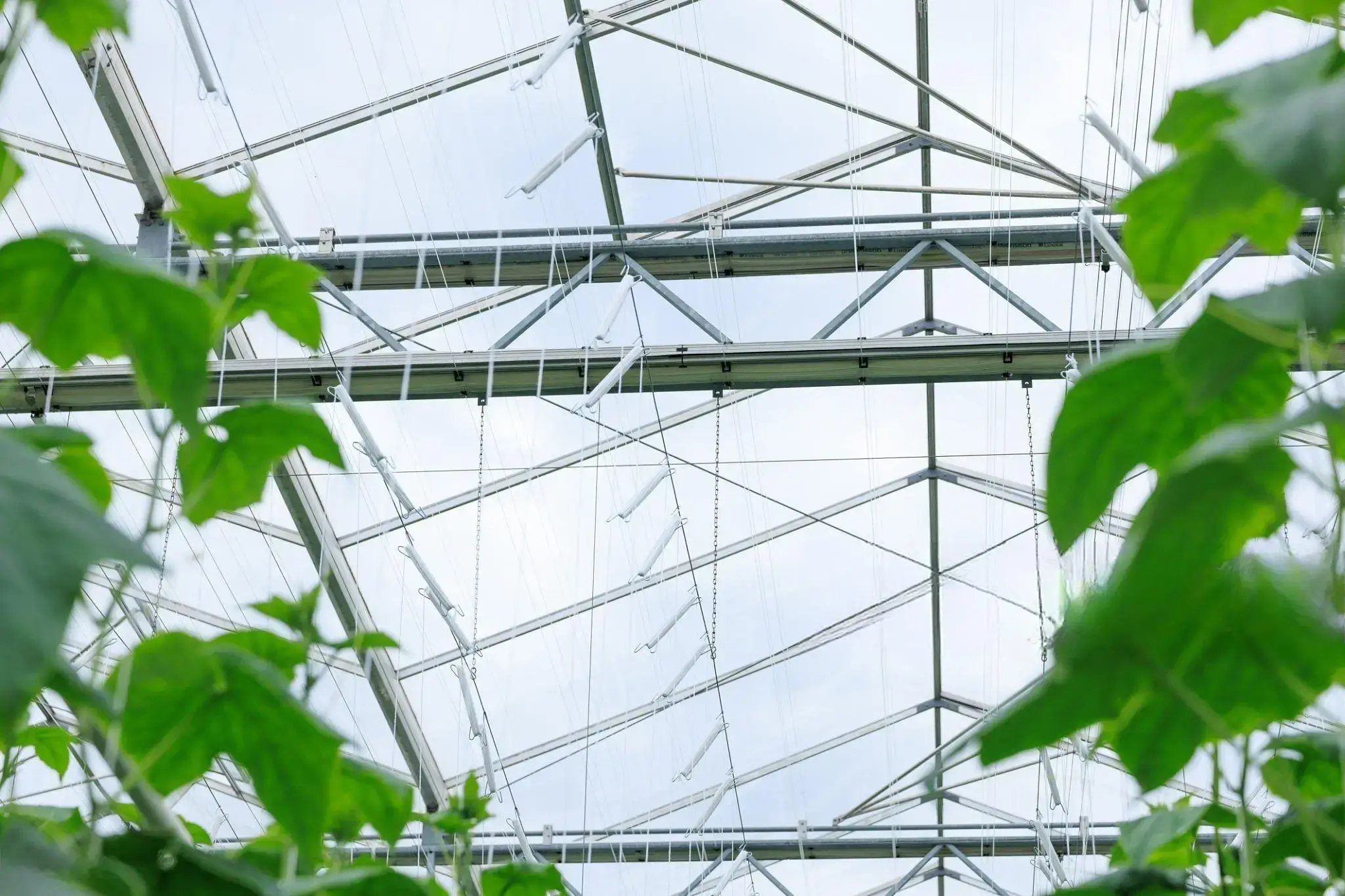
Penetrate Dense Foliage & Steel
Stop fighting multipath fading. By bypassing 2.4GHz Wi-Fi entirely, we utilize low-frequency physical waves for robust telemetry aggregation.
- Diffraction Physics: Operating between 410-525MHz, the VT-LR600 Modems effortlessly bend around metal structures and ignore water-dense tomato vines.
- Zero OPEX: Bridge TDR soil moisture and PAR sensor data up to 8km back to the main climate computer without individual 4G SIM fees.
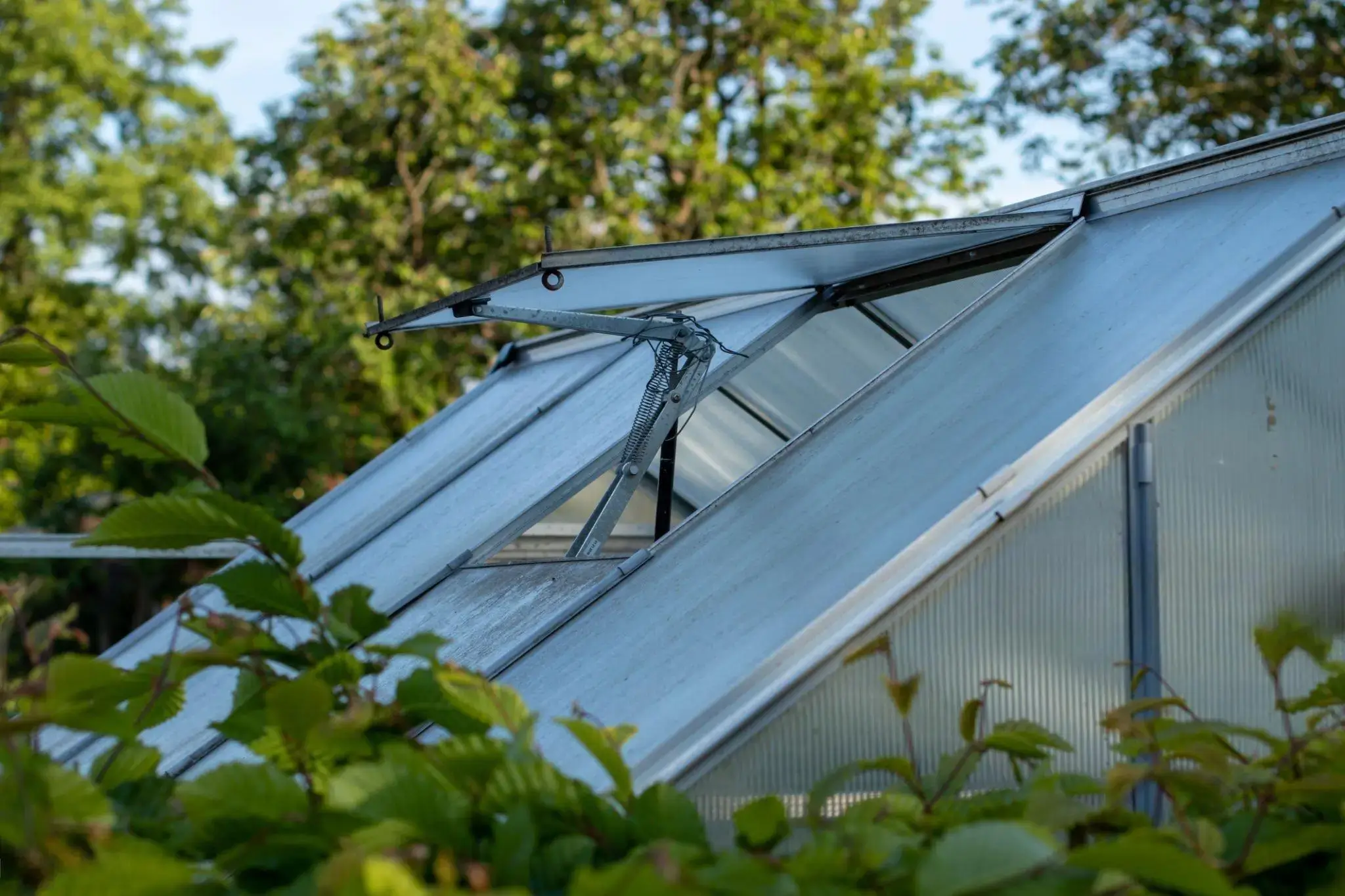
Failsafe Edge Control Saves Crops
Unlike standard LoRaWAN, our P2MP architecture does not rely on internet routing and acts as a “invisible RS485 cable”, keeping control loops wholly local.
- Transparent Polling: Your Siemens or Argus PLC natively polls remote NDIR CO2 sensors using Modbus RTU. No third party network server needed.
- Hardware Failsafe: The 8CH-IO controller is at the edge. If the master network fails, the “DI controls DO” logic can independently open emergency vents using local contactors as temperatures increase.
LoRa vs. Other Wireless Protocols
Deploying the correct wireless physical layer determines the survival of the project. Here is the engineering reality in agricultural settings.
| Network Layer | Hardware Model | Role in Greenhouse Architecture | Link |
|---|---|---|---|
| 1. The Edge Control | 8CH-IO-LTE / ETH | Digitizes 4-20mA sensors locally and provides offline actuation of vent motors via 5A Relay Outputs. | View I/O Series |
| 2. The Wireless Bridge | VT-LR600 / 601 | Point-to-Multipoint Transparent Bridge. Bypasses obstacles to beam data from the field to the main PLC without trenching. | View LoRa Series |
| 3. The Cloud Gateway | VT-LTE500 | Main Office Edge Gateway. Actively polls Modbus data, packages it into MQTT/JSON, and pushes it to your SCADA via 4G LTE. | View LTE500 |
Honest Engineering Boundaries
We build industrial telemetry, not consumer gadgets. To save your agricultural engineering team’s time, here is exactly when you should look elsewhere, and when Valtoris is the perfect fit.
This solution is NOT for you if:
- – You want to stream CCTV video or high-bandwidth imagery from the greenhouse. (LoRa is strictly for low-bandwidth Modbus telemetry data, not video).
- – You are looking for coin-cell battery-operated toys. (Our edge controllers drive heavy industrial contactors for vent motors and require a 9-24V DC industrial power supply or solar panel).
- – You need a turnkey farming SaaS app. (We supply the unbreakable hardware pipeline, allowing you to push JSON data to your own cloud).
You should deploy Valtoris if:
- + Your 2.4GHz Wi-Fi network constantly drops packets due to dense foliage and humid cooling pads.
- + You need to bridge legacy Modbus RTU fertigation machines and modern PLCs without spending thousands on cable trenching.
- + You require local failsafe actuation (e.g., opening roof vents) if the cloud connection is lost during a heatwave.
Zero-Code Configuration
Ditch the complex programming. Our hardware is fully configured through intuitive graphical interfaces, reducing deployment time from days to minutes.
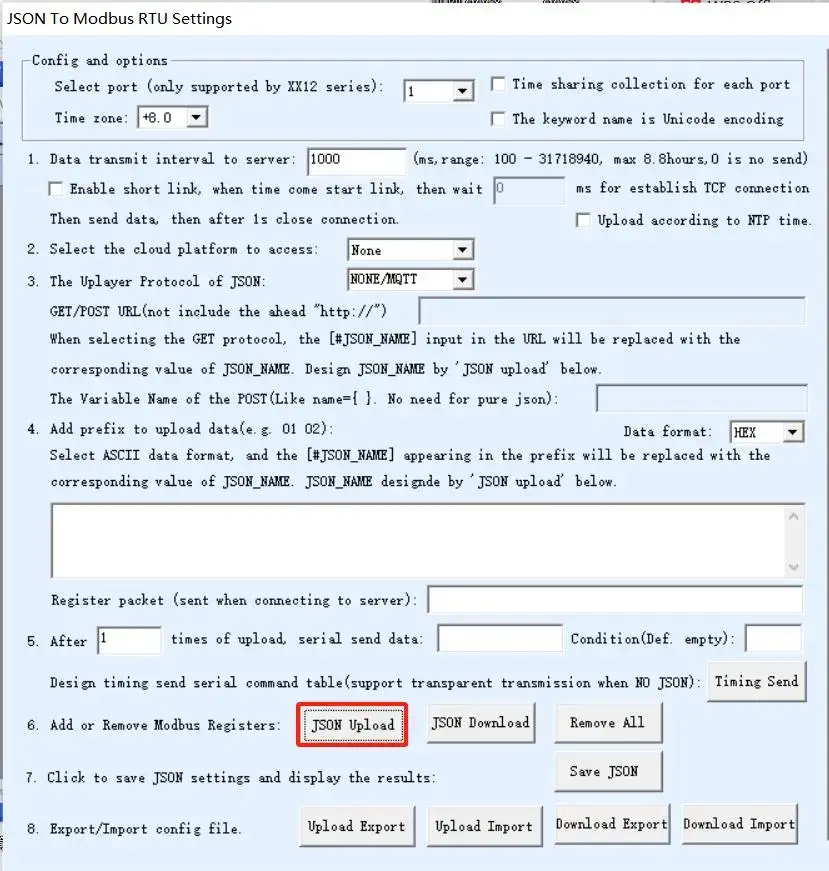
Recommended Hardware Stack
Radically lower your integration OPEX by utilizing these modular components.
| Hardware Model | Connectivity Type | Role in Greenhouse Architecture | Link |
|---|---|---|---|
| VT-LR600 / 601 | Private LoRa (Sub-GHz) | Point-to-Multipoint Transparent Bridge. Replaces RS485 trenching by bridging signals through dense foliage up to 8km. | View LoRa Series |
| 8CH-IO-LTE / ETH | Edge Logic I/O | Digitizes 4-20mA sensors locally (12-bit AI) and provides offline actuation of vent motors via 5A Relay Outputs (DO) working on 9-24V DC. | View I/O Series |
| VT-LTE400 | 4G LTE Cellular Router | Main Office Secure Gateway. Aggregates data from the VT-LR601 and pushes it securely to corporate headquarters via IPsec/WireGuard VPN. | View LTE Router |
RF Deployment Standard Operating Procedure
A robust greenhouse monitoring system requires strict adherence to Sub-GHz RF engineering principles.
1. RF Line-of-Sight & Antenna Placement
Sub-GHz max penetration is a function of the Fresnel Zone for install height. To send a signal 1 km at 470 MHz you need a clearance at the mid-point. Always install the VT-LR601 Gateway at a minimum of 3 meters above ground level. Under these conditions the SX1287 chipset reliably cuts through heavily obstructed facility infrastructure.
Critical Note: The VT-LR600 comes with a standard 1 meter external suction cup antenna. Magnetic bases deteriorate on oxidized steel common in greenhouses, so do not rely solely on the magnetic mount. Route the cable outside the metal cabinet and secure the antenna vertically using industrial strength zip ties.
2. Local Network Topology
A Point-to-Multipoint (Star) topology is a MUST. Do not do peer-to-peer mesh routing for environmental data. It adds latency and unneeded complexity to the network across green house aisles.
Configuration Tip: When connecting multiple Modbus RTU sensors to the 8CH-IO RS485 port, make sure each sensor has a unique Slave ID and the furthest node has a 120Ω termination resistor.
3. Bandwidth & Payload Tuning
Lock the VT-LR600 nodes to Spreading Factor 8 or 9 (SF8/SF9). It’s the perfect balance between getting through glass / steel barriers and keeping “Time-on-Air” low. strip unnecessary headers to keep payload under 140 bytes.
Download The Engineering Evaluation Kit
Integration is not a guessing game. Download full technical payload guides including full Modbus RTU Register Map, JSON Payload Structuring via MQTT and P2MP Configuration Manuals.
Go to Resource LibraryDeep Dive: Engineering FAQ
The 915MHz / 868MHz ISM band is public. What if the farm next door is also using LoRa?
Can the 8CH-IO module survive the corrosive and humid environment?
What if I have 5 different sensor clusters in 5 separate greenhouses? Do I need 5 receivers?
Do I need a third-party server to push data to Alibaba Cloud or AWS?
Do the edge controllers run on battery power, or do they require a mains supply?
Request a Free RF Topology Review
Stop wrestling with damaged cables and Wi-Fi dead zones. Submit your project details to our engineering team and get a clear, actionable wireless upgrade path.
What you will receive:
- ✓ 1-on-1 Engineering Consultation to evaluate your site constraints and coverage requirements.
- ✓ Draft Point-to-Multipoint Topology Map tailored specifically to your farm’s layout.
- ✓ Preliminary Hardware BOM Estimate for transparent budgeting and ROI projection.