
Industrial Serial Device Servers & Modbus Gateways
Rugged RS232/RS485 to TCP/IP & MQTT Converters Built for Deterministic IIoT
When connecting legacy field equipment to modern SCADA or cloud platforms, generic consumer hardware fails. Valtoris engineers robust industrial serial converters and Modbus gateways specifically designed for harsh environments. From compact DIN-rail units for control cabinets to high-density rackmount solutions, our hardware features true Modbus RTU to TCP parsing, MQTT support, and 3000V galvanic isolation.
Serial to Ethernet Converters
Designed for control cabinets and rack-mount infrastructures. Convert 1 to 32 serial ports to wired Ethernet LAN with zero latency and multi-master Modbus caching support.
Serial to WiFi Converters
Fill the gap in dangerous factory floors or mobile AGV setup. Deliver robust telemetry via Modbus over secure 2.4GHz wireless networks secured by WPA2-PSK without the prohibitive cost of physical wiring.
The Valtoris Serial DNA
Whether you choose Wired Ethernet or Wireless WiFi, every Valtoris device server is forged with the same uncompromising industrial baseline.
Up to 3000V Isolation
Select models feature optocoupler isolation that completely blocks destructive stray currents, eliminating RS485 ground loop noise in high-EMI environments.
Virtual COM Port & Redirector
Run legacy SCADA software over TCP/IP seamlessly. Our utility acts as a robust COM port redirector, mapping the remote server to a local Virtual COM port on Windows with zero code modification.
Built-in Modbus RTU/TCP Conversion
Not just bare transparent transmission. On-board processors function as a dedicated Modbus gateway, actively translating protocols and caching edge data to avoid polling collisions.
OT Network Security
Secure your fieldbus data with robust TCP connection password authentication, IP filtering, and WPA2-PSK encryption for wireless models to prevent unauthorized SCADA access.
Is Valtoris Right For Your Project?
We don’t build generic hardware for everyone. We engineer mission-critical connectivity for industrial integrators. Here is the absolute truth about who we serve best.
We Are The Perfect Fit If…
-
Harsh Industrial Environments You are deploying in control cabinets subject to extreme temperatures (-40°C to +85°C), heavy vibration, or severe electromagnetic interference (EMI).
-
Modbus Polling Stability You need true Modbus RTU/TCP parsing and local data caching to prevent bus collisions when multiple SCADA masters poll the same serial device simultaneously.
-
Legacy SCADA Integration You need to bring older RS232/485 PLCs, CNC machines, and energy meters onto a modern TCP/IP network seamlessly using Virtual COM Port (VCOM) redirectors.
We Are NOT A Good Fit If…
-
Climate-Controlled Office Use If you just need to connect an old printer to a PC in an air-conditioned room, a $15 consumer-grade USB-to-Serial cable from Amazon is enough. Do not pay for our industrial premium.
-
Battery-Powered IoT Sleep Nodes Our gateways require constant 9~24V DC power for high-speed deterministic routing. We are not designed for solar or battery-powered LoRa sleep nodes.
-
High-Speed Motion Control Serial servers cannot handle the nanosecond sync of Siemens S7 or CNC robotic arms. Need PROFINET or EtherCAT? Explore Our Industrial Switches Instead →
Featured Industrial Serial Device Servers
Skip the catalog. Here are the most deployed hardware platforms chosen by our system integrators.

1CH-RS485-ETH Converter
The ubiquitous DIN-rail standard. Single port RS485 to TCP/IP with 2KV surge protection and Modbus/MQTT support.
View Details →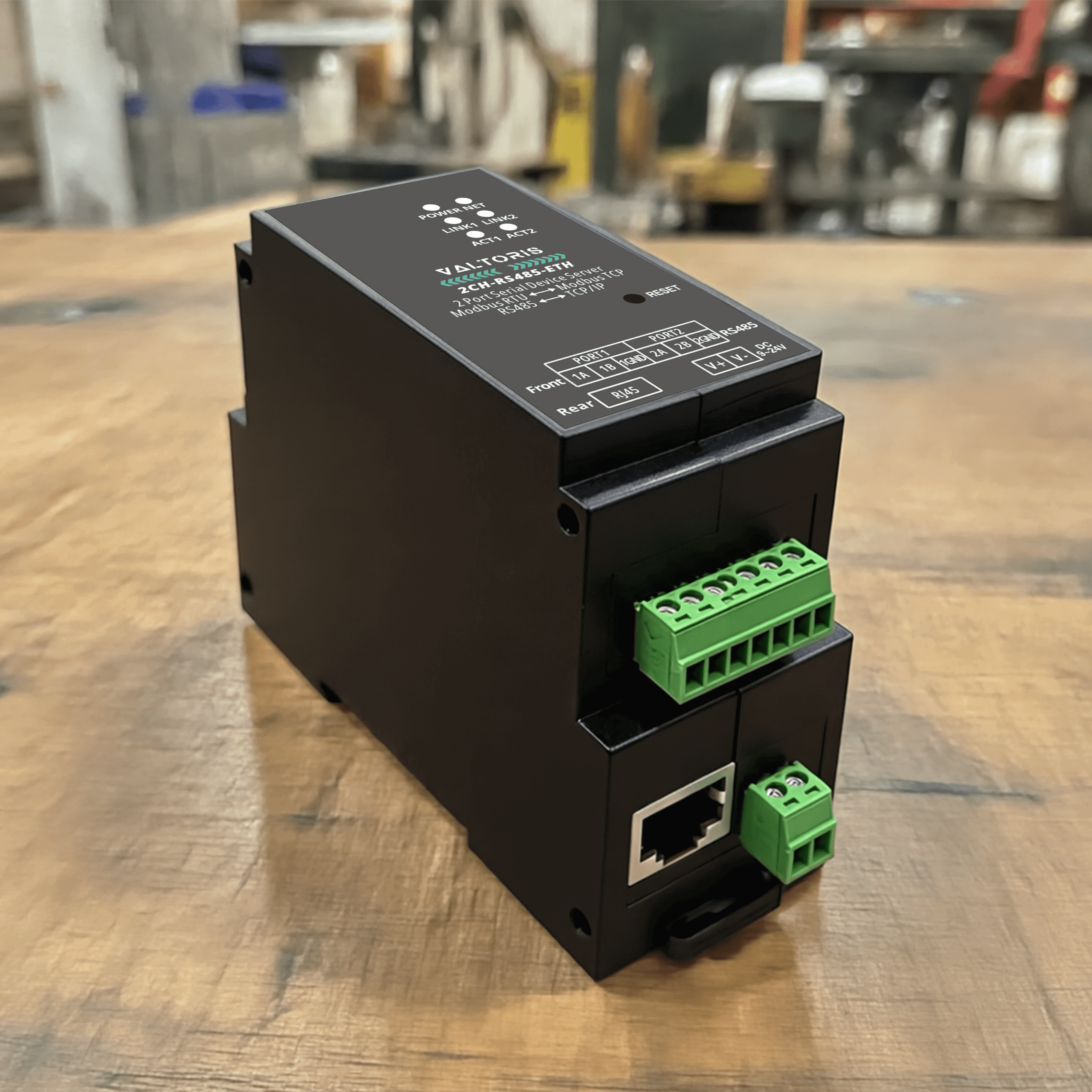
2CH-RS485-ETH Gateway
Compact dual-port RS485 to Ethernet module. Ideal for expanding multi-drop serial networks within a single enclosure.
View Details →
4CH-RS485-ETH (VI)
Built for VFD cabinets. 4 independent RS485 ports with 3000V optical isolation and dual Ethernet cascading.
View Details →
8CH-RS232/485-ETH
High-density 8-port DIN-rail converter. Features 3-in-1 serial ports, dual LAN for daisy-chaining, and native Modbus to MQTT/JSON conversion for direct cloud integration.
View Details →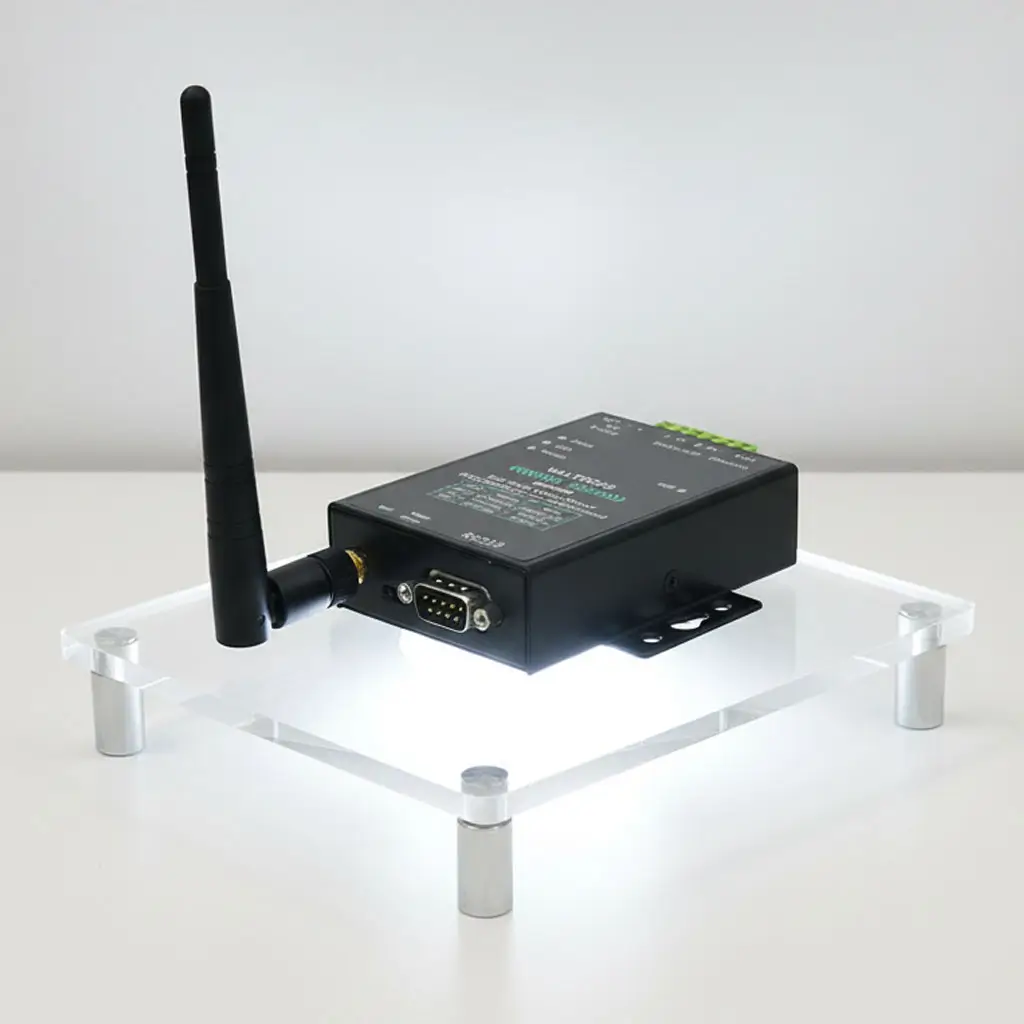
VT-WF100 Metal Gateway
Cut the cables. Industrial 3-in-1 serial (RS232/485/422) to 2.4GHz Wi-Fi bridge with WPA2-PSK security.
View Details →
32CH-RS232/485/422-ETH
Engineered for data center out-of-band (OOB) management. This 1U rackmount serial console server condenses 32 ports into a built-in gigabit switch for secure IT infrastructure access.
View Details →Industrial Connectivity Resources
Explore architectural guides, protocol tutorials, and deployment strategies.
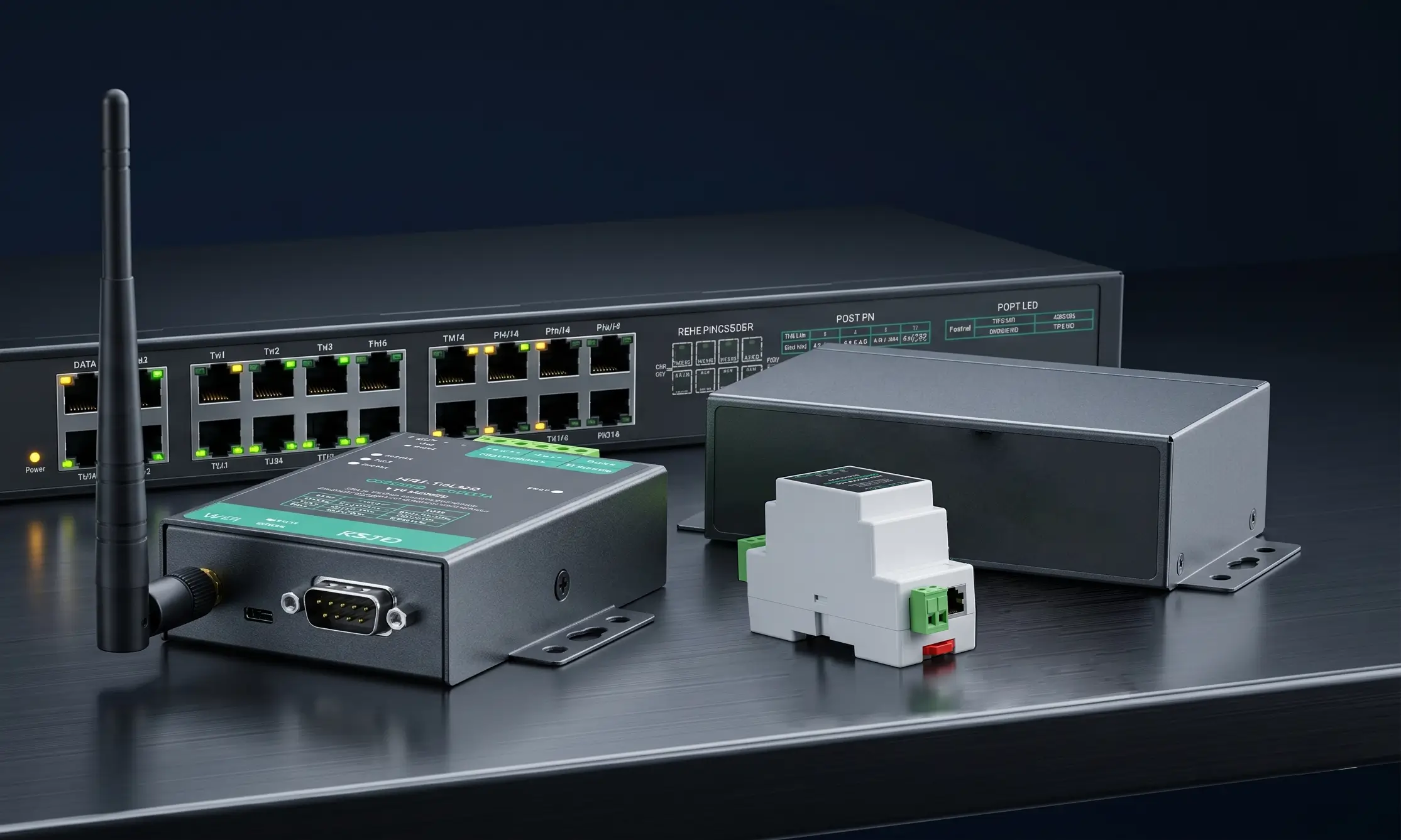
What is a Serial Device Server? One Device, Three Jobs
Understand the core mechanics of bridging legacy RS232/RS485 networks to modern Ethernet infrastructure.
Read Guide →
How to Set Up Remote CNC Control via RS232 Serial Server
A complete architectural walkthrough for integrating Fanuc and Haas CNC machines into your factory MES using DNC drip-feeding.
Read Guide →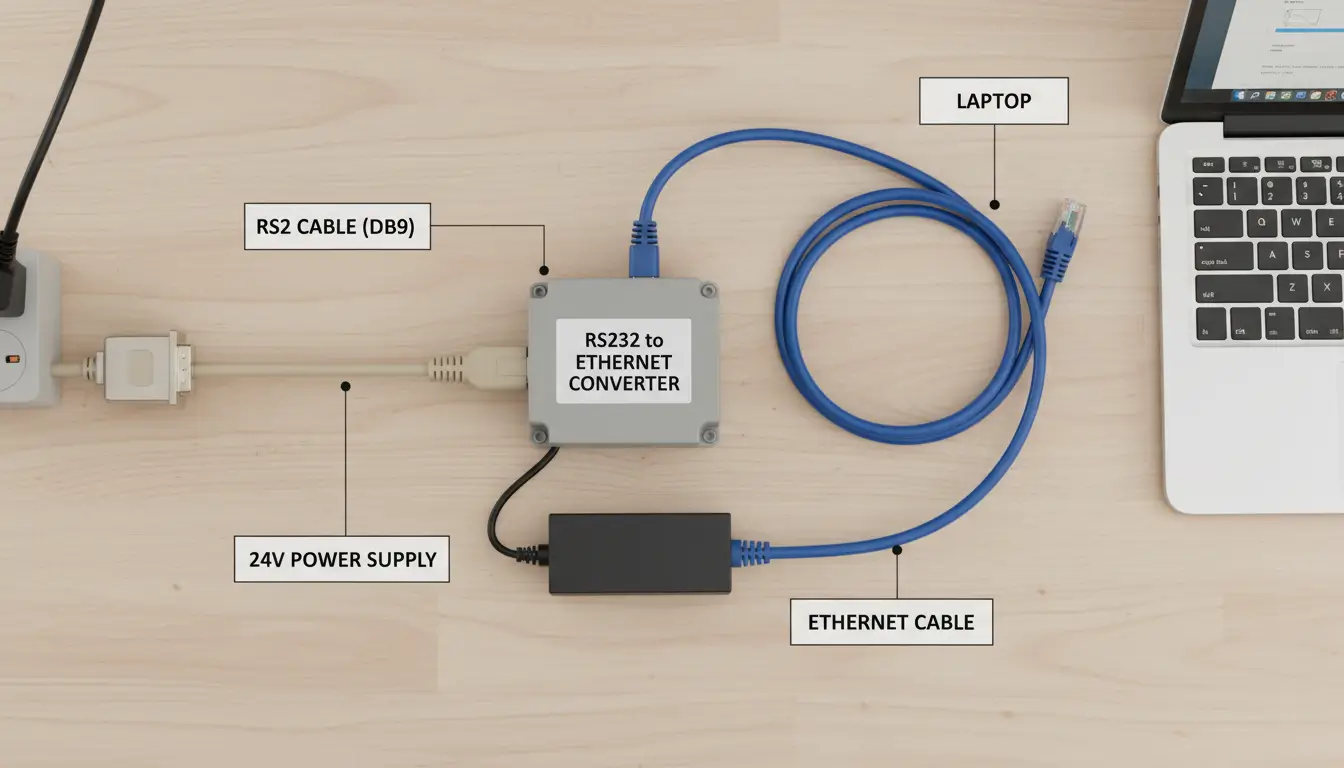
Serial to Ethernet Converter Software: When You Need It
Demystifying Virtual COM Ports (VCOM) and Socket programming. Learn when to use redirector utilities versus native TCP/IP commands.
Read Guide →Ready for a Quote on Your Serial Device Server?
Having a hard time finding the right serial device server or Modbus gateway for your industrial application? Don’t worry. We’ll help you out. Contact us today and we’ll find the perfect connectivity solution for you.
Request Your QuoteFrequently Asked Questions
Q1: How do I connect multiple serial devices to a single Ethernet connection?
A: There are 2 industrial approaches. First, combine multiple local devices into one RJ45 uplink using a multi-port serial port server (e.g., our 4-port or 8-port DIN-rail units). Second, employ a Daisy-Chain Topology. Serial servers with dual Ethernet ports act as an unmanaged switch. You can daisy chain them and completely remove the need for outside industrial switches in your cabinet.
Q2: My legacy SCADA software only recognizes local COM ports (COM1, COM2). How can it read data from an Ethernet serial server?
A: You do this with a Virtual COM Port (VCOM) program. Our servers include a utility that installs on your Windows or Linux host. It maps the remote serial device server IP address to a virtual local COM port. Your legacy software will work as if the RS232/RS485 device was directly plugged into the back of the PC.
Q3: What is the difference between simple “Transparent Transmission” and a true “Modbus Gateway”?
A: Transparent transmission just puts the original serial data into TCP packets and blindly sends it. This is fine for basic ASCII data, but it often causes timeout errors and bus lockups when polling Modbus RTU due to network latency. A true Modbus TCP/IP Gateway actively translates the protocol from Modbus RTU. It manages slave IDs, packet parsing and buffers data locally to avoid polling conflicts and provide instantaneous SCADA responses.
Q4: Do I need separate device servers for RS232 and RS485 equipment?
A: Not if you pick a versatile 3-in-1 model. Our next generation serial connectivity devices combine all three major serial interfaces (RS232/485/422) into one device. This enables system integrators to standardize on one hardware model over an entire plant, with easy bridging between legacy RS232 PLCs and long-haul RS485 sensor networks.
Q5: Can multiple SCADA masters poll the same serial device server at the same time?
A: Basic transparent converters will lock up or return garbled data if two TCP hosts poll the same RS485 bus simultaneously. As a specialized manufacturer of serial connectivity, our advanced servers feature built-in Multi-Host support and Modbus storage caching. This allows multiple SCADA systems to query the server concurrently, returning data in milliseconds without causing serial bus collisions.
Q6: How do these servers handle power surges and ground loops in factory environments?
A: Consumer-grade converters will fail instantly under electrical stress. Because serial connectivity is our core engineering advantage, Valtoris industrial units are built with robust electromagnetic isolation (EMI), dedicated serial port surge protection (up to 3000V optical isolation on select models), and wide-voltage inputs (e.g., 9-24V DC). They are rigorously tested to survive the harsh electrical transients common in power distribution and heavy manufacturing.