
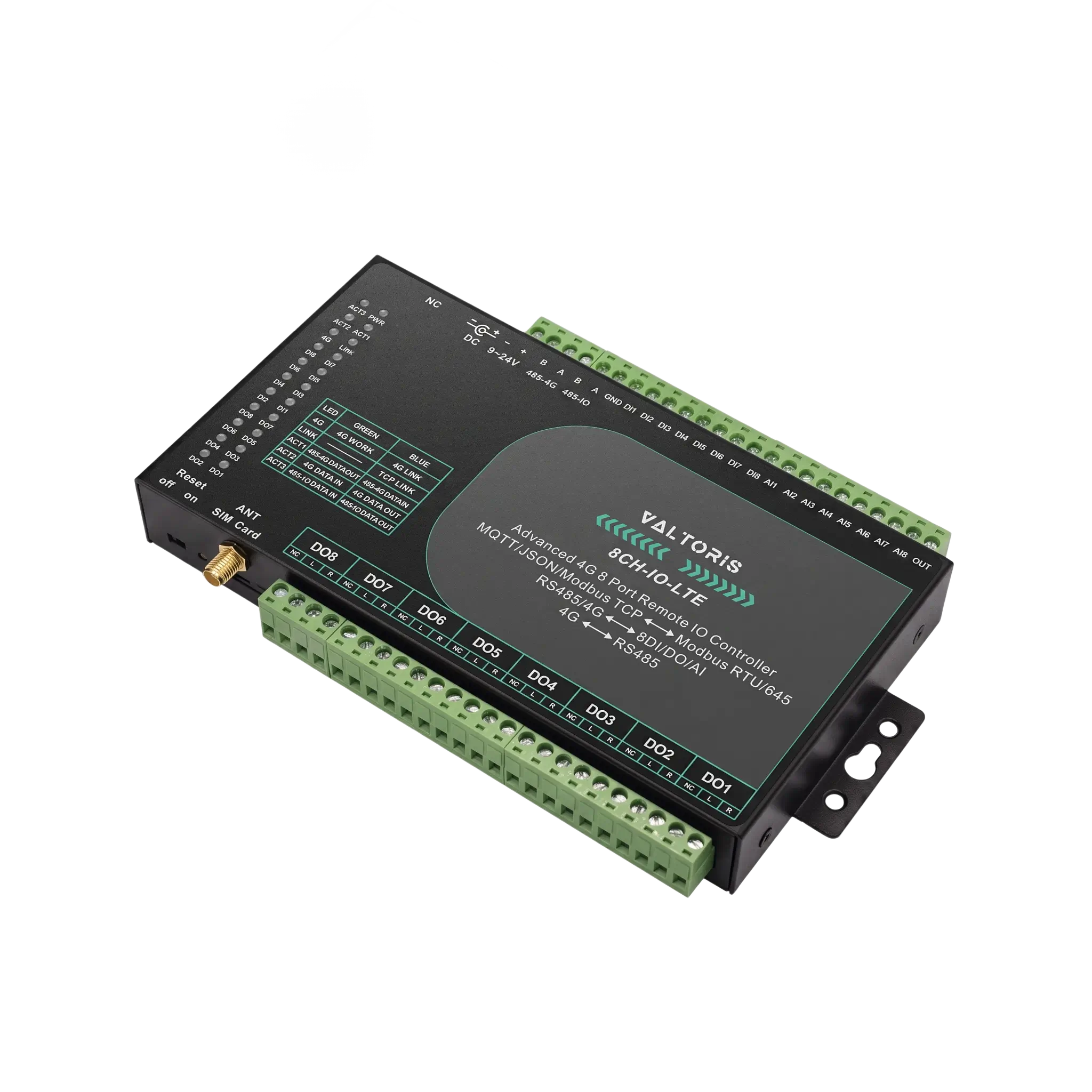
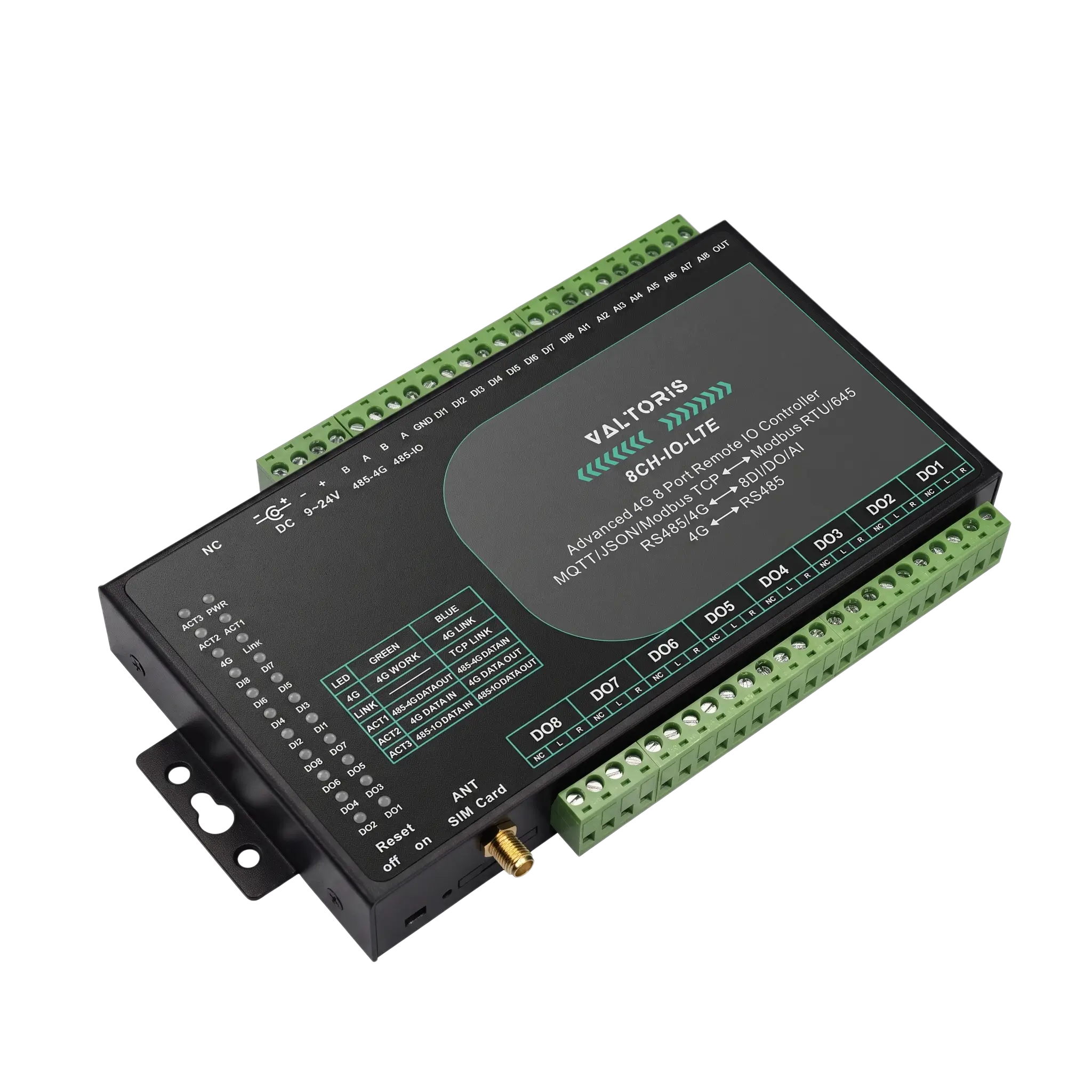

Cellular Remote I/O & Off-Grid Telemetry
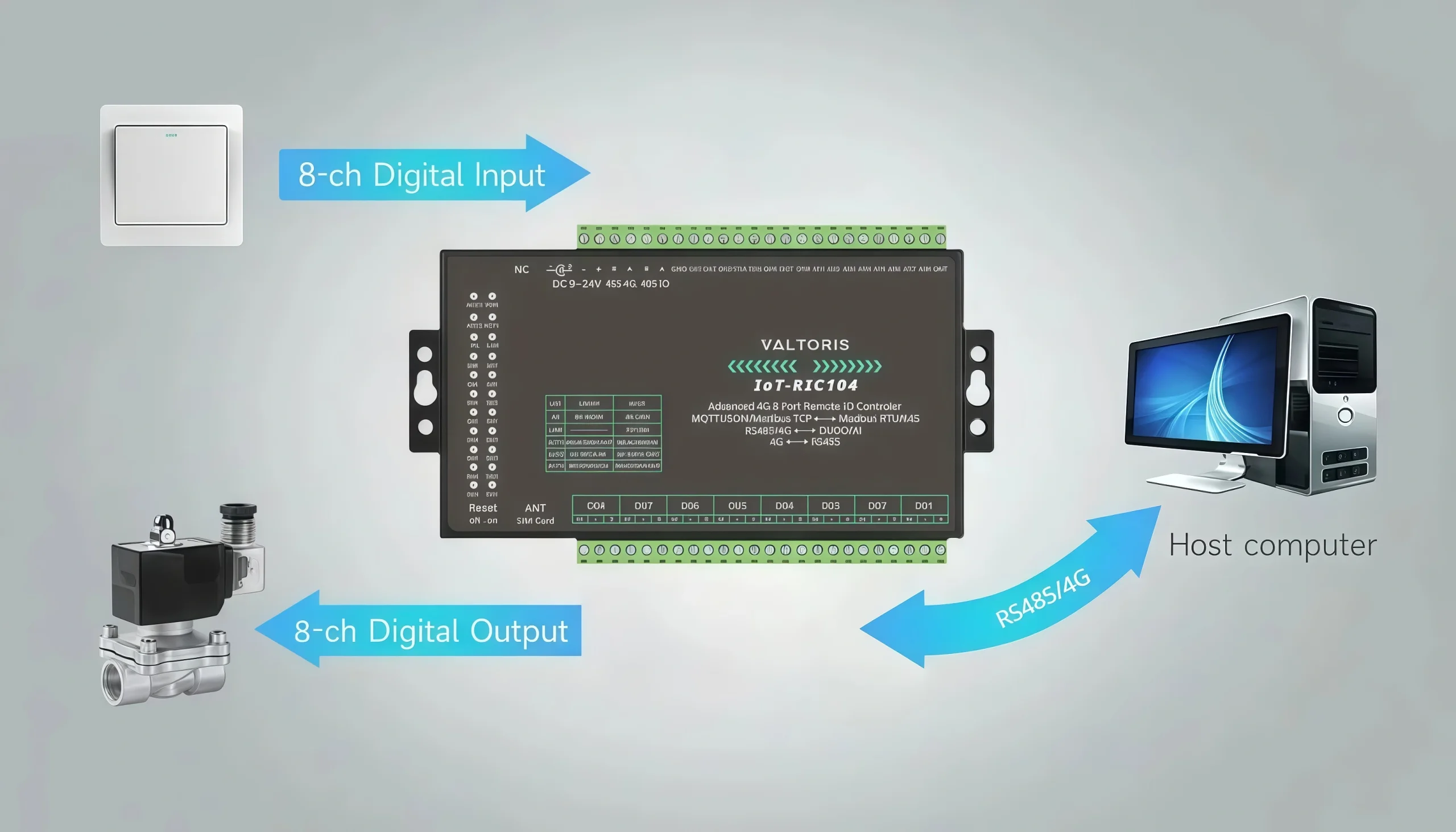
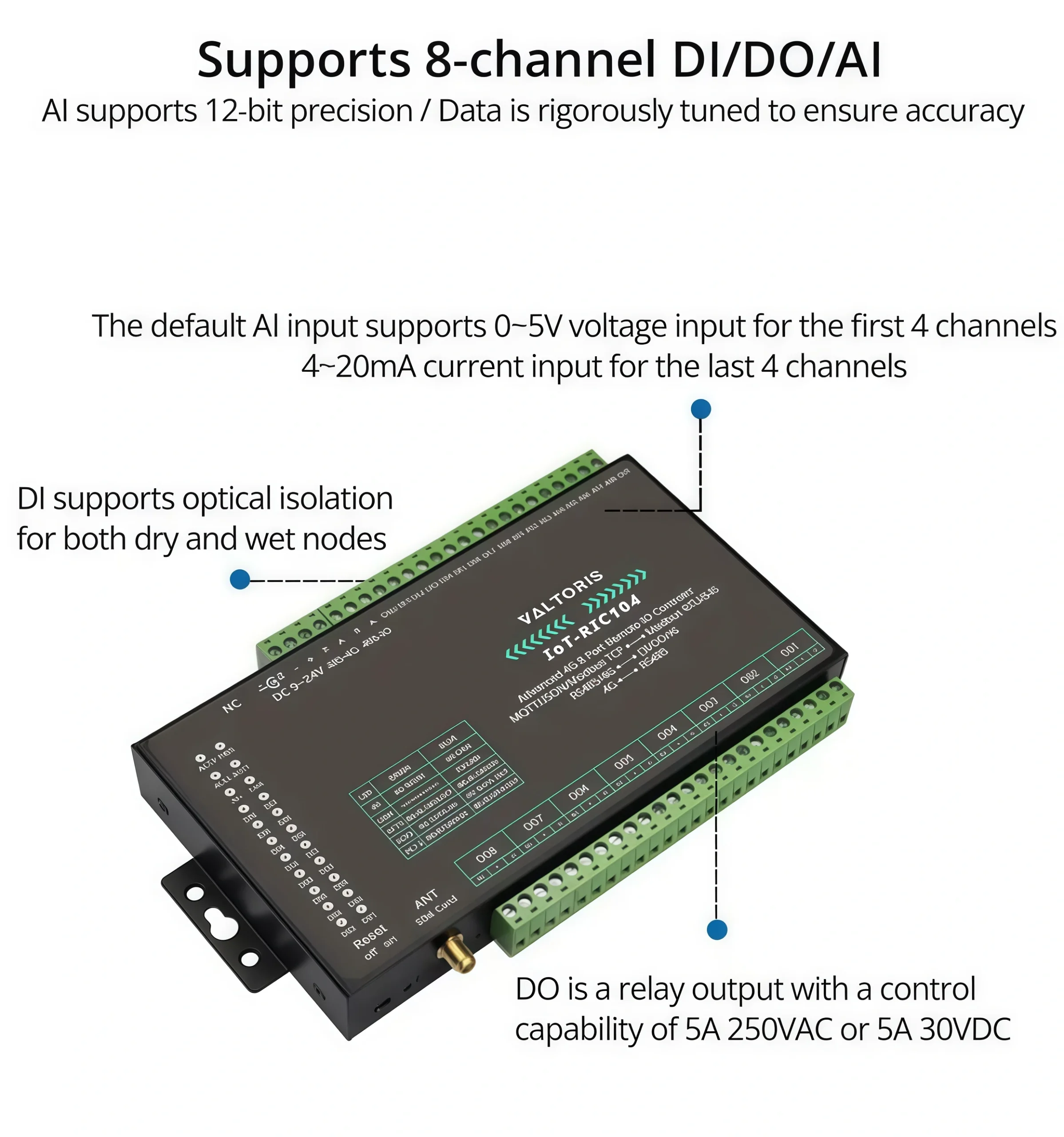
This 8-Channel 4G LTE I/O Controller securely connects isolated field assets directly to your SCADA system or cloud. It actively monitors 8DI/8AI and controls 8DO using standard 4G LTE networks, eliminating the need for expensive trenching or micro-PLCs.
Consolidated I/O Density & Serial Gateway
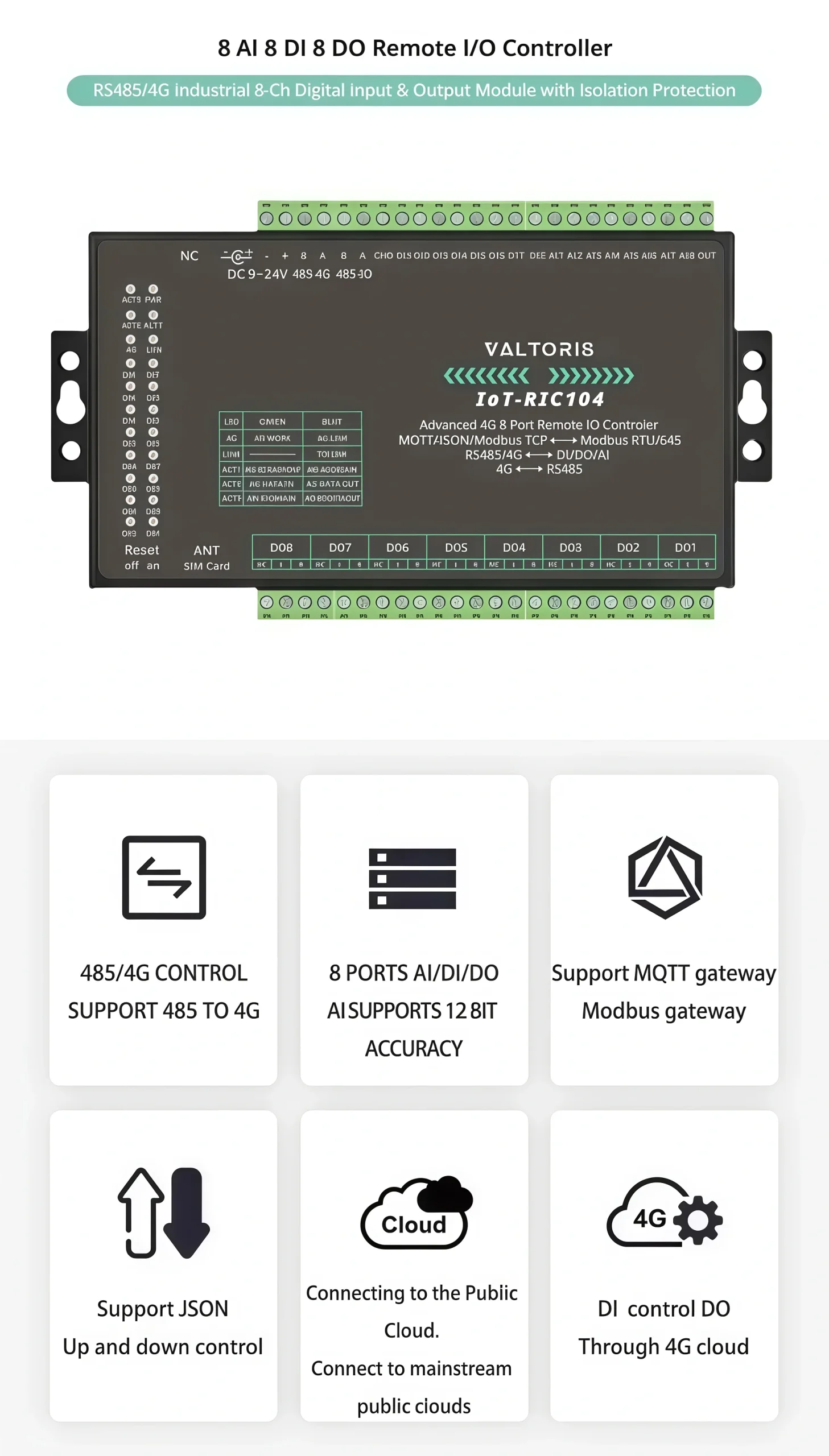
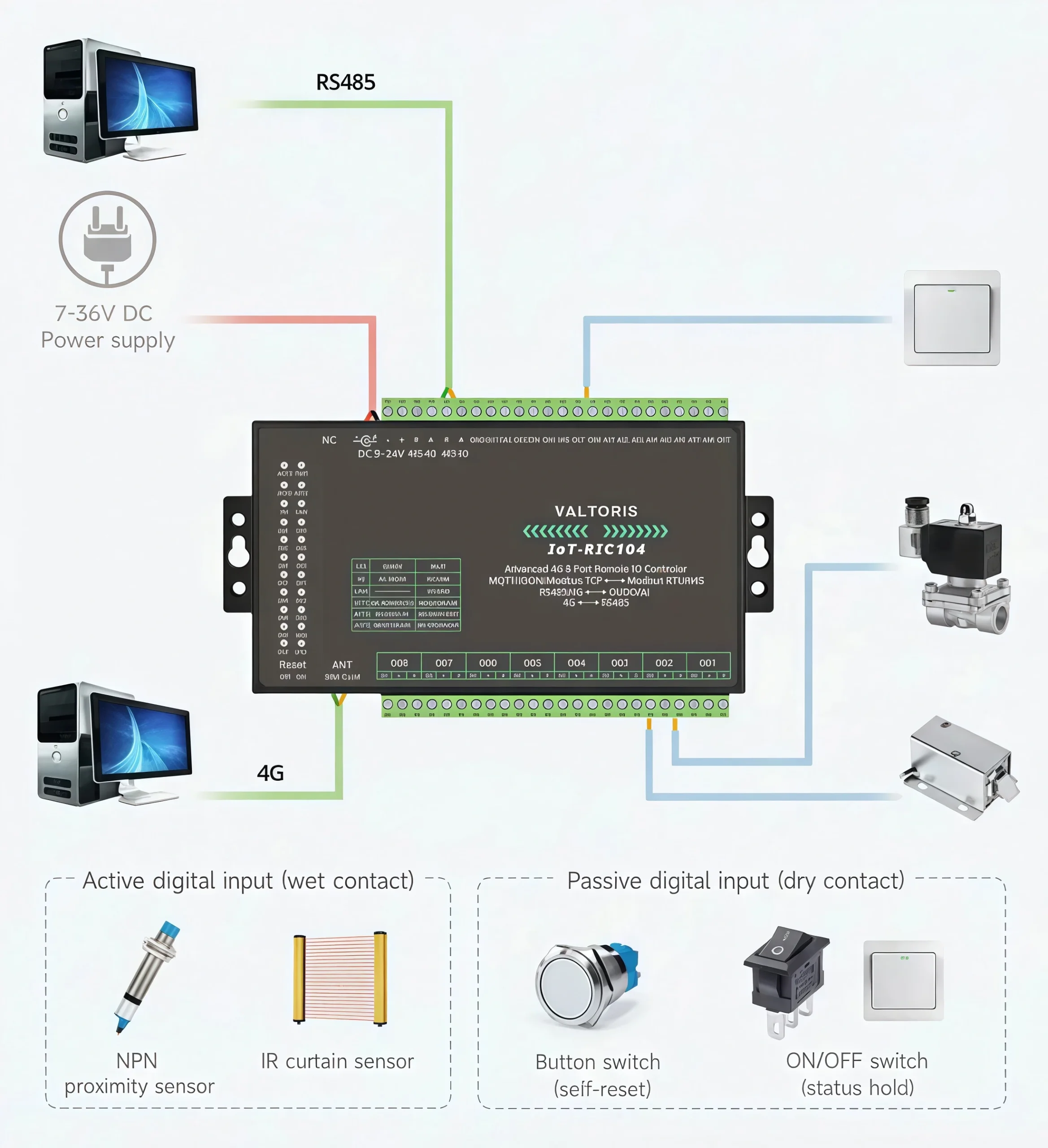
The unit is equipped with a dedicated RS485 port and 24 channels of mixed I/O. It works as a transparent serial server and enables you to daisy chain third-party Modbus RTU devices (like flow meters) and send their data over cellular networks.
Native MQTT & Modbus Protocol Support
It integrates natively with AWS, Azure and private IoT clouds. It natively supports conversion for MQTT, JSON, HTTP and Modbus TCP/RTU. There is no complex edge programming needed and JSON payloads are fully customizable.
Peer-to-Peer (P2P) Control & Edge Logic
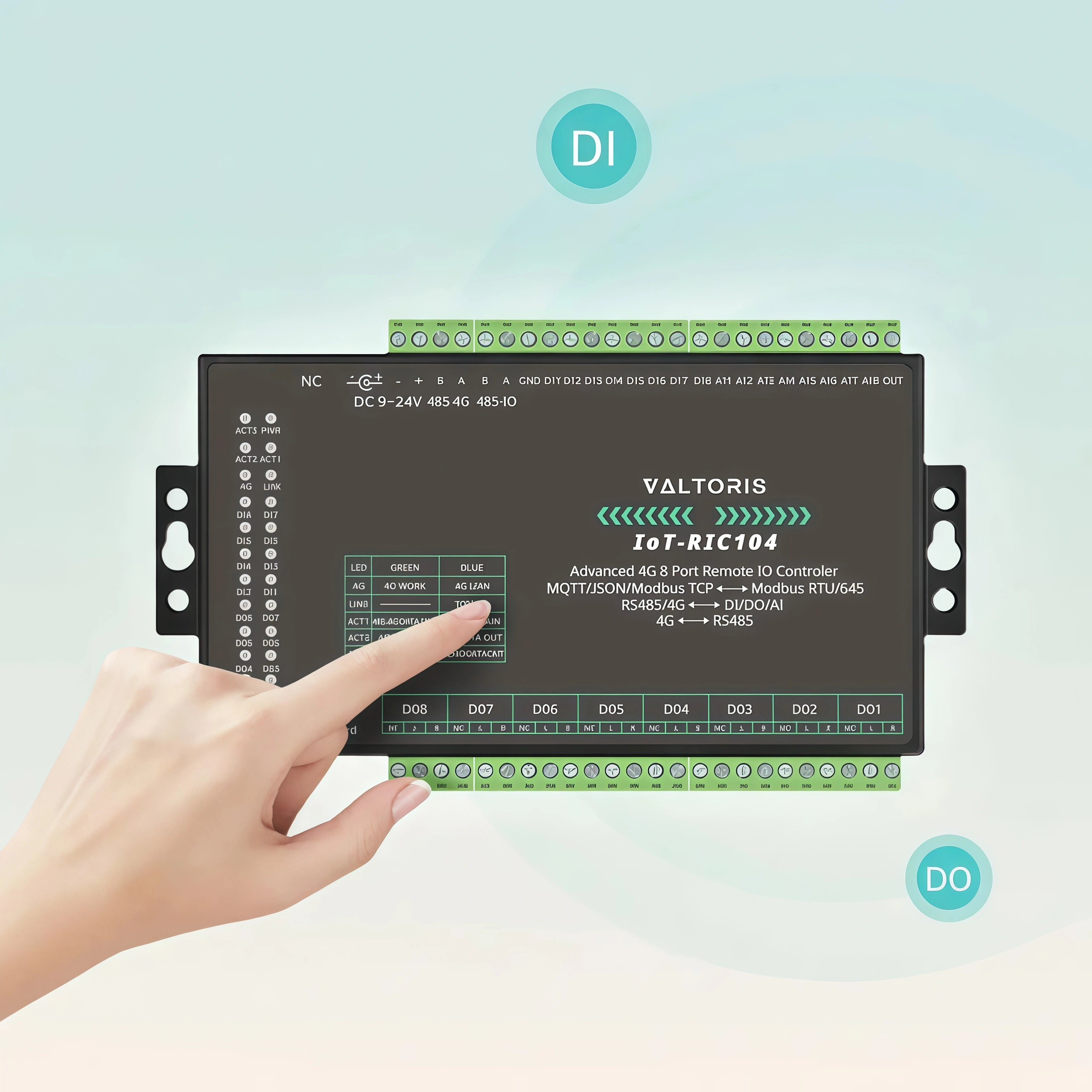
Use 4G to connect two devices and make a wireless P2P tunnel. A Digital Input fired on Device A opens the corresponding relay on Device B immediately. It also provides for local active reporting of critical alarm conditions.
Comprehensive Diagnostic Indicators
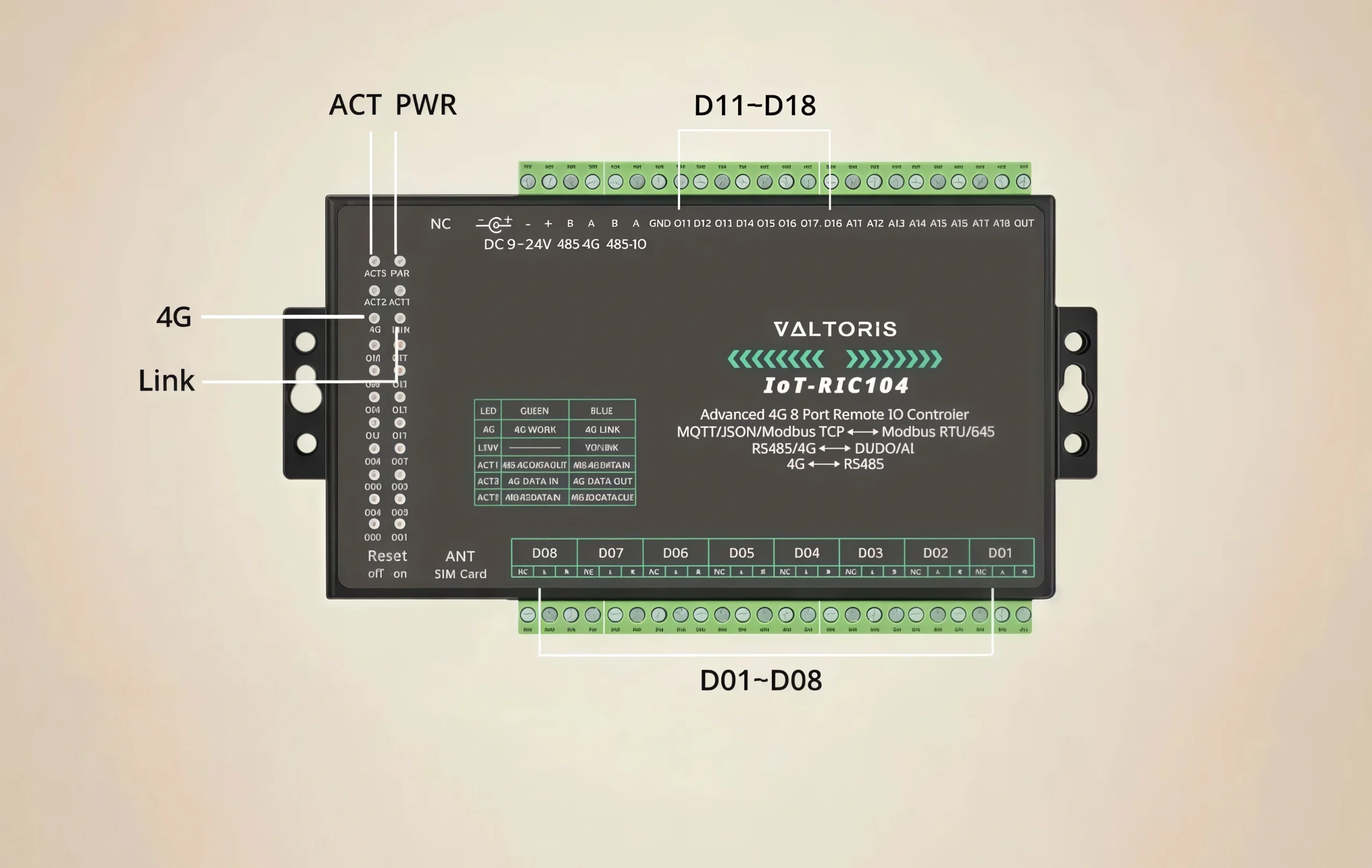
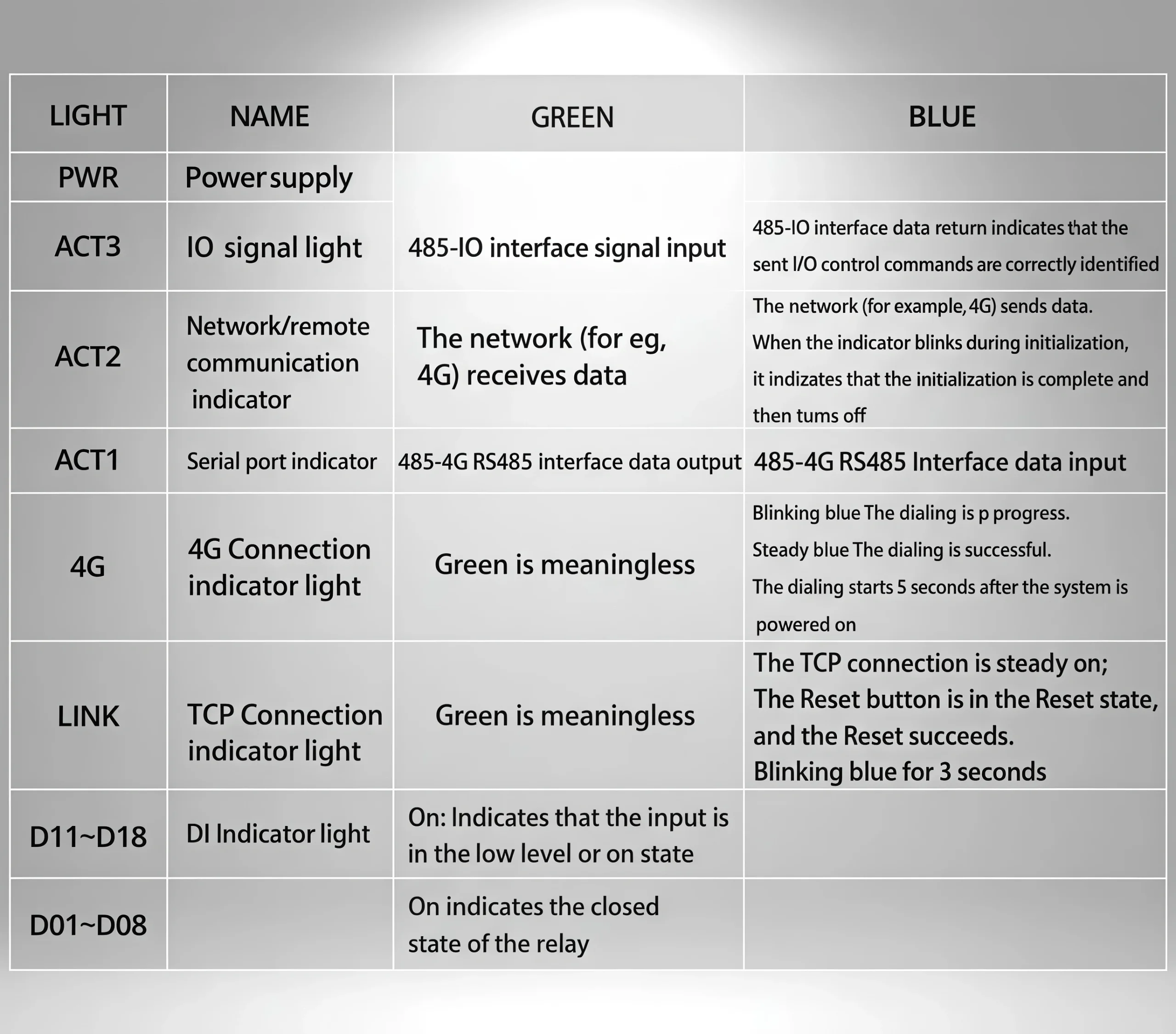
Front panel LEDs provide immediate visual feedback for 4G link stability, Modbus data flow, and relay status, simplifying on-site diagnostics.
Product Show
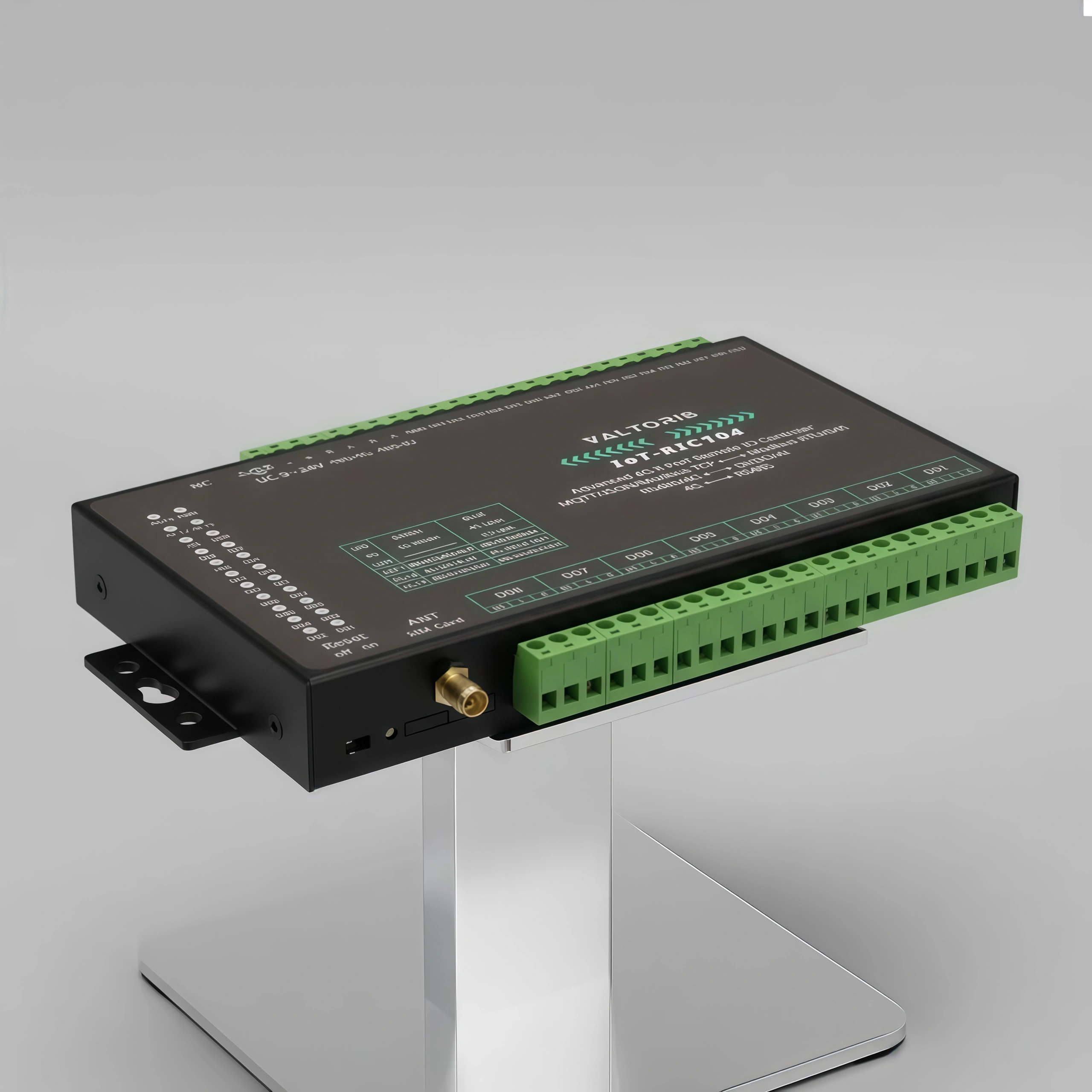
Remote I/O Controller Selection Guide
| Model | I/O Density | Network Uplink | Power Input | Dimensions (mm) |
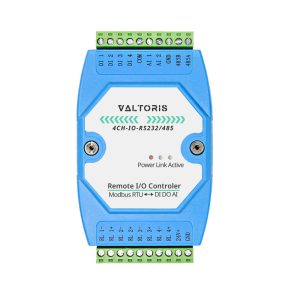 4CH-IO-RS232/485 | 2 AI / 4 DI / 4 DO | Serial (RS232/485) | Terminal (DC 9~24V) | 121 × 72 × 34 |
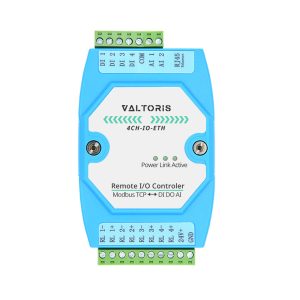 4CH-IO-ETH | 2 AI / 4 DI / 4 DO | Ethernet (TCP/IP) | Terminal (DC 9~24V) | 121 × 72 × 34 |
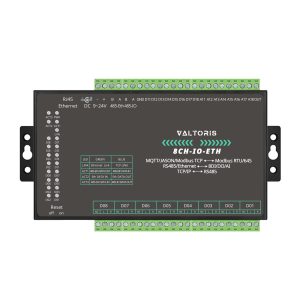 8CH-IO-ETH | 8 AI / 8 DI / 8 DO | Ethernet (TCP/IP) | Terminal + DC Jack | 197 × 92 × 25 |
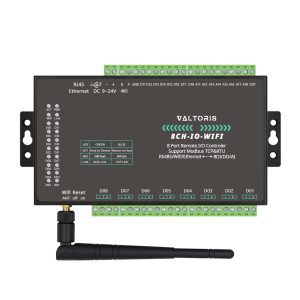 8CH-IO-WF | 8 AI / 8 DI / 8 DO | Wi-Fi (Wireless) | Terminal (DC 9~24V) | 197 × 92 × 25 |
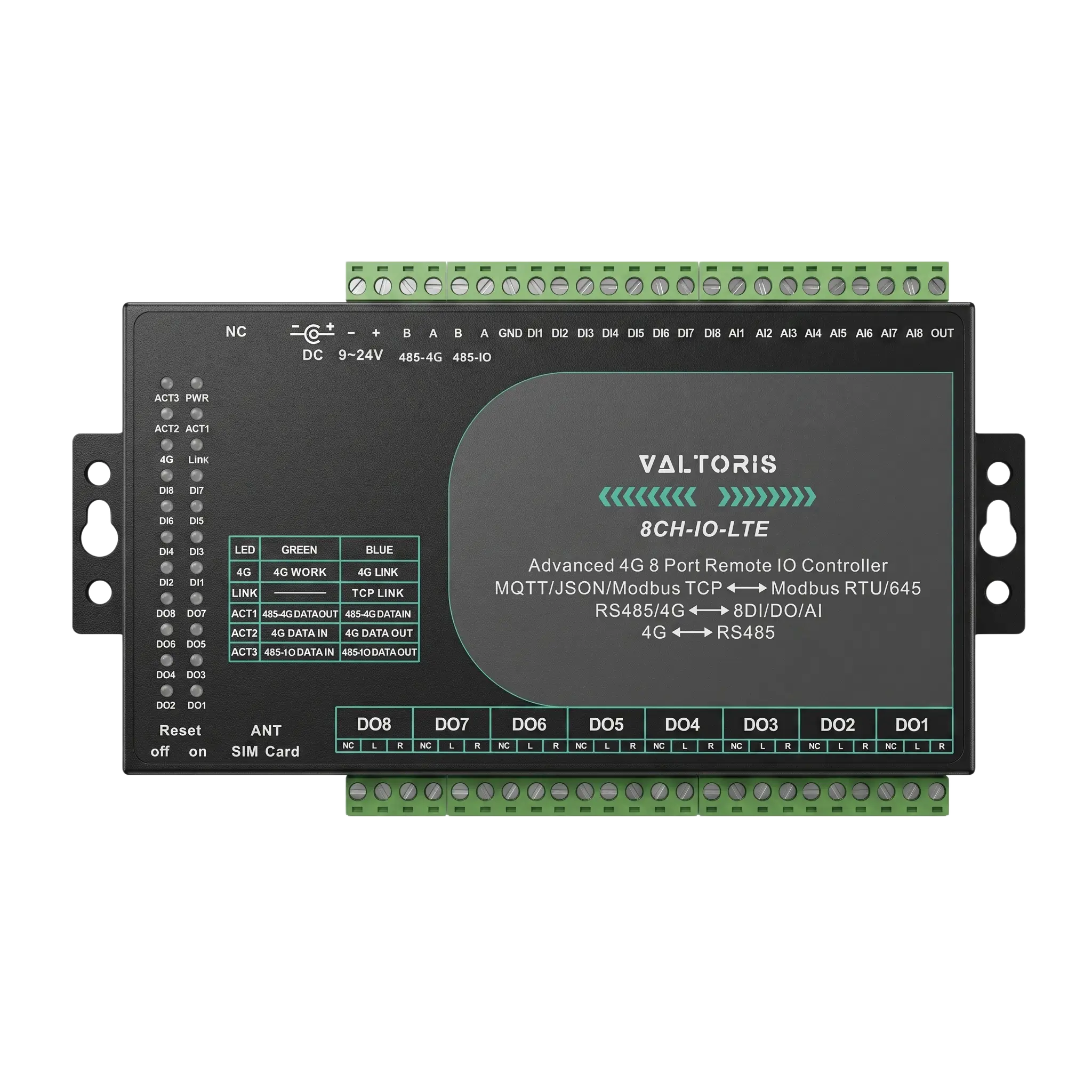 8CH-IO-LTE | 8 AI / 8 DI / 8 DO | 4G LTE (Cellular) | Terminal + DC Jack | 197 × 92 × 25 |