
IT/OT Convergence Architecture:
Bridging Edge and Cloud Solutions
Eradicate “Protocol Hell” and network drops. Empower your infrastructure with hardware-level Modbus-to-MQTT conversion, IC watchdogs, and failsafe edge actuation.
Explore Edge Architecture ↓The Bottleneck: Why Standard Architectures Fail
“Protocol Hell”
Modern cloud dashboards speak MQTT and JSON, while legacy field PLCs and valves speak rigid Modbus RTU/TCP. Custom middleware scripts on consumer boards constantly crash, trapping vital data in the cloud.
Fatal Network Drops
When the cellular signal drops in a remote field, cloud-dependent valves get stuck open. Relying on standard routers without IC hardware watchdogs guarantees catastrophic floods and downtime.
Lightning & Surge Strikes
Running miles of copper sensor wires across open fields acts as a massive antenna. A single lightning strike or EMI surge can cascade and destroy your entire central networking rack.
Our Strategy: Hardened Edge Intelligence
1. Hardware-Level Protocol Translation
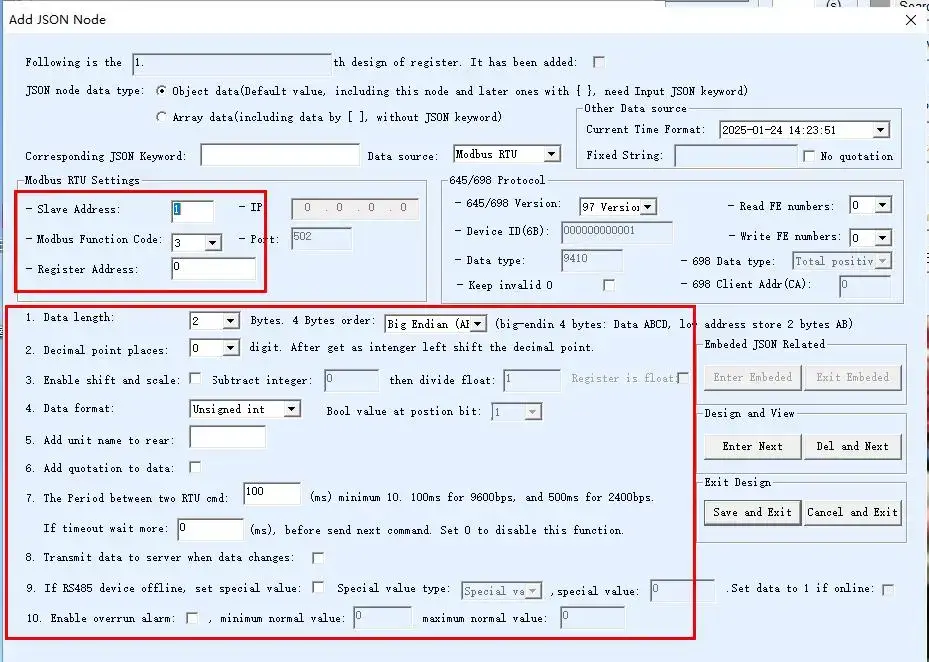
Deploy embedded serial gateways that natively subscribe to AWS/Azure MQTT brokers, instantly parsing incoming JSON payloads and translating them into field-ready Modbus commands with zero coding required.
2. Autonomous Failsafe Execution
Equip edge panels with industrial 4G routers featuring deep IC hardware watchdogs. Combined with Remote I/O controllers, the edge executes closed-loop actuation locally, even if the primary cloud link drops.
3. RS485 Galvanic Isolation (Air-Gap Defense)
Segment your RS485 network using opto-isolated hubs. Electrical signals are converted to light, physically blocking massive lightning surges and chassis EMI from reaching core infrastructure.
Interactive IT/OT Topology Map
Click the functional modules below to reveal their edge computing logic.
Node Info
The Blueprint: Recommended Hardware Stack
* All recommended modules are engineered for extreme environments, featuring wide-voltage DC input (9V-48V), heavy-duty EMI shielding, and a -40°C to 85°C operating range to guarantee uninterrupted deployment.
← Swipe to view full details →
| Functional Module | Key Edge Computing Specs | Recommended Hardware |
|---|---|---|
| Cellular Edge Router |
• IC Hardware Watchdog Auto-Reboot • Smart 4G/WAN Link Failover • Wide-Temperature Tolerant | Valtoris VT-LTE400 → |
| Protocol Bridge Node |
• Native MQTT to Modbus TCP/RTU • Bi-directional JSON Parsing • No Custom Middleware Required | Valtoris 1CH-RS232/485-ETH → |
| Physical Defense Hub |
• Photoelectric Air-Gap Isolation • Complete Lightning Surge Blocking • Prevents Cascading RS485 Failures | Valtoris 8CH-HUB-RS485 → |
| Remote Execution Node |
• 4-20mA Analog Input (AI) Sensing • Mechanical Relay (DO) Actuation • Closes the Automation Loop Locally | Valtoris 8CH-IO-ETH → |
Honest Engineering Boundaries
We build hardened data pipelines, not consumer microcomputers. To save your IT/OT team’s time, here is exactly when you should look elsewhere, and when Valtoris is the perfect fit.
This stack is NOT for you if:
- – You want to run heavy Linux/Windows Edge AI Vision Models directly on the gateway. (Our devices run lightweight, deterministic RTOS strictly for Modbus/MQTT translation, lacking the GPU/CPU for video analytics).
- – You need a full-suite Turnkey SCADA SaaS Platform. (We provide the unbreakable hardware data pipe; you supply your own AWS, Azure, or Ignition dashboard).
You should deploy Valtoris if:
- + Your IT department demands JSON over TLS/SSL, but your legacy field equipment only outputs raw Modbus RTU/TCP.
- + You need hardware-level lightning/surge protection (Galvanic Isolation) because your RS485 lines span miles across open fields.
The Architect’s Deep Dive: Overcoming the IT/OT Divide
A comprehensive technical breakdown of protocol translation, hardware watchdogs, and edge failsafes.
Protocol Hell: Bridging Cloud Dashboards with Legacy Field PLCs
In terms of IT, modern cloud computing architectures are built on lightweight, async protocols such as MQTT, and the payloads are JSON. JSON’s human-readable key-value pairs are very elegant for web applications and big data analysis. The execution layer (remote VFDs, PLCs and solenoid valves), however, does not have the computational power to parse JSON or connect to a MQTT broker.
Modbus RTU (over an RS485 physical layer) and Modbus TCP are the standard protocol for industrial field hardware. Modbus uses hard hex register addresses. When an algorithm publishes a JSON message to actuate a pump, the field PLC cannot interpret it without translation to hardware level. Traditionally this gap was closed by deploying fragile, consumer-grade microcomputers running bespoke Python scripts that crash in extreme temperatures. Modern infrastructure relies on purpose-built Modbus to MQTT gateways that ingest JSON natively and automatically output Modbus commands.
Edge Computing: Failsafe Actuation When Networks Drop
Remote infrastructure operates in environments vulnerable to extreme weather and network instability. If an automated system relies 100% on cloud processing to command valves to close, a 4G network drop means valves remain stuck in the “open” position, resulting in catastrophic process failures.
Robust IT/OT integration demands a localized Edge Failsafe Networking strategy. Central control panels must utilize industrial cellular routers featuring Independent Circuit (IC) hardware watchdogs. These watchdogs constantly run ICMP ping tests to external IPs. If the cellular network silently degrades, the watchdog physically pulls power to the modem module at the pin level, causing an independent cold boot to restore the connection without human intervention.
Beyond Dashboards: Achieving Closed-Loop Control
Visualizing data on a smartphone is helpful, but true automation requires Closed-Loop Control. To physically turn a valve, a digital cloud command must ultimately become a physical electrical current. This is where advanced Remote Edge I/O Controllers bridge the final millimeter.
- High-Fidelity Sensing (AI/DI): Edge controllers collect 4-20mA Analog Inputs (AI) directly from pressure and flow transmitters. Unlike 0-5V signals, 4-20mA current loops travel thousands of feet across noisy factory floors without losing accuracy.
- Mechanical Execution (DO): When edge logic determines an action is necessary, the controller’s built-in relay—a Digital Output (DO)—physically closes an internal circuit, sending a 24V DC payload directly to the solenoid valve or contactor.
Get the 2026 IT/OT Integration Blueprint
Ready to eradicate “Protocol Hell”? Download the high-resolution PDF architectural schematic instantly, complete with MQTT-to-Modbus parameter mapping and hardware failsafe guidelines.
IT_OT_Edge_Architecture.pdf
✓ Open Access: No email required.
✓ Includes Failsafe Watchdog Setup.