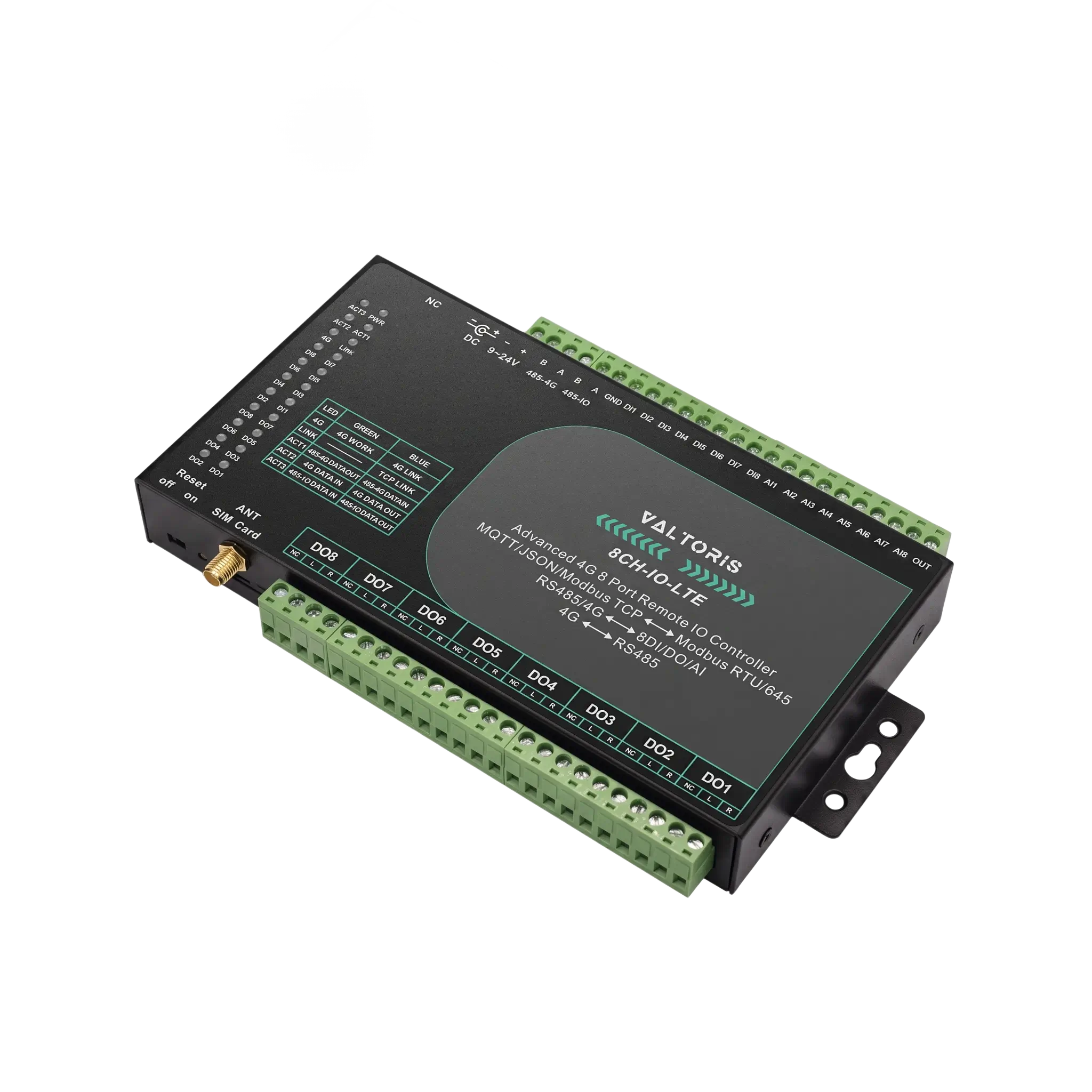
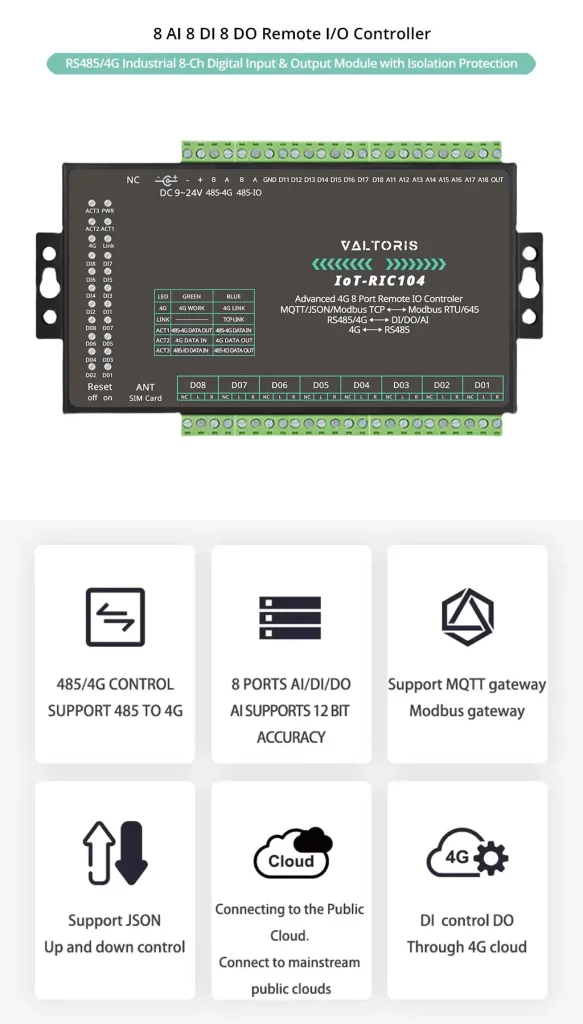
Controlador de E/S 4G LTE industrial de 8 canales | Pasarela MQTT Modbus

Diseñado para la telemetría fuera de la red, este nodo de borde de E/S 4G LTE celular consolida 8 canales de señales analógicas y digitales junto con datos serie RS485, proporcionando una sólida integración Modbus y MQTT para la gestión remota de la infraestructura .

sku :
INSTANT QUOTE

Función principal

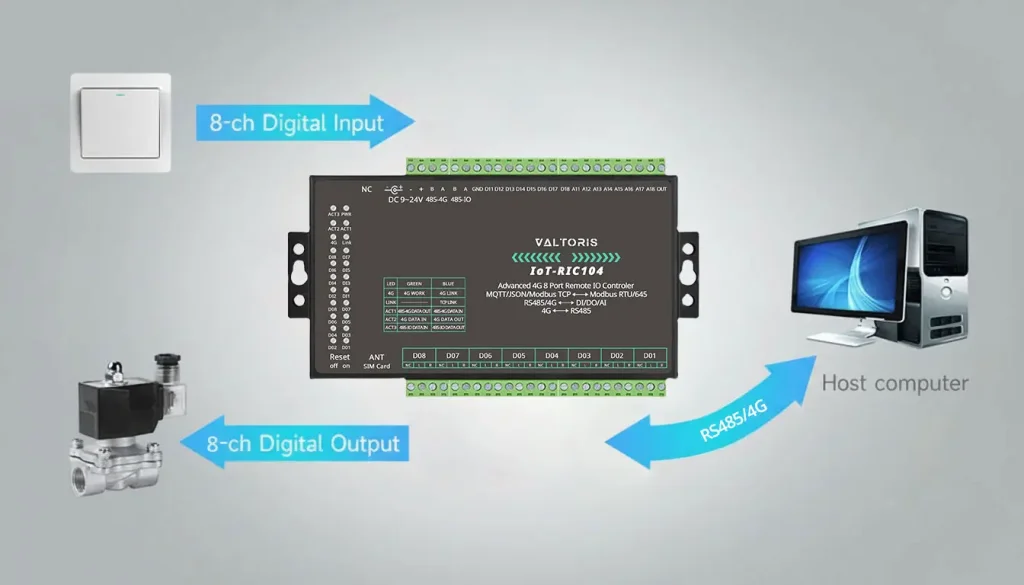
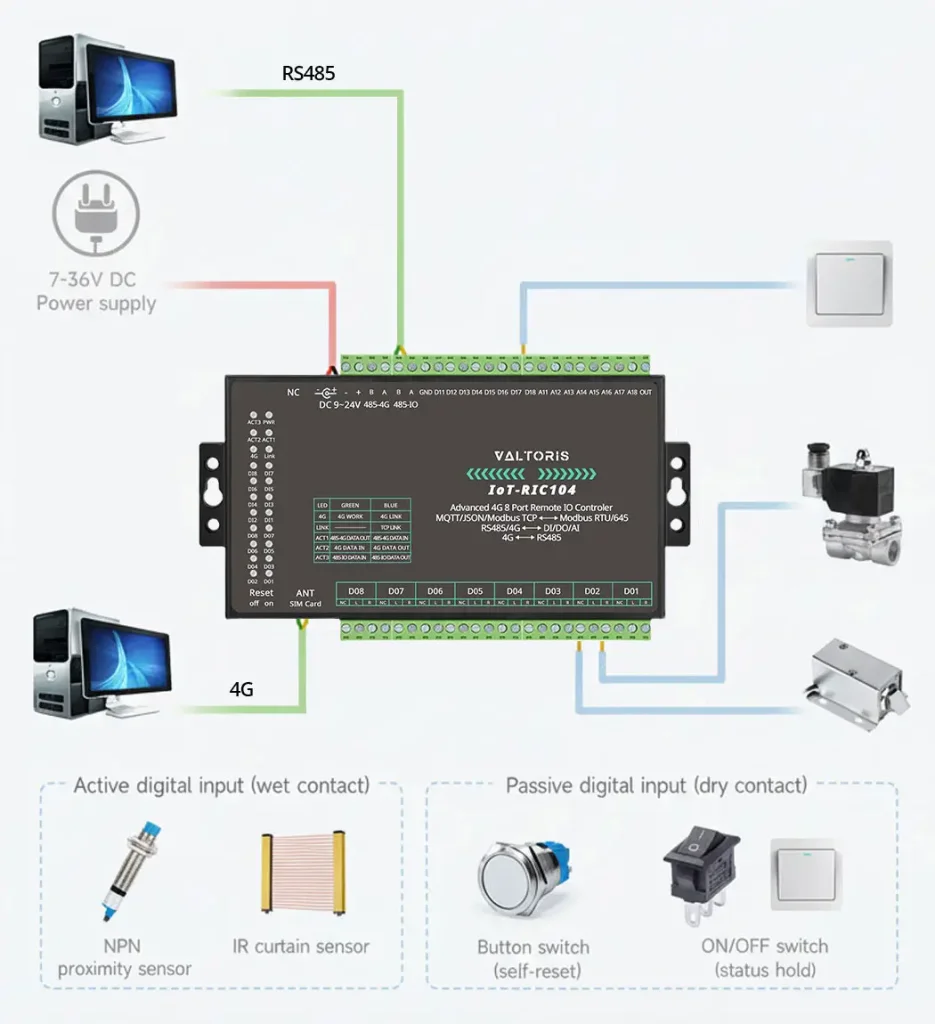
Admite la lectura de la entrada digital mediante el envío de comandos del protocolo Modbus TCP/RTU a través de RS485/4G para el control de la salida digital
Protocolo de comunicación ModBus

Soporta ModBus TCP o ModBus RTU, se puede seleccionar manualmente

Controlado mediante RS485 y 4G
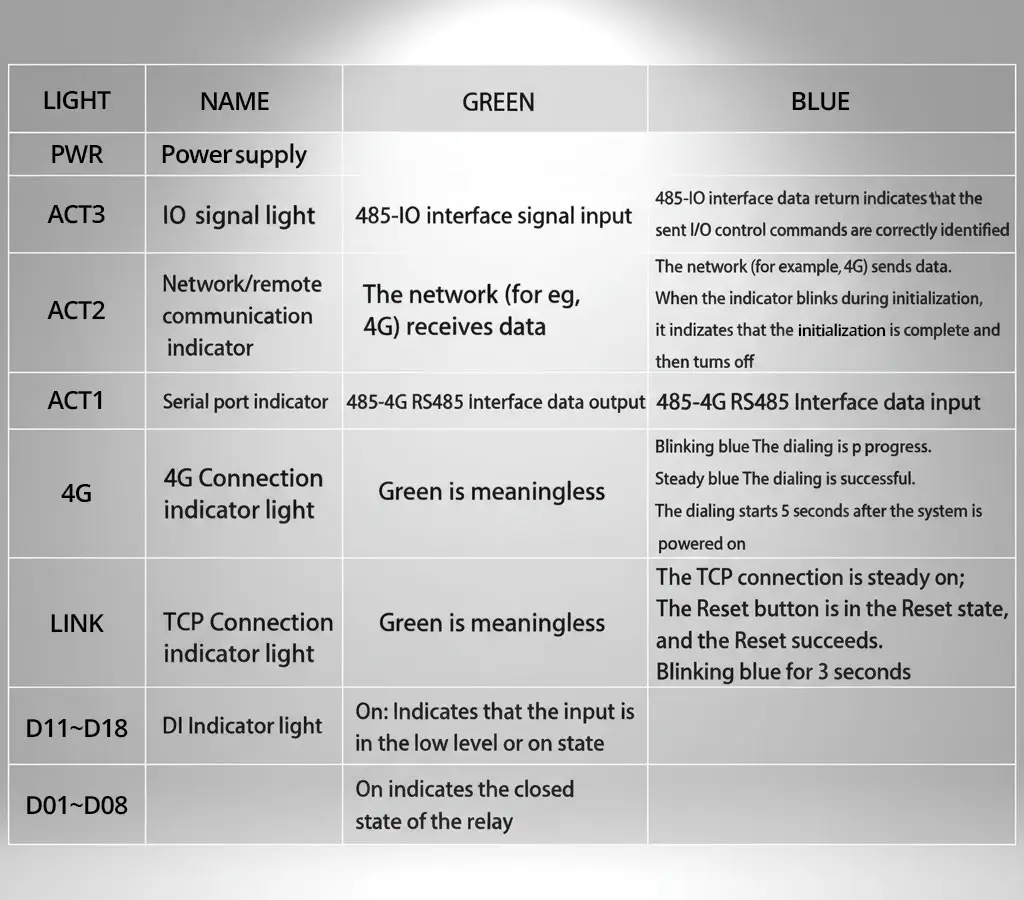
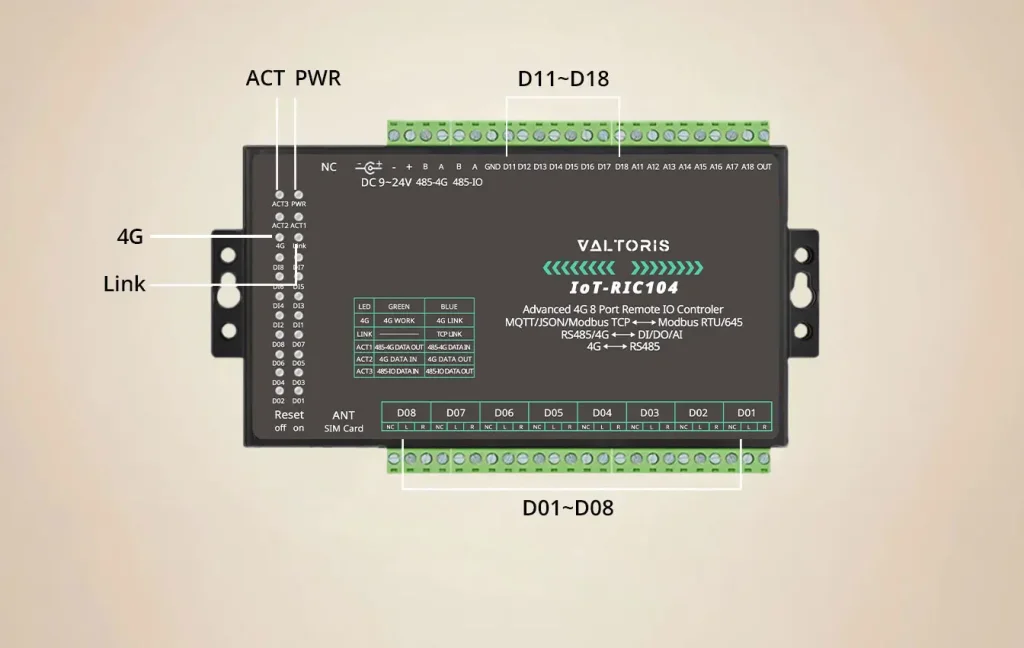
Luz indicadora de riqueza

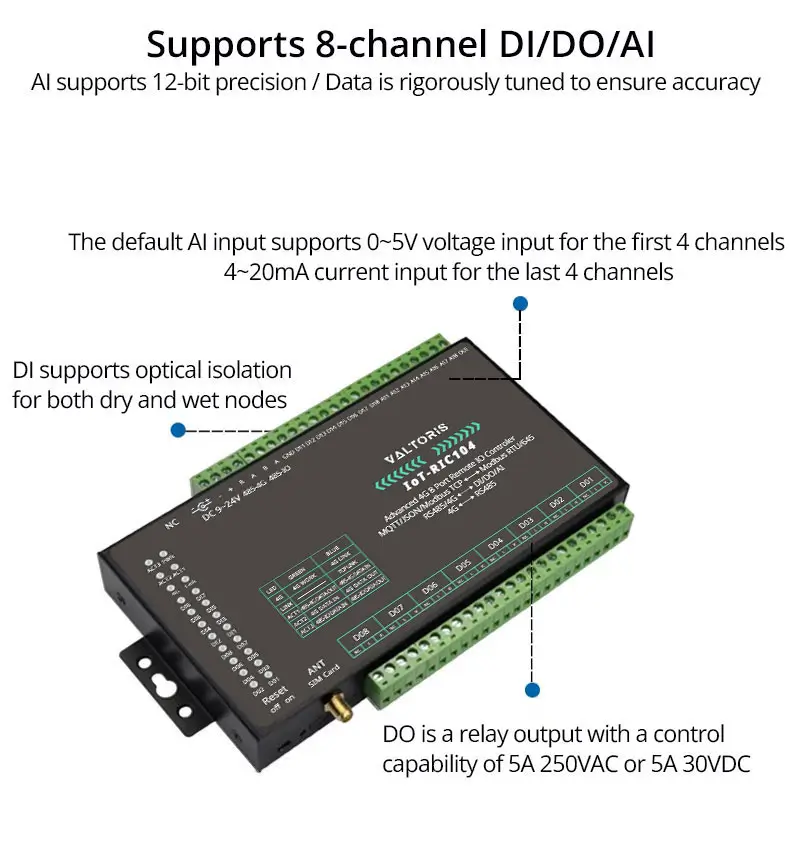
Muestra el estado DI/DO, el estado de la red y el estado del flujo de datos.
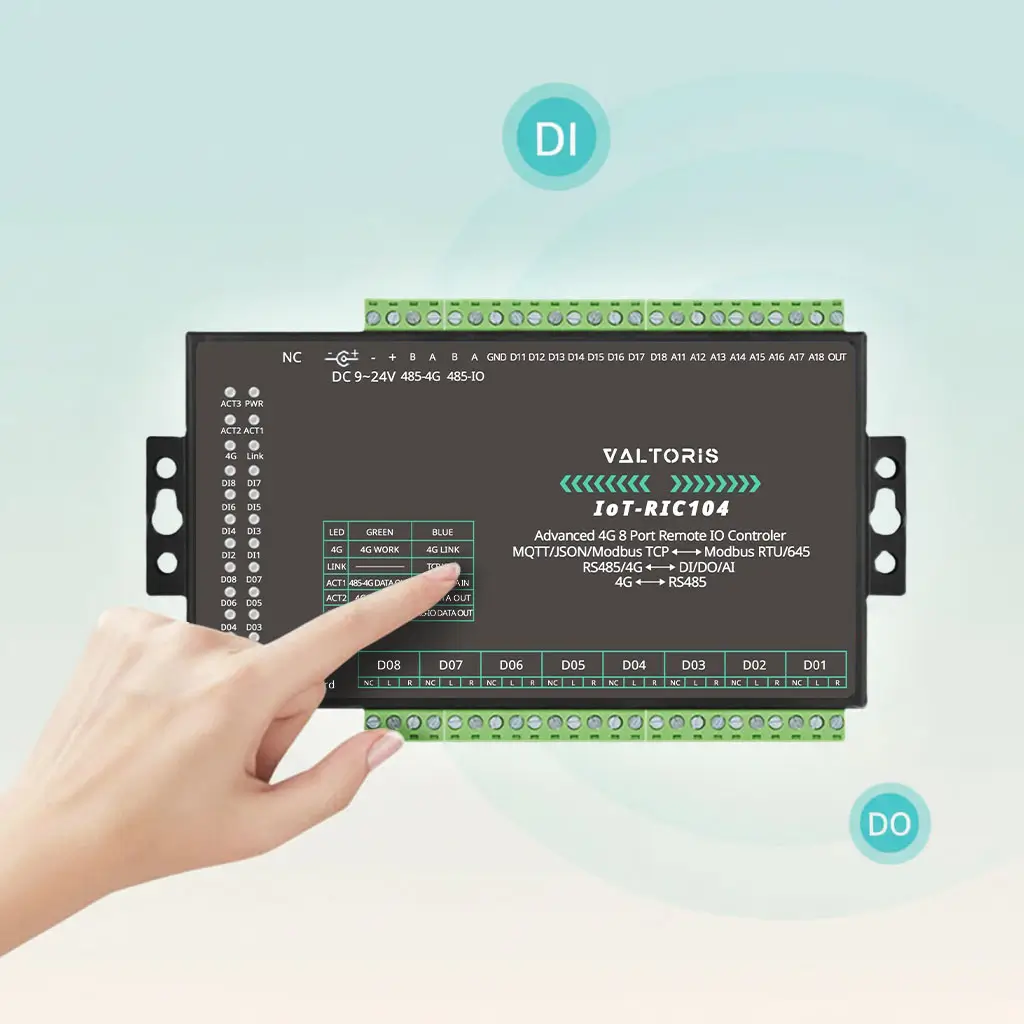
Admite control DI DO

Un par de dispositivos 8CH-IO-LTE pueden conectarse mediante comunicación 4G para controlarse entre sí, lo que facilita su uso.
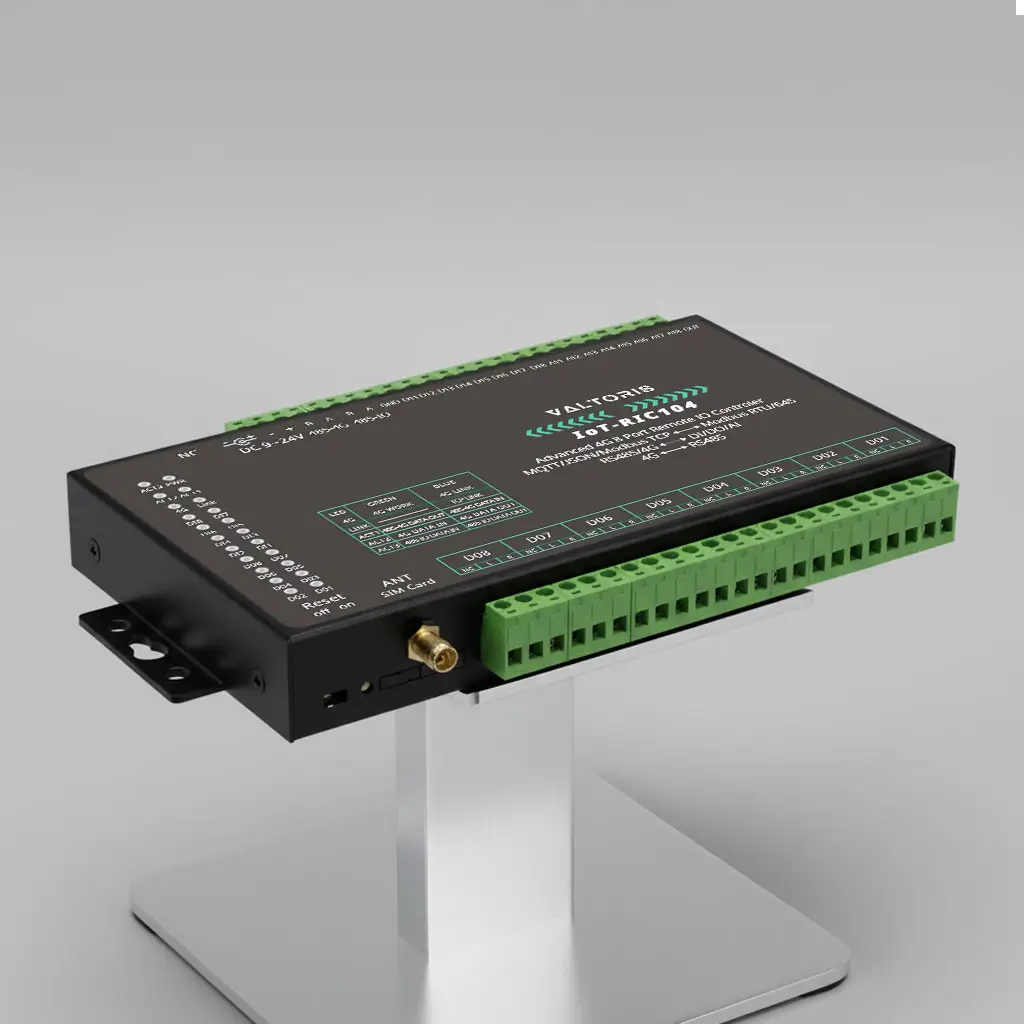
Productos
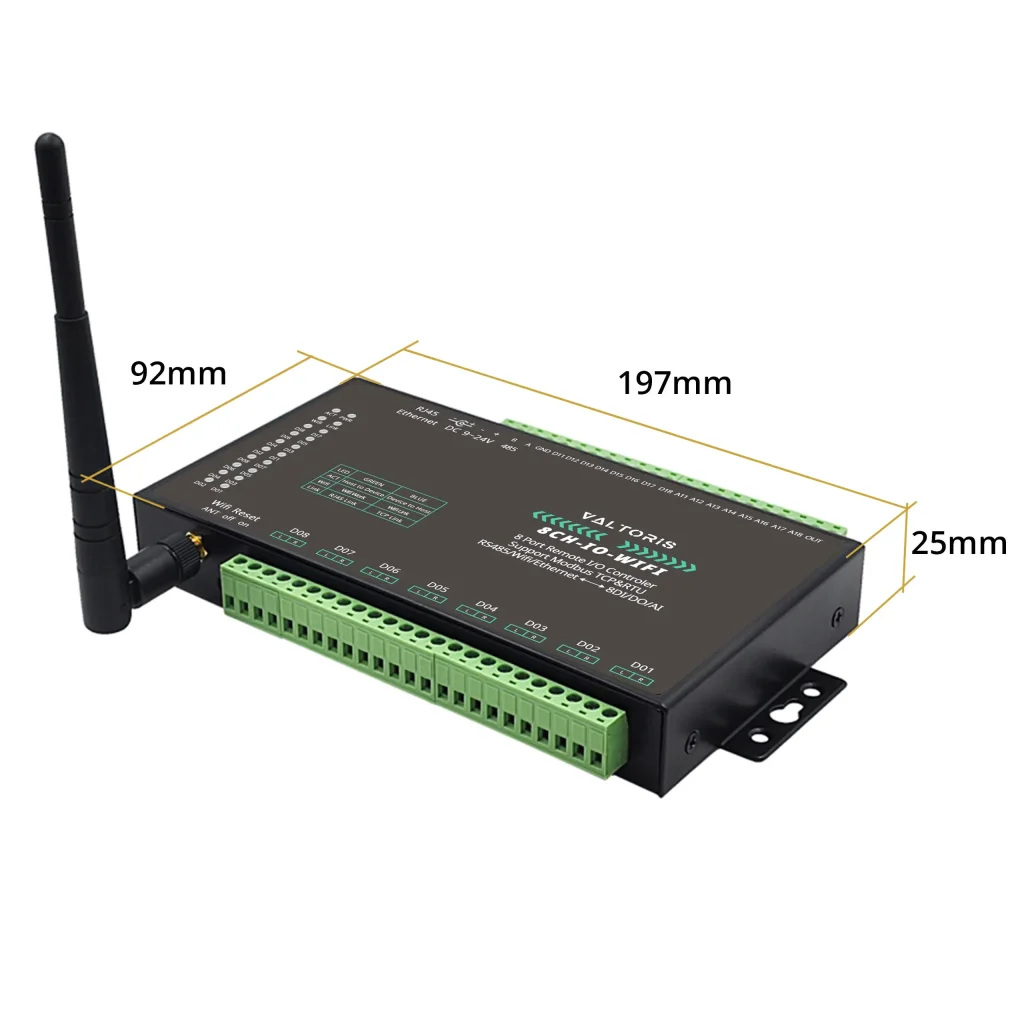
Dimensiones generales
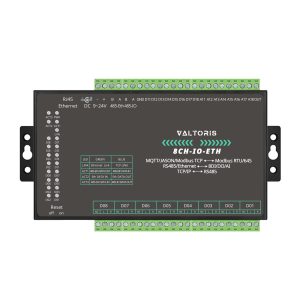
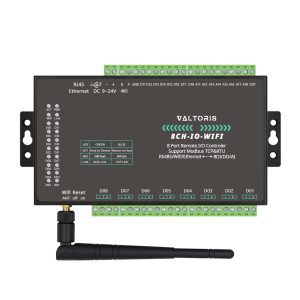
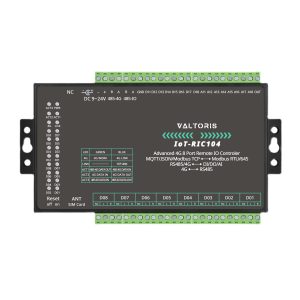
Guía de selección del controlador de E/S remotas

ModeloTIPO DE CONTROL REMOTO I/OMétodo de comunicaciónFuente de alimentación Rango de tensiónDimensiones
(L × A × A)

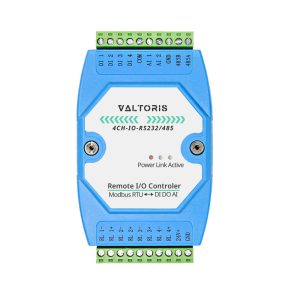
4CH-IO-RS232/485

2 AI 4 DI 4 DO Controlador remoto de E/SRS232/485Terminal de tornilloDC 9~24V121*72*34mm

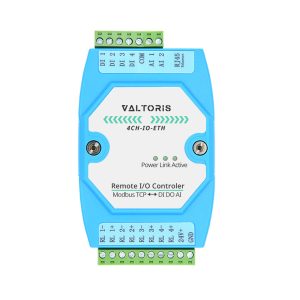
4CH-IO-ETH

2 AI 4 DI 4 DO Controlador remoto de E/SEthernetTerminal de tornilloDC 9~24V121*72*34mm

8CH-IO-ETH

8 AI 8 DI 8 DO Controlador remoto de E/SEthernetTerminal de tornillo + puerto de alimentación DC 5.5DC 9~24V197*92*25mm

8CH-IO-WE

8 AI 8 DI 8 DO Controlador remoto de E/SWIFITerminal de tornilloDC 9~24V197*92*25mm

8CH-IO-LTE

8 AI 8 DI 8 DO Controlador remoto de E/S4GTerminal de tornillo + puerto de alimentación DC 5.5DC 9~24V197*92*25mm


External interface

Size:

L x W x H =9.2cm×19.7cm×2.5cm

Software

Network protocol

Modbus TCP/ MQTT/JSON/ HTTP

RS485 protocol

Modbus RTU

Serial port parameter


Baud Rate

115200bps

Parity bit

Parity checking

Data bit

7, 8 bits

Stop bit

1 bit

AI Input Format

Current: 4~20mA, 0~20mA», Voltage: 0~5V, 0~10V, «Resistor: 0~10K, temperature/humidity sensor, 12-bit accuracy

Power Consumption

4G dial status: 60mA@12V

Communication

Transmission rate

LTE:Max 10Mbps(down)/Max 5 Mbps(up)

GPRS:85.6Kbps(down)/Max85.6Kbps(up)

Support band

B1/B3/B5/B8@FDD LTE

B34/B38/B39/B40/B41@TDD-LTE

B3/B8@GSM

SIM

Voltage: 3V, 1.8V; Size: large card (small card can be purchased to use)

Antenna interface

50Ω/SMA glue stick antenna or suction cup antenna is optional

Environment

Operating temperature

-40~85℃

Storage temperature

-45~165℃

Humidity range

5~95% relative

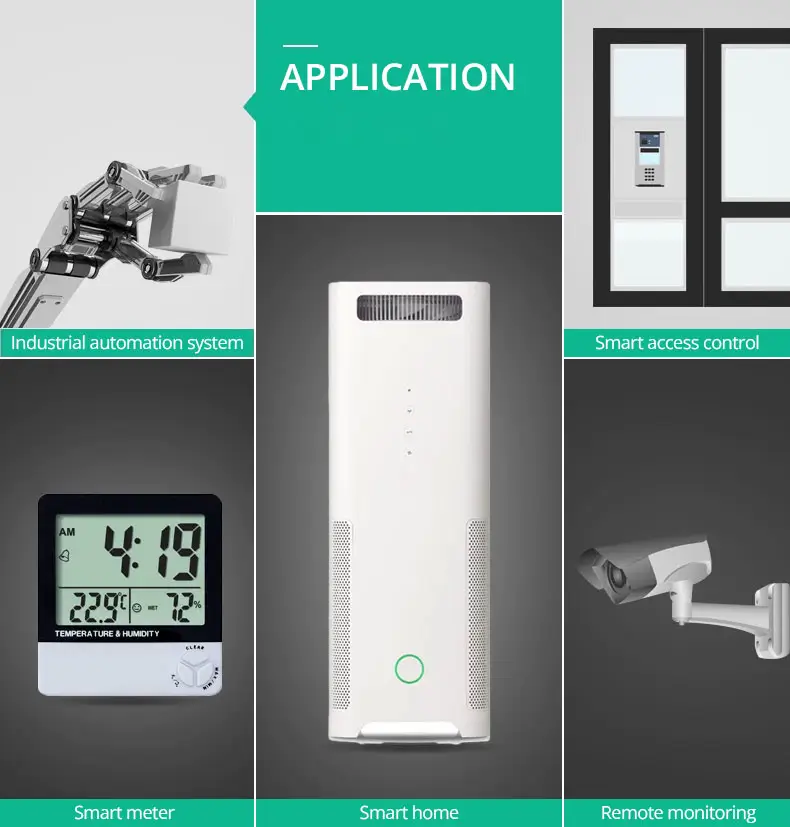
The 8CH-IO-LTE is a rugged edge node for consolidation of analog and digital signals over RS485 and cellular networks. To prevent remote lockups, we added a dedicated hardware watchdog circuit that guarantees the CAT1 cellular module is always connected and always on. It converts Modbus TCP to RTU protocol seamlessly and allows monitoring of 8x DI, 8x AI and controlling of 8x relay outputs simultaneously without any extra PLC hardware.

Q1: What happens to the relay outputs if the 4G LTE connection drops?

A. Our gateways have configurable Failsafe States. You can set the relay (DO) to remember its last position or automatically go to a predefined safe state (like shutting down a pump) when the cellular network is lost. Meanwhile, the built-in hardware watchdog will continue to attempt to reconnect in the background until the link is restored.

Q2: Can the gateway execute local control logic without relying on cloud commands?

A: Yes. The 8CH-IO-LTE is not just a passive pass-through node; it supports Local Linkage Rules (Edge Logic). You can set up conditions directly on the device—for example, «If AI channel 1 detects high water level, instantly close DO relay 1 to start the pump.» This edge-level control prevents potential disasters caused by network latency.

Q3: Can I customize the JSON payload format when publishing sensor data to an MQTT broker?

A: Definitely. We know that different IoT platforms (AWS IoT, Azure, ThingsBoard) have strict payload requirements. You can completely customize the MQTT topics and the JSON data structure in our configuration interface. If you have legacy SCADA software that does not support MQTT, you can still integrate it using our [Industrial Serial Device Servers & Virtual COM software].

Q4: Can this cellular I/O controller completely replace a local PLC?

A: It depends on your application. For distributed pumping stations, weather monitoring, or remote telemetry where you only need simple threshold-based switching and data logging, it can easily replace a micro-PLC, saving you hardware and programming costs. However, for high-speed, millisecond-level motion control, you should keep the PLC and use this gateway simply as an [Industrial Cellular Modem (DTU)] to pass the PLC’s RS485 data to the cloud.

🛠️ Engineering Guides & Pinouts

Practical wiring diagrams, protocol comparisons, and troubleshooting steps for field engineers.

🏗️ Hardware Selection & Architecture

Detailed buying guides and network topologies for scaling your remote SCADA deployments.

REQUEST A QUOTE

SKU/Part No.