

Compact Ethernet Data Acquisition
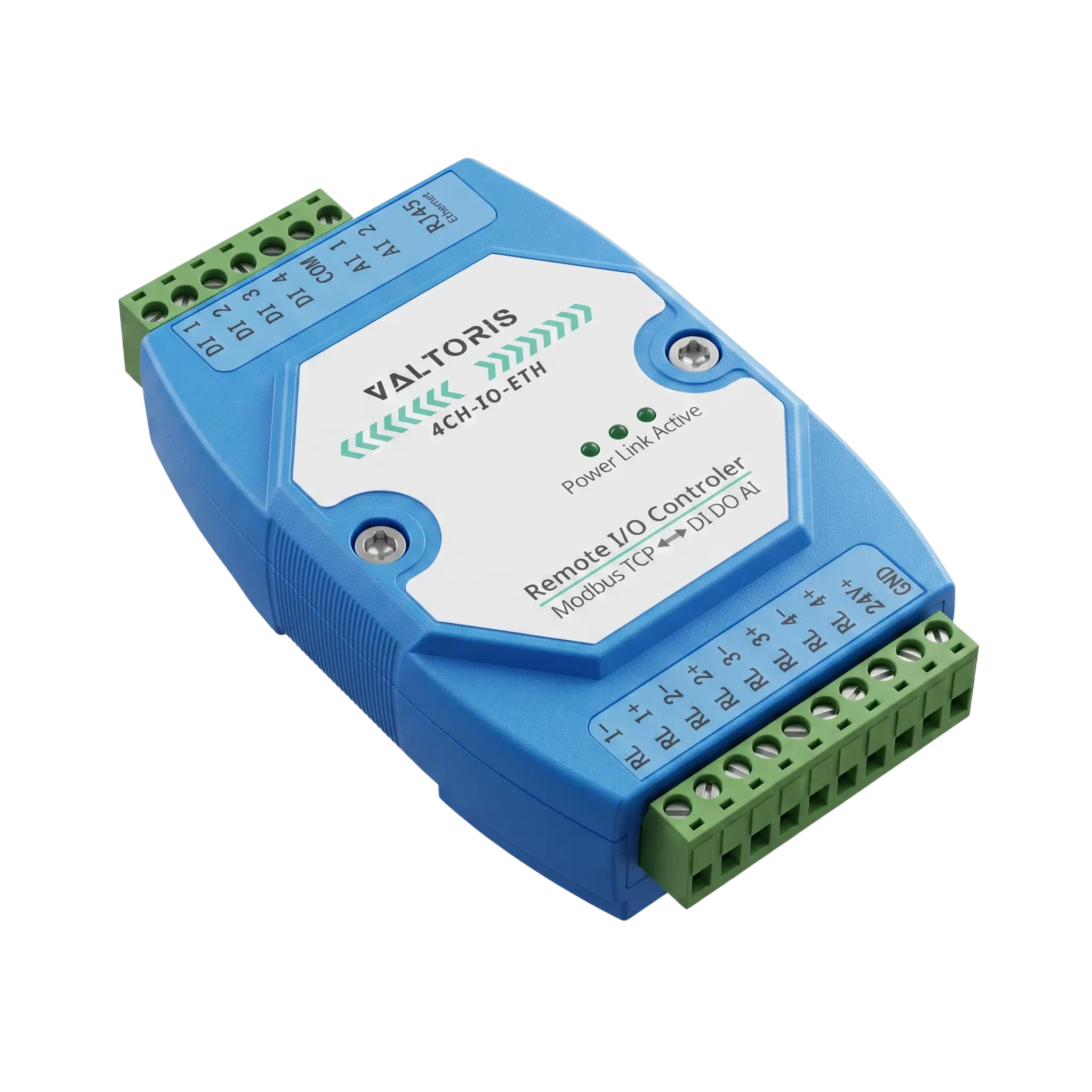
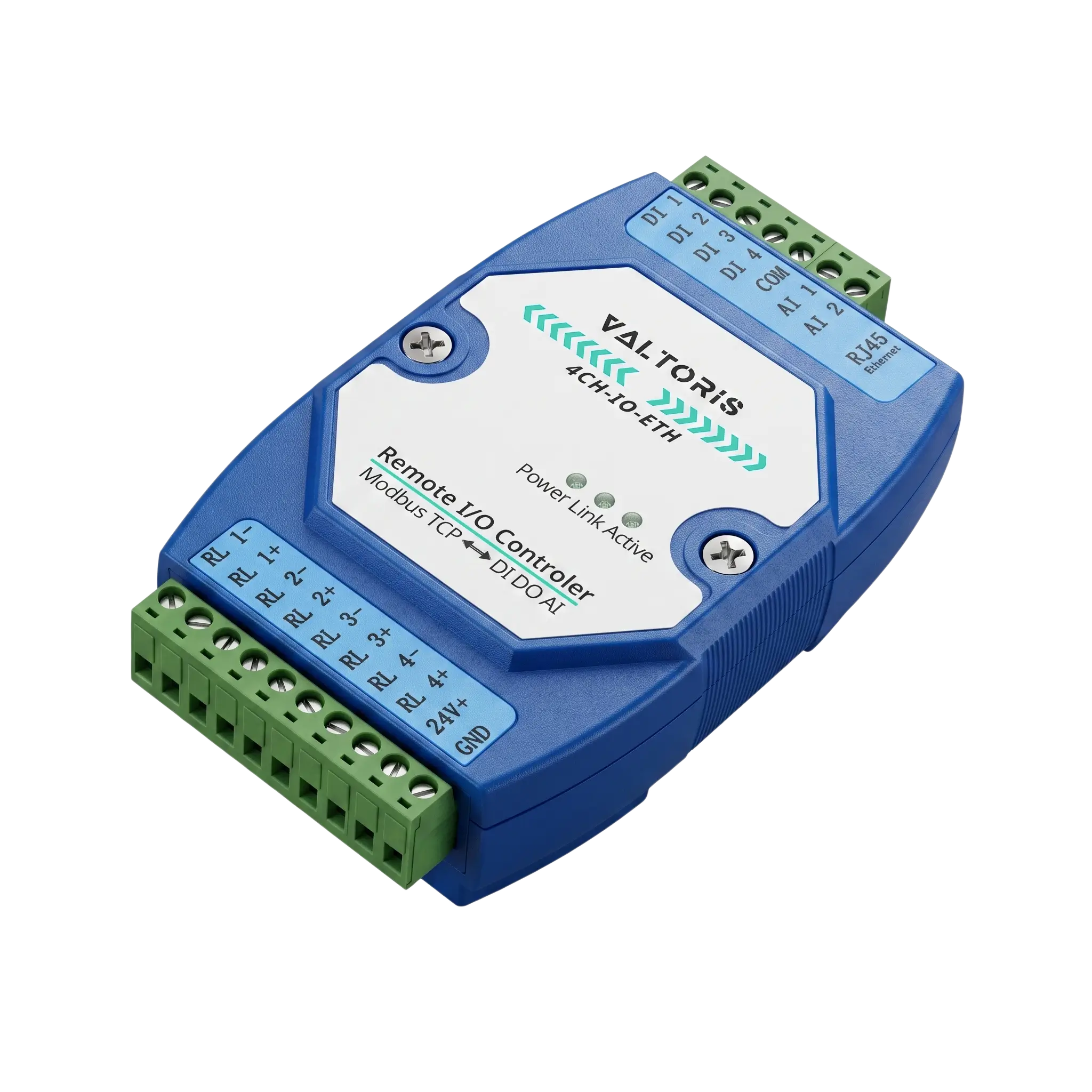
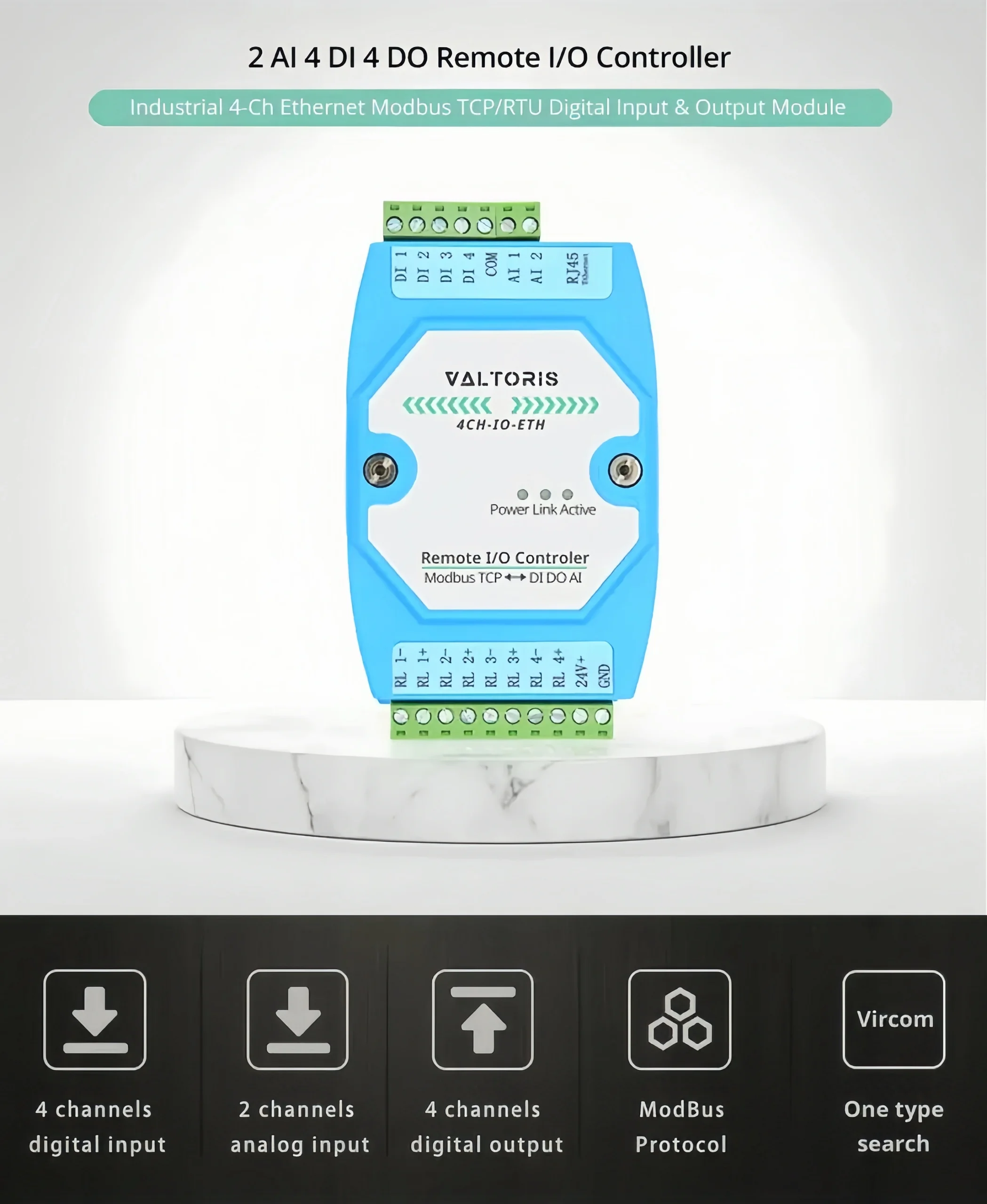
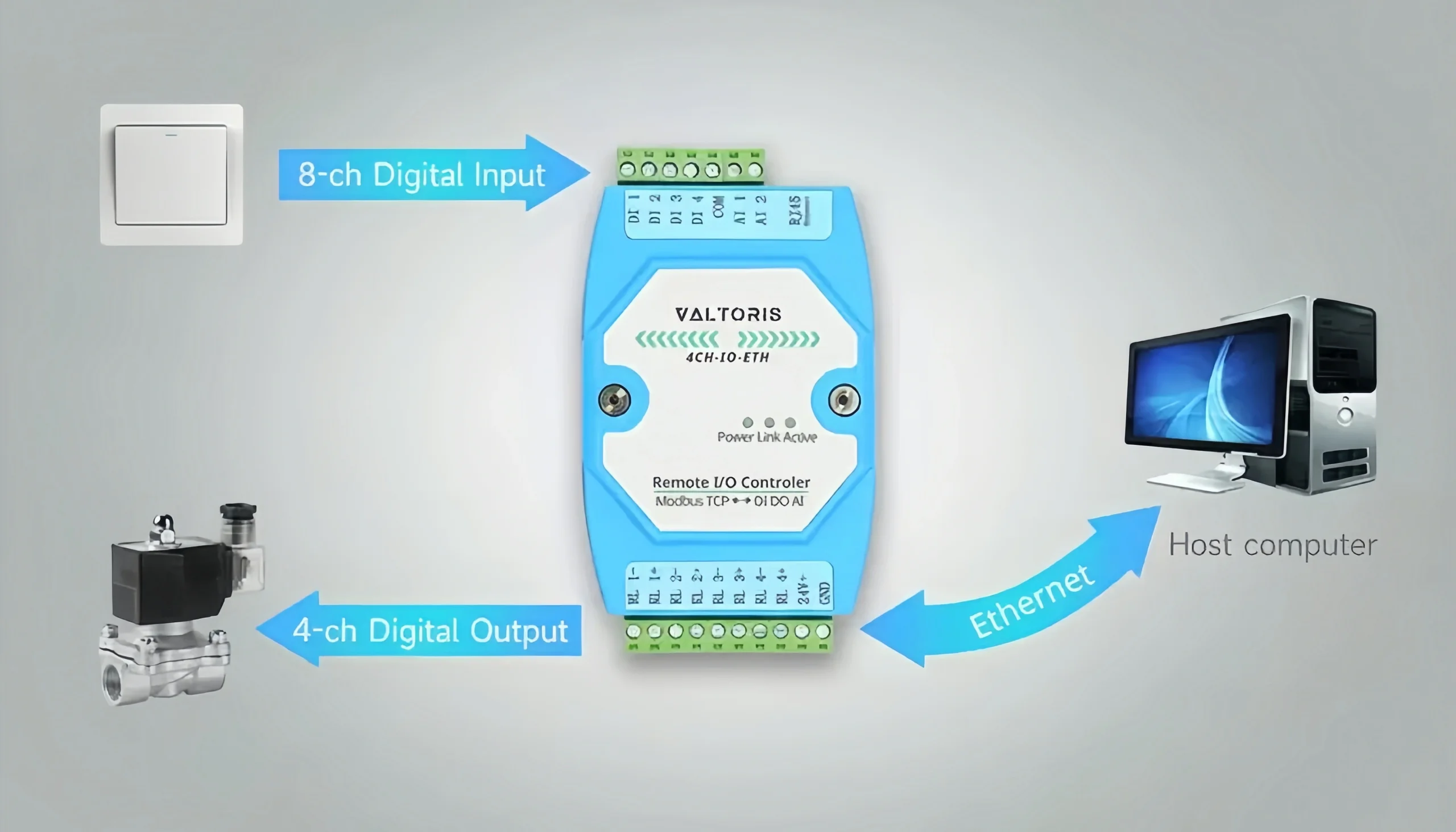
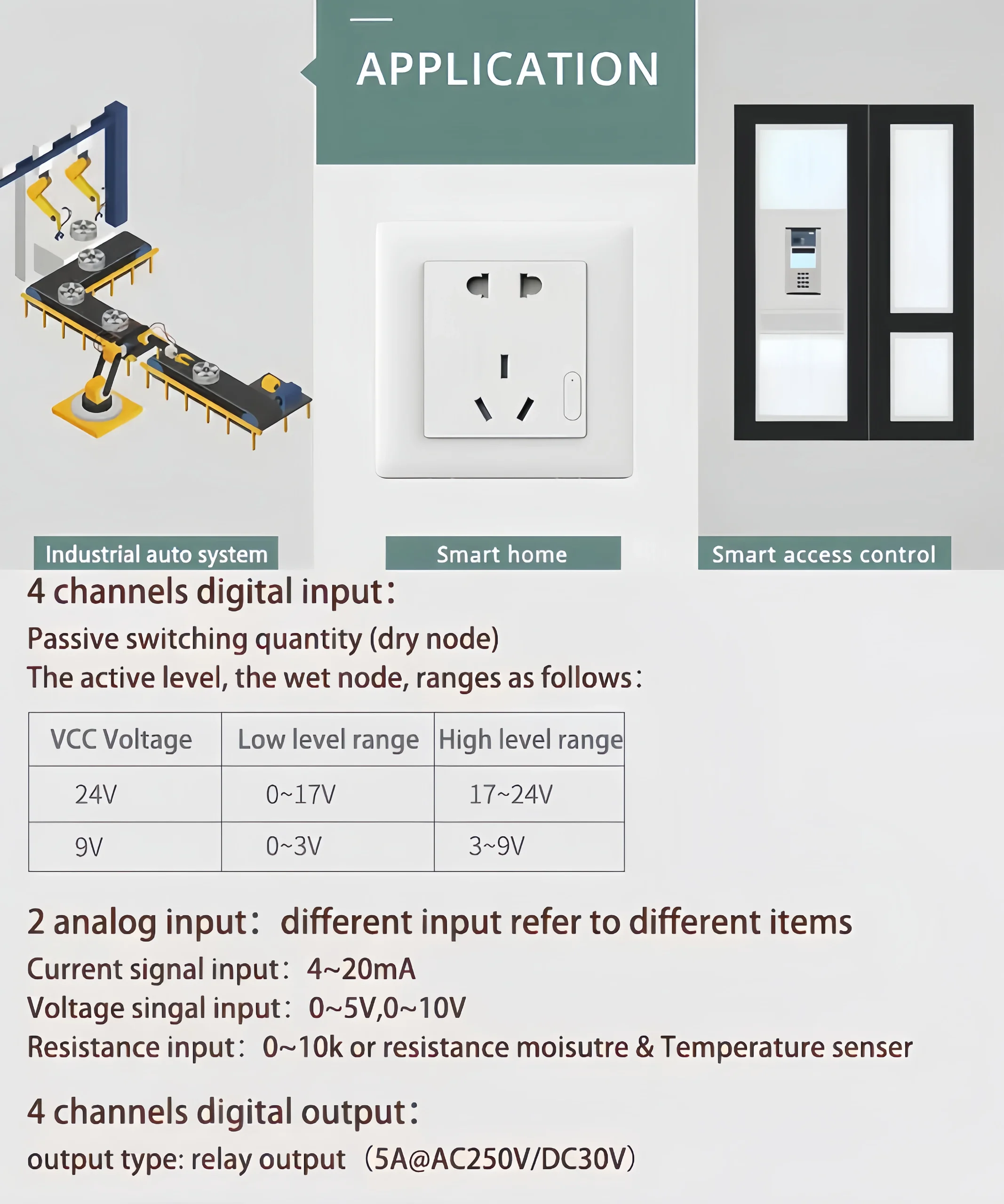
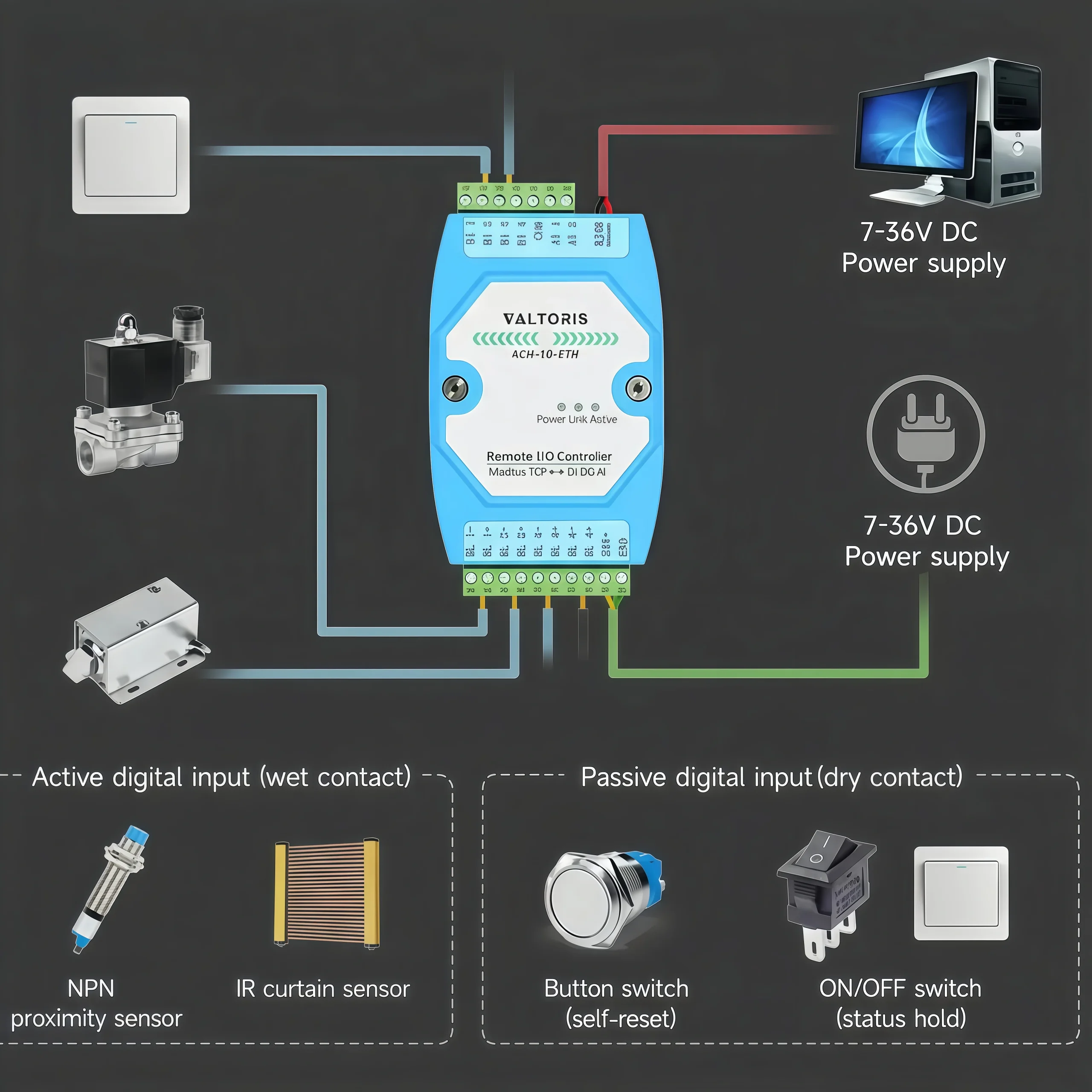
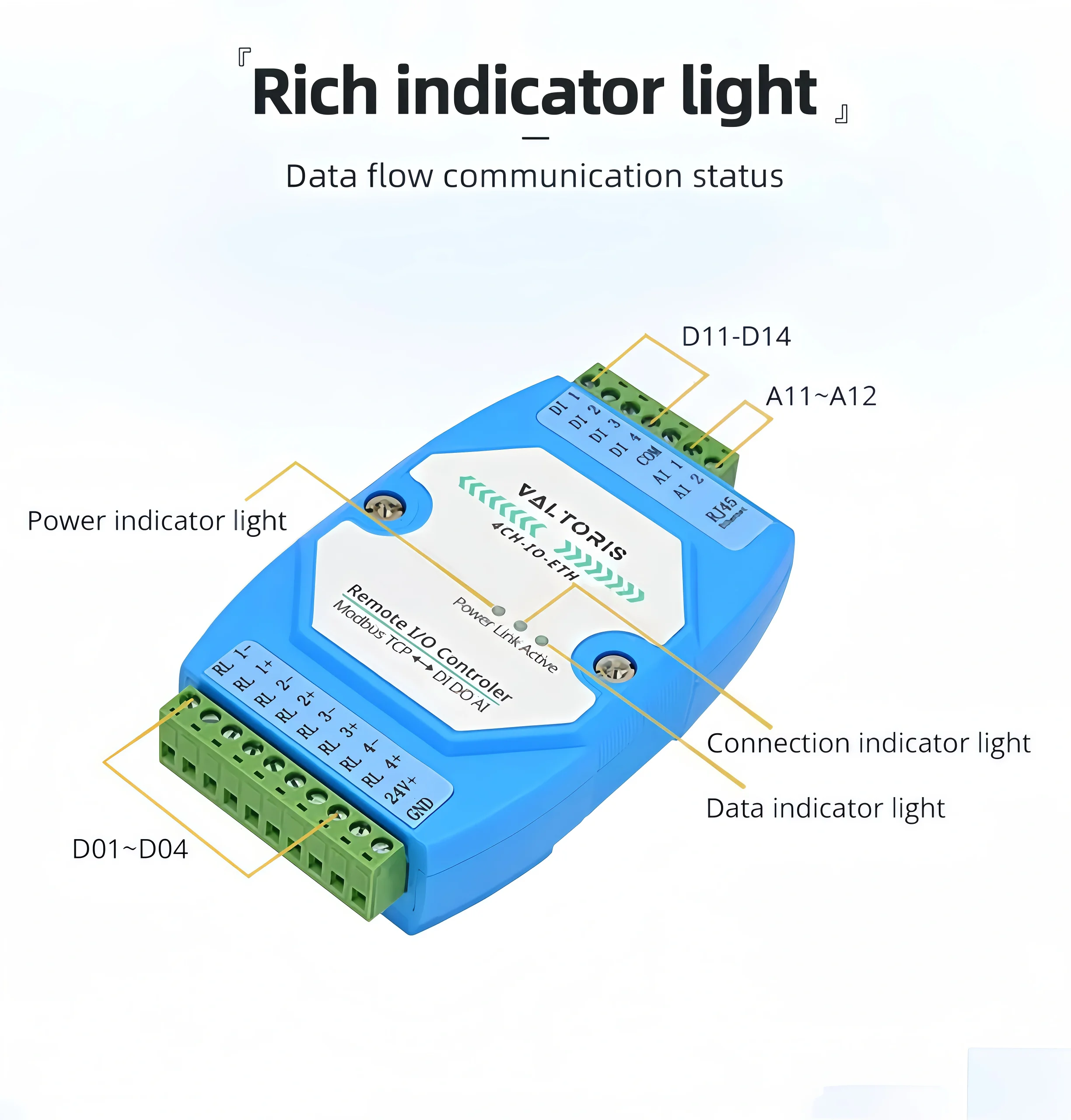
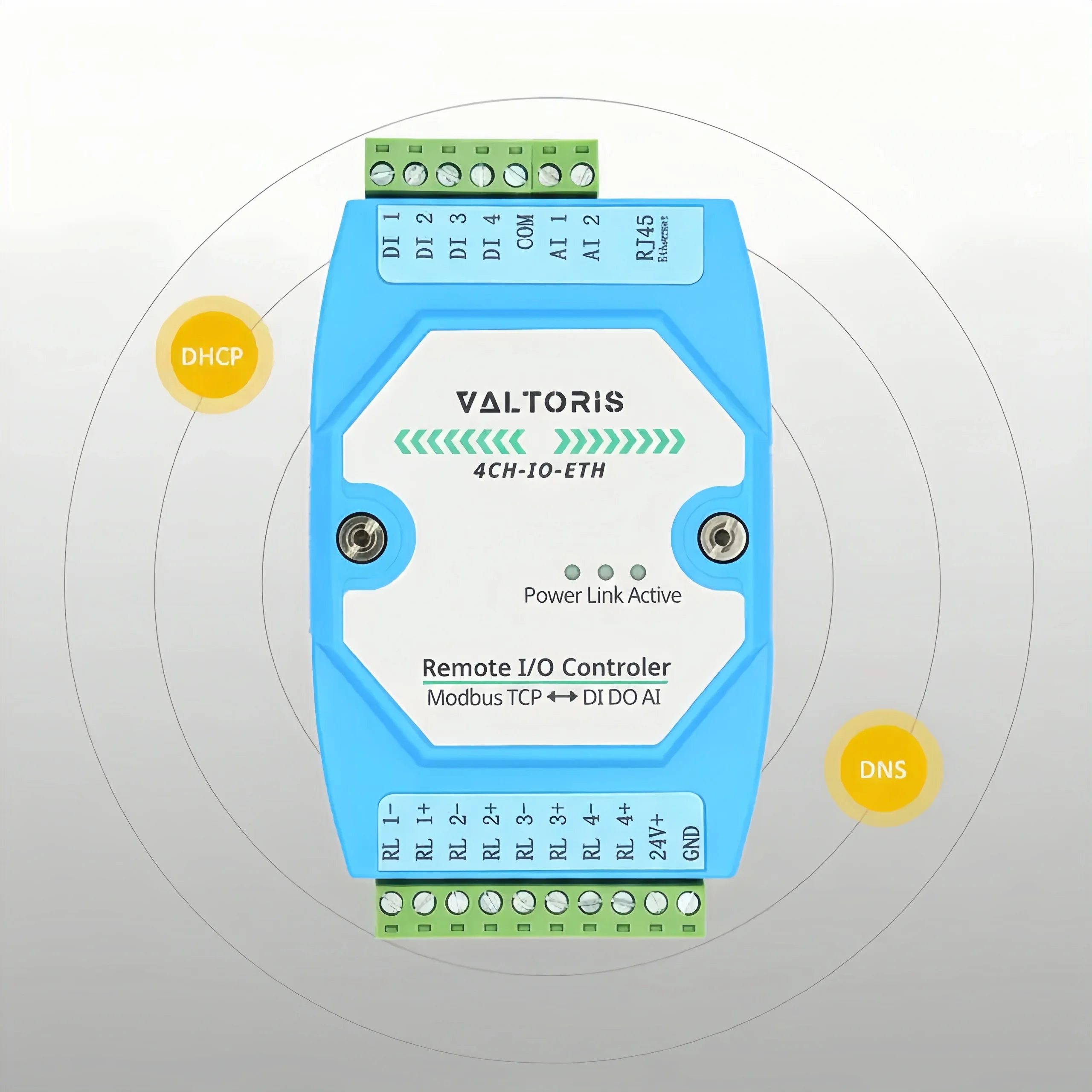
With this 4-Channel Ethernet input output controller, you can monitor and control industrial equipment remotely, reliably. It supports 4 channels of digital input (DI), 2 channels of analog input (AI) and 4 channels of relay output (DO) at the same time over standard TCP/IP network.
Engineered for the Control Cabinet
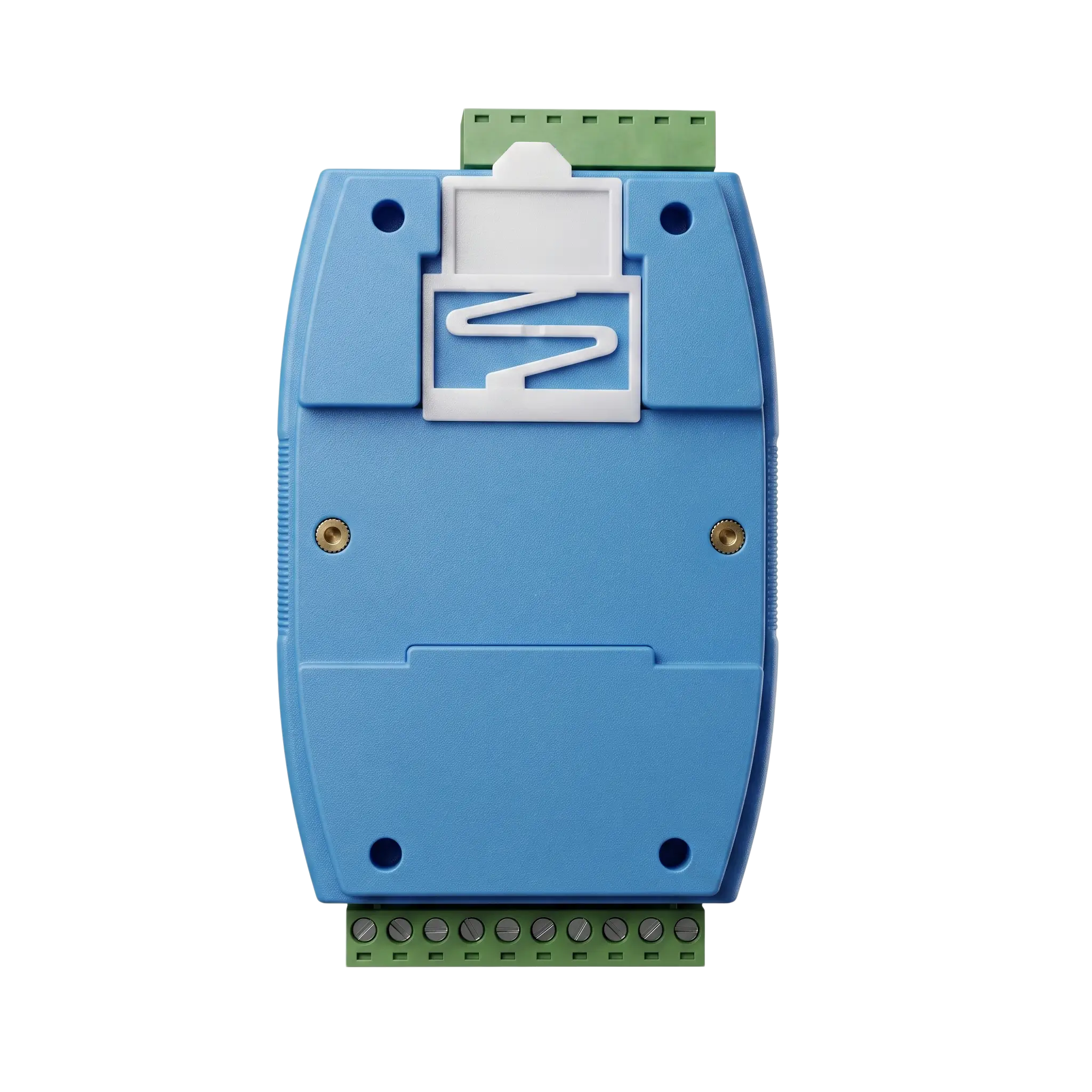
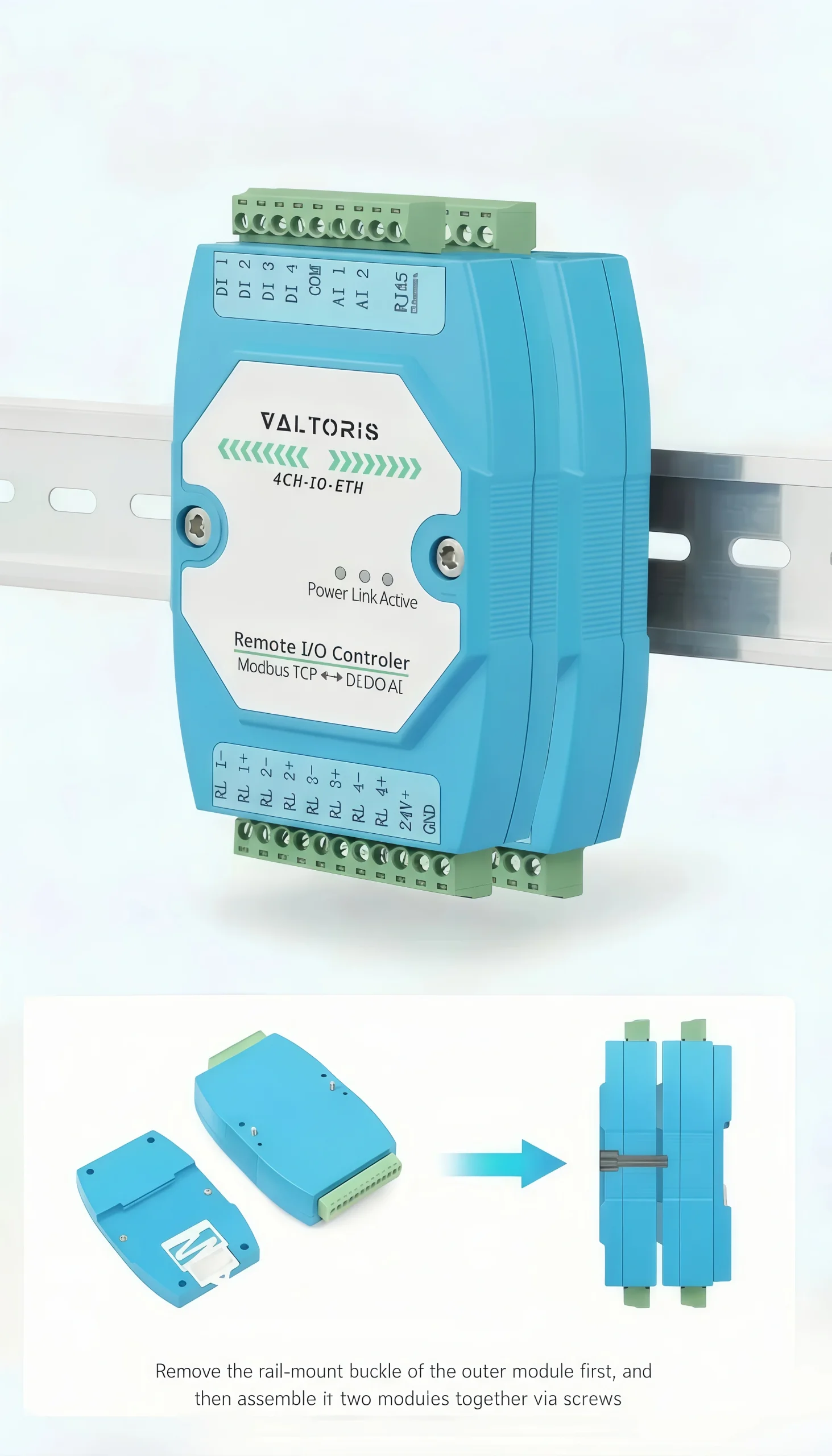
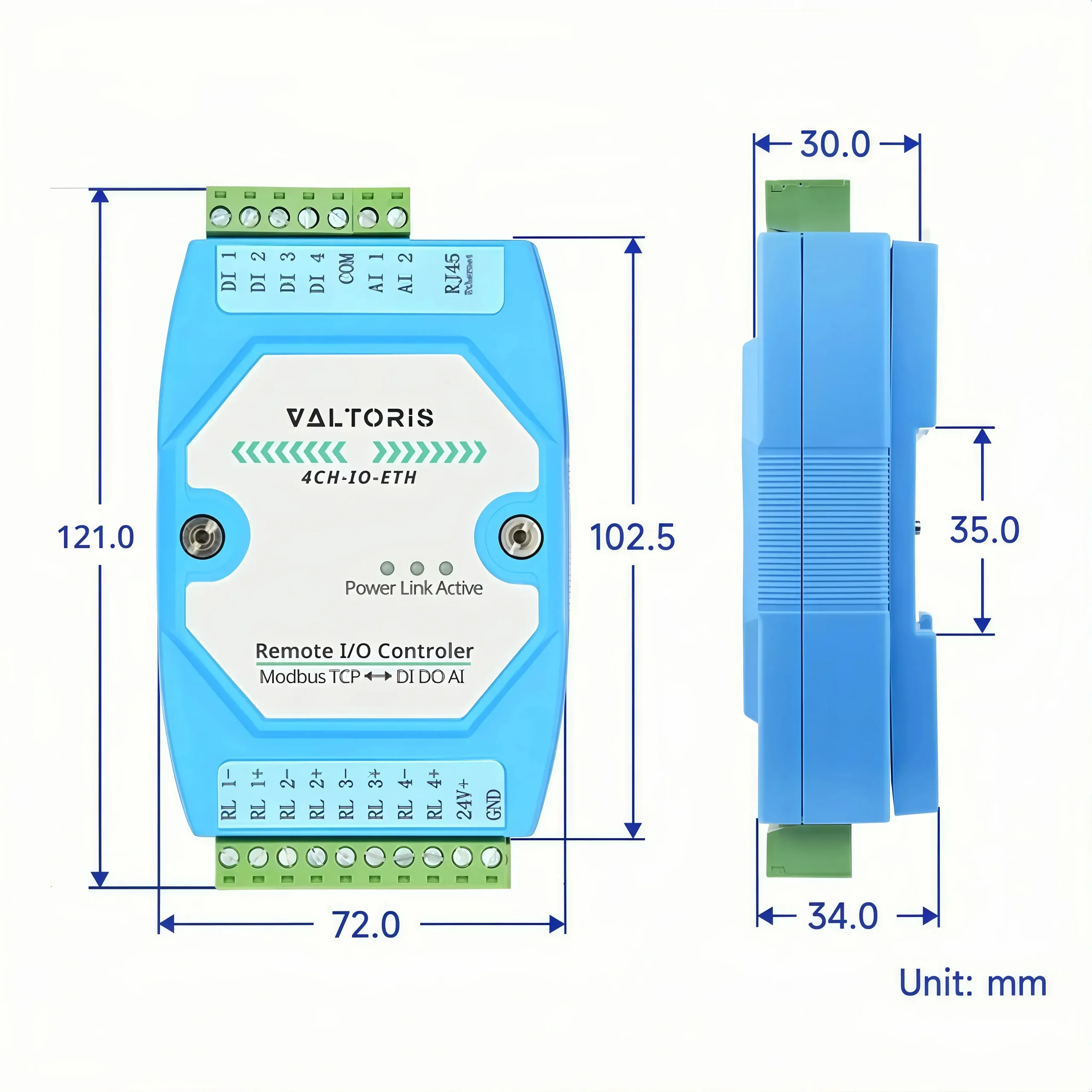
Panel real estate is expensive. This I/O module features an ultra-compact footprint with a native 35mm DIN-rail buckle mechanism. You can slide it effortlessly alongside existing PLCs and contactors without custom mounting brackets.
Advanced Modbus Edge Processing & P2P Control
The 4CH series provides intelligent edge capabilities, unlike basic I/O blocks. It supports dual protocols (Modbus TCP/RTU) and Peer-to-Peer (P2P) control. Two modules can be coupled over a LAN so that a physical switch on Module A can instantly trigger a relay on Module B without the need for a central server.
Flexible Networking: DHCP & DNS Support
Deploying dozens of nodes shouldn't require manual IP address bookkeeping. The built-in DHCP client automatically pulls network configurations from your router, while DNS resolution allows you to send telemetry data directly to cloud domain names instead of static IP addresses.
Stackable Design & Dimensions
Need more than 4 channels? The module's flush chassis design enables stackable, side-by-side mounting on DIN rails, allowing you to scale your acquisition nodes linearly as project requirements grow.
Remote I/O Controller Selection Guide
Compare the Valtoris 4CH series against our larger capacity and wireless telemetry modules to find the exact fit for your control architecture.
| Model | I/O Density | Network Uplink | Power Input | Dimensions (mm) |
 4CH-IO-RS232/485 | 2 AI / 4 DI / 4 DO | Serial (RS232/485) | Terminal (DC 9~24V) | 121 × 72 × 34 |
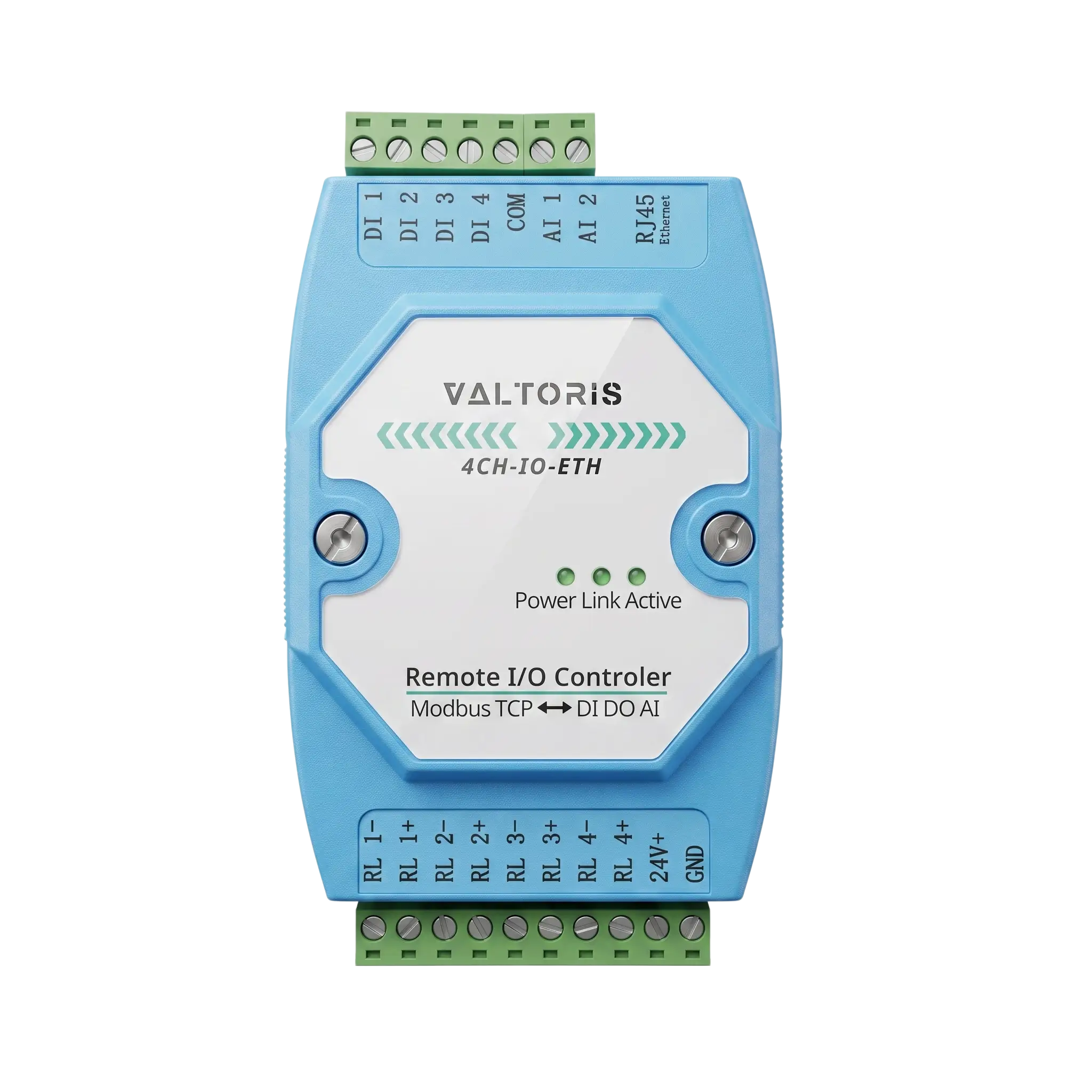 4CH-IO-ETH (This Model) | 2 AI / 4 DI / 4 DO | Ethernet (TCP/IP) | Terminal (DC 9~24V) | 121 × 72 × 34 |
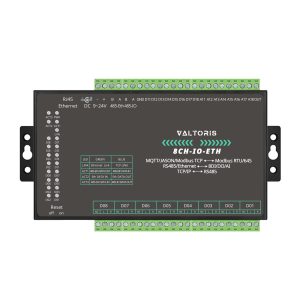 8CH-IO-ETH | 8 AI / 8 DI / 8 DO | Ethernet (TCP/IP) | Terminal + DC Jack | 197 × 92 × 25 |
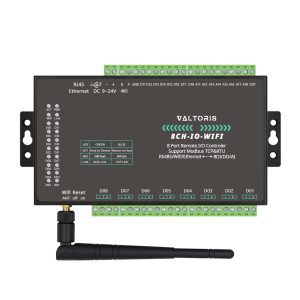 8CH-IO-WE | 8 AI / 8 DI / 8 DO | Wi-Fi (Wireless) | Terminal (DC 9~24V) | 197 × 92 × 25 |
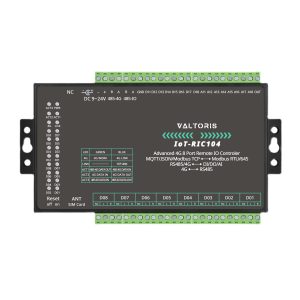 8CH-IO-LTE | 8 AI / 8 DI / 8 DO | 4G LTE (Cellular) | Terminal + DC Jack | 197 × 92 × 25 |