Module d'E/S déportées Ethernet à 8 canaux et passerelle RS485 pour l'industrie

Conçu pour les réseaux industriels hybrides, ce nœud d’E/S distantes Ethernet à 8 canaux consolide la télémétrie analogique et numérique mixte avec un pontage série RS485 intégré, offrant une conversion robuste des protocoles Modbus et MQTT pour une acquisition de données SCADA unifiée.

sku :
INSTANT QUOTE

Fonction principale

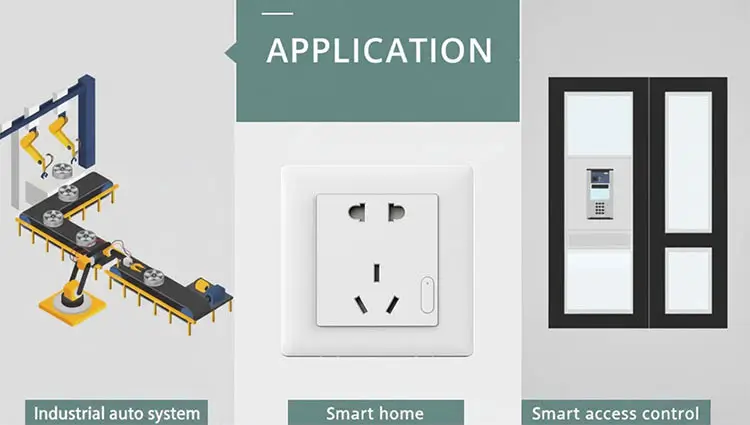
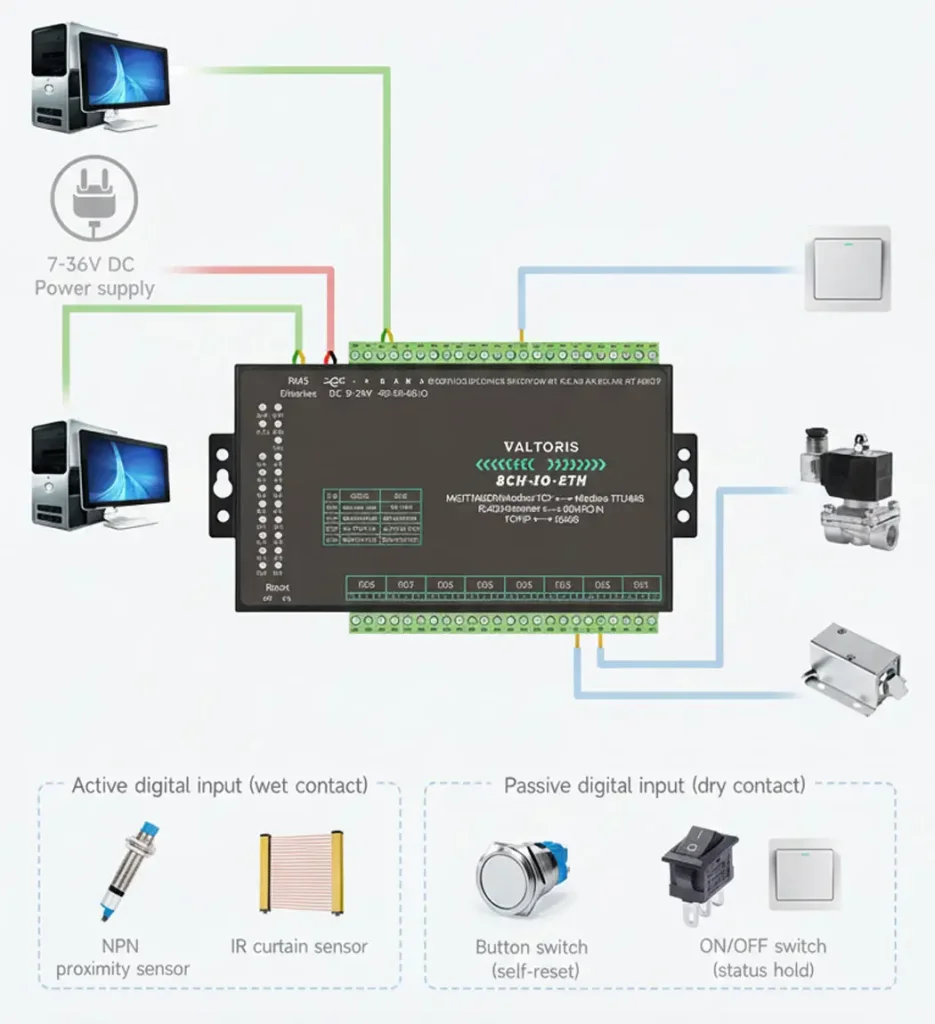
Permet de lire les entrées numériques en envoyant des commandes du protocole Modbus TCP/RTU via Ethernet/RS485 pour le contrôle des sorties numériques.
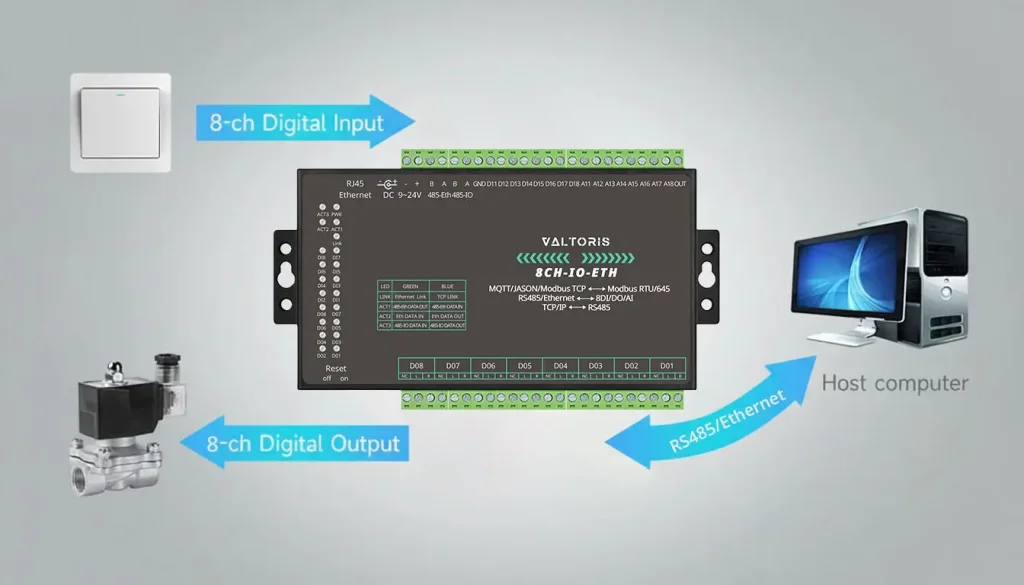
Protocole de communication ModBus

Prise en charge de ModBus TCP ou ModBus RTU

Prise en charge de MQTT+JSON et HTTP

Il fournit un ensemble complet de commandes RS485 Modbus RTU pour faciliter l'intégration et le développement par les ingénieurs.
Témoin de richesse

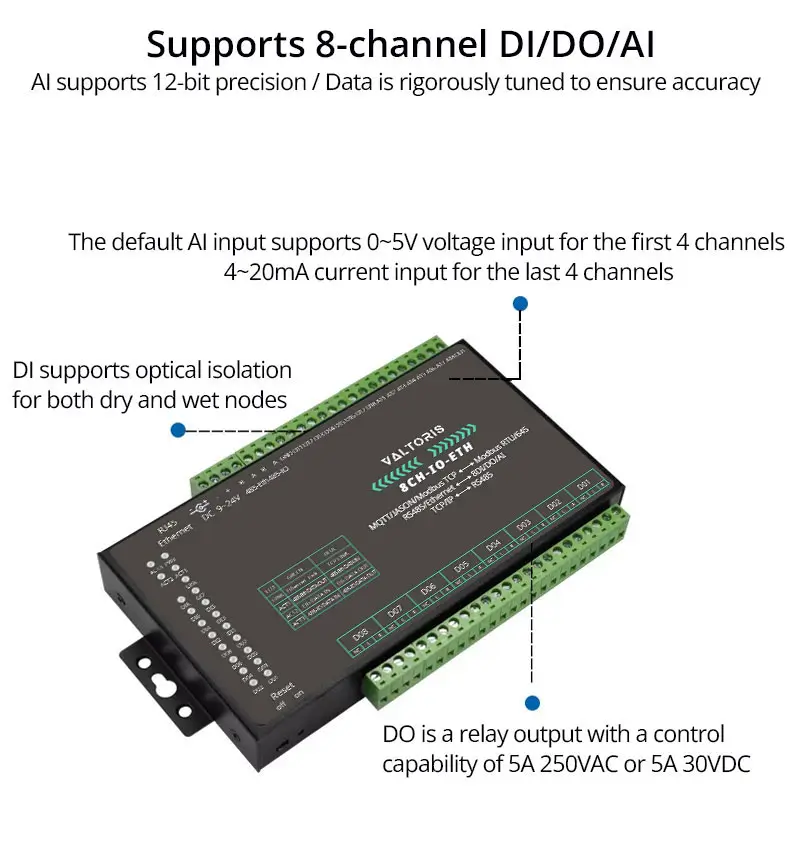
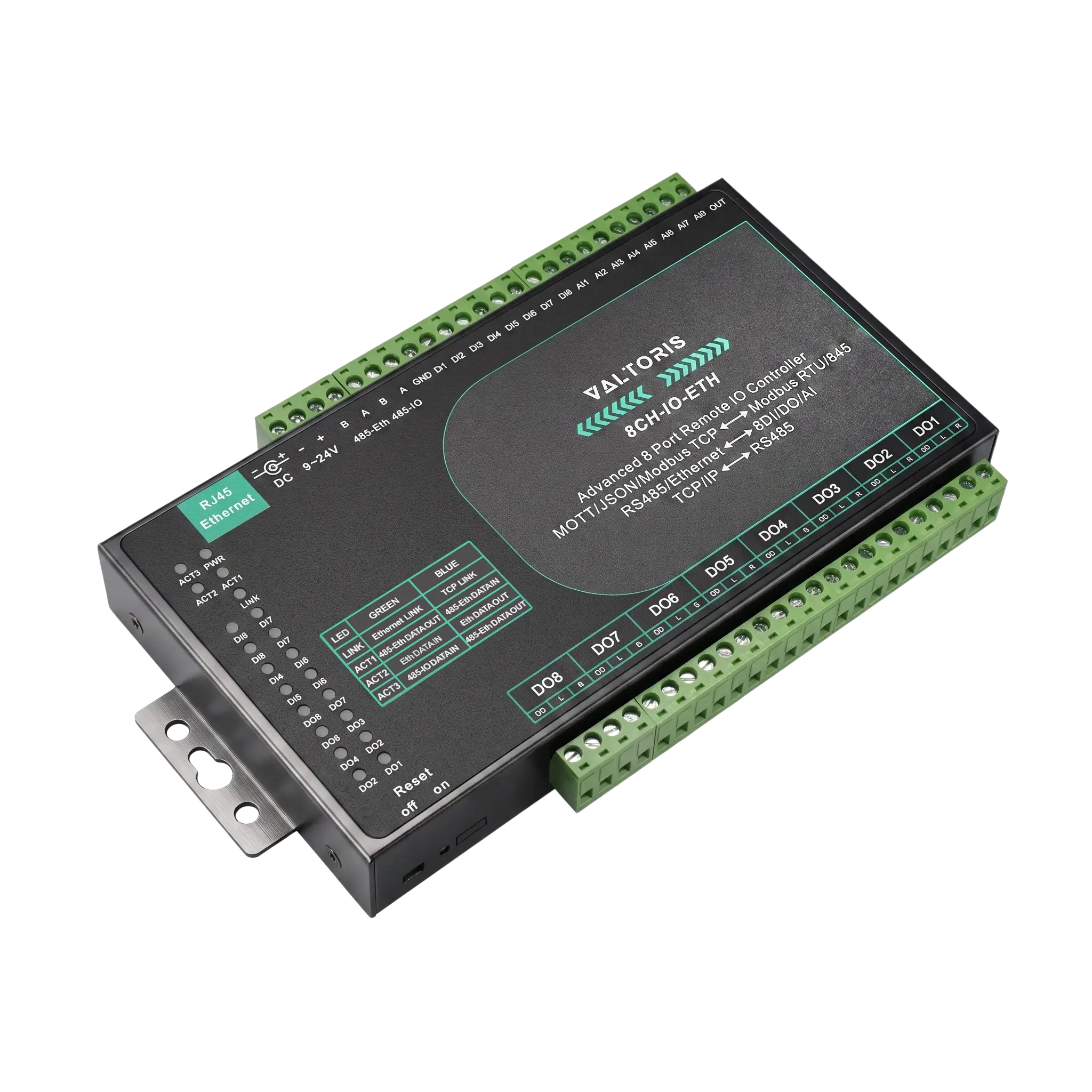
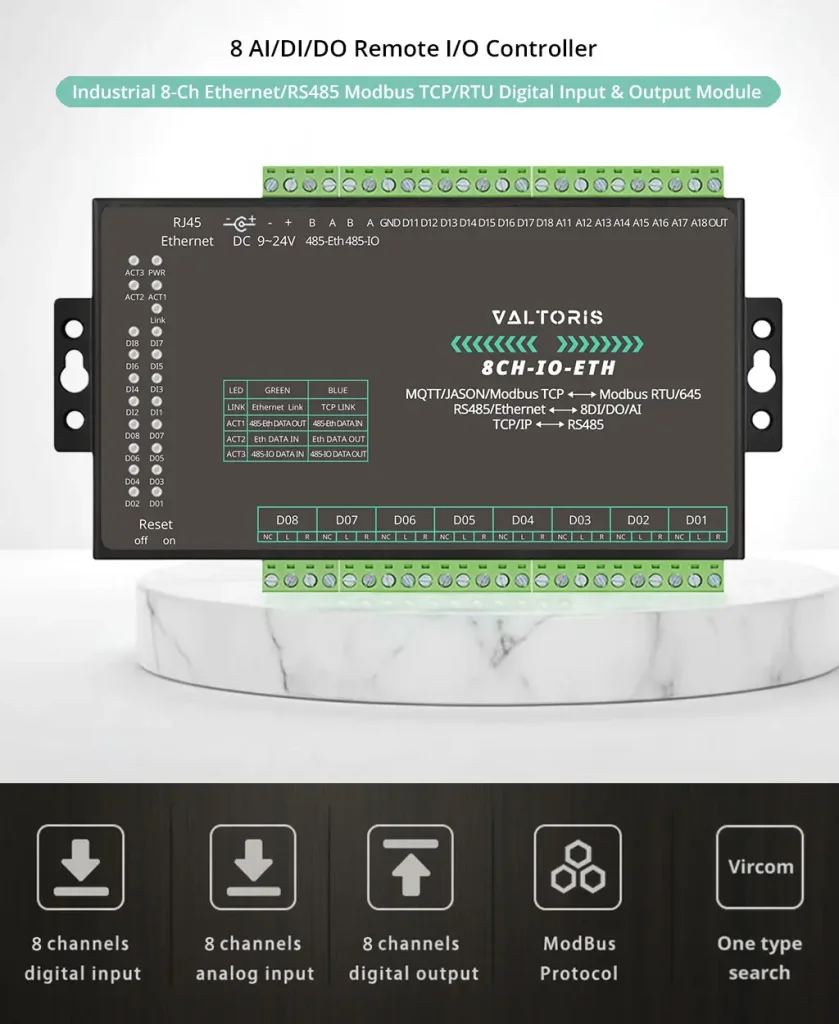
Affiche l'état DI/DO, l'état du réseau, l'état de la communication des données, etc.
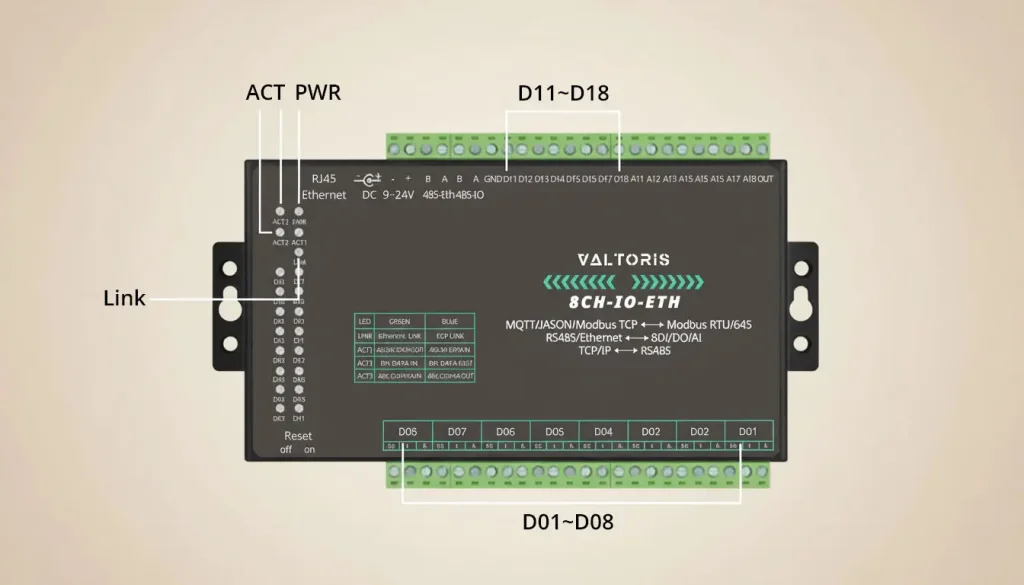
Témoin lumineuxNom de l'indicateur VertBleu
PWRVoyant d'alimentation  
ACT3Voyant de communication IO485-IO Entrée de données de l'interfaceLes données de l'interface 485-IO sont renvoyées, ce qui indique que l'instruction de contrôle IO envoyée a été correctement identifiée.
ACT2Indicateur de réseau/télécommunicationL'extrémité du réseau reçoit des donnéesLe côté réseau envoie des données ;

Cet indicateur clignote pendant l'initialisation, indiquant que pendant l'initialisation, l'indicateur s'éteint après l'initialisation.

ACT1Indicateur de communication sérieSortie de données du port RS485Entrée de données du port RS485
LIENIndicateur de connexion TCPIndique que le câble réseau est correctement connecté.Allumé en permanence lorsque la connexion TCP est établie.
DI1~DI8Témoin lumineux DIOn indique que l'entrée est basse ou fermée. 
DO1~DO8 Allumé : Le relais est fermé. 

Prise en charge du contrôle DI DO

Une paire d'appareils 8CH-IO-ETH peut être connectée via la communication Ethernet pour se contrôler mutuellement, ce qui les rend faciles à utiliser.
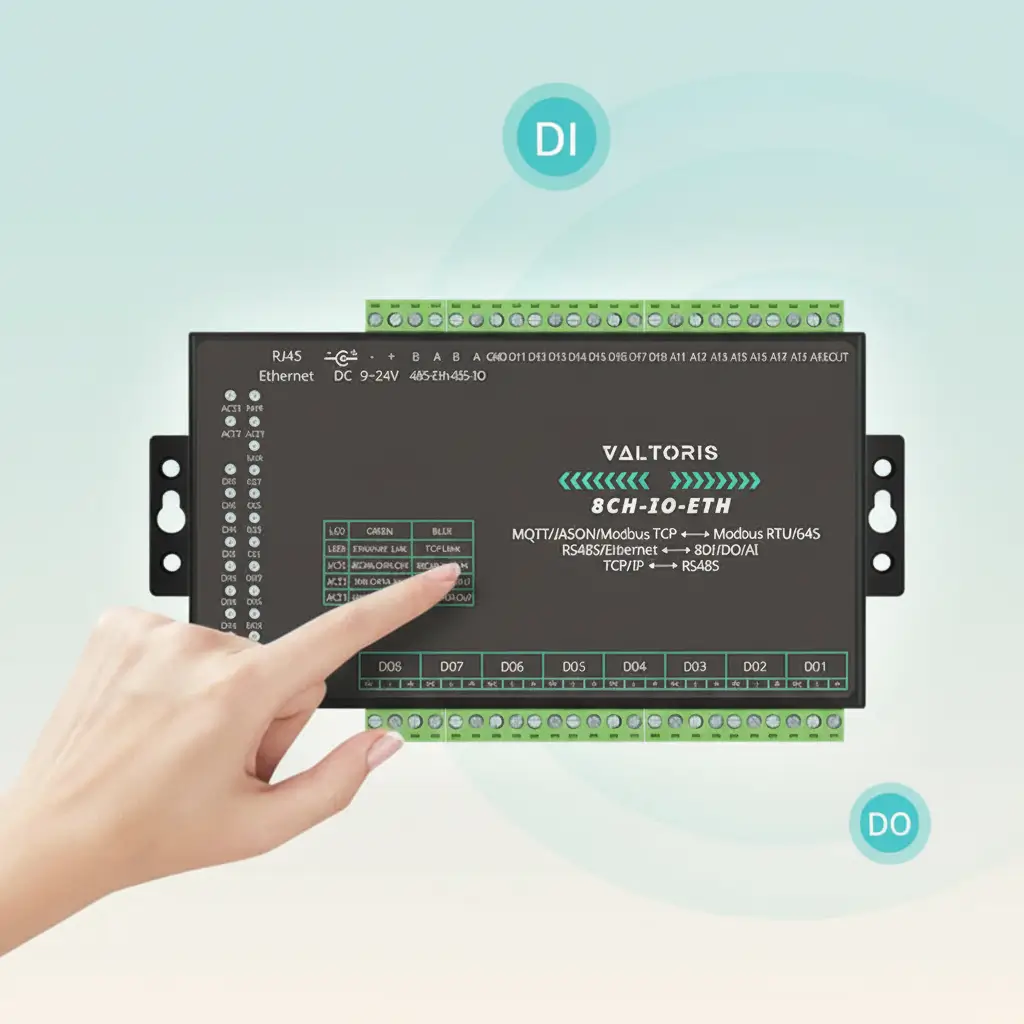
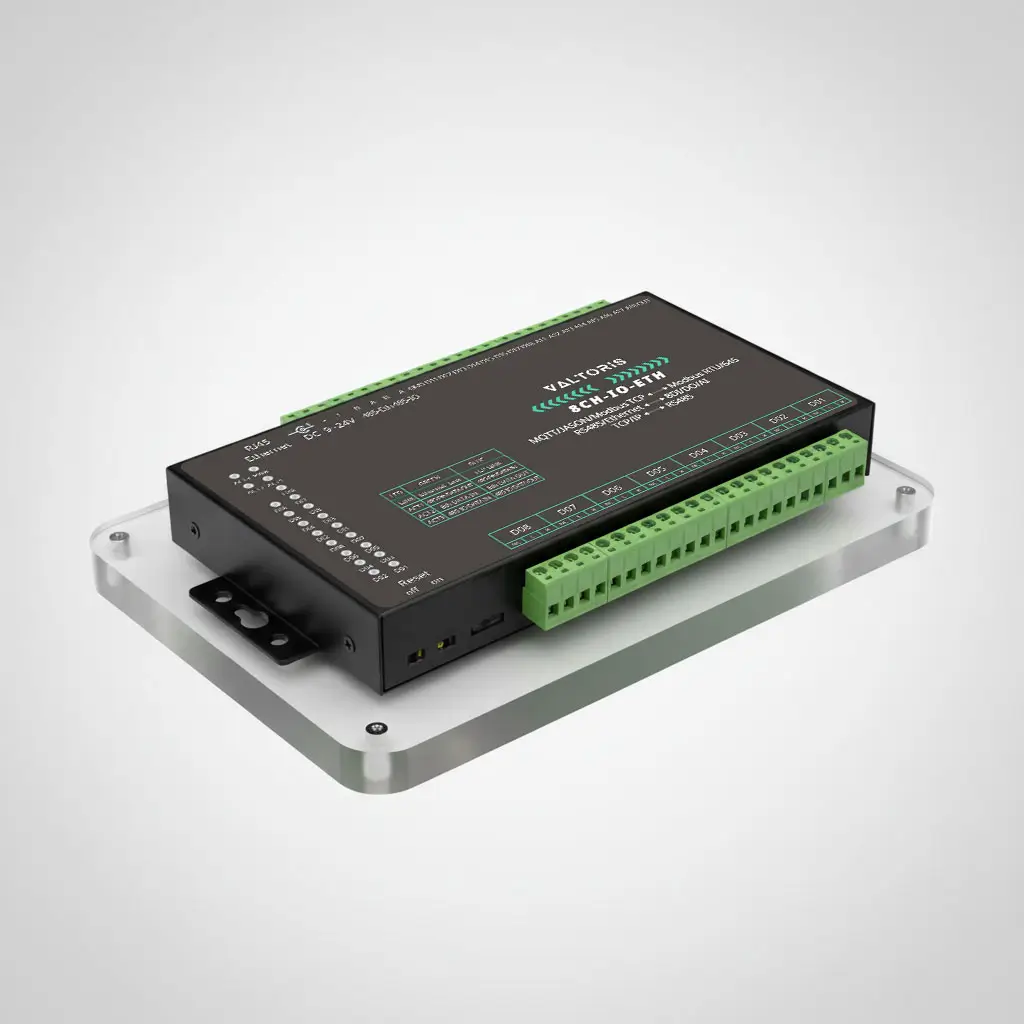
Présentation du produit
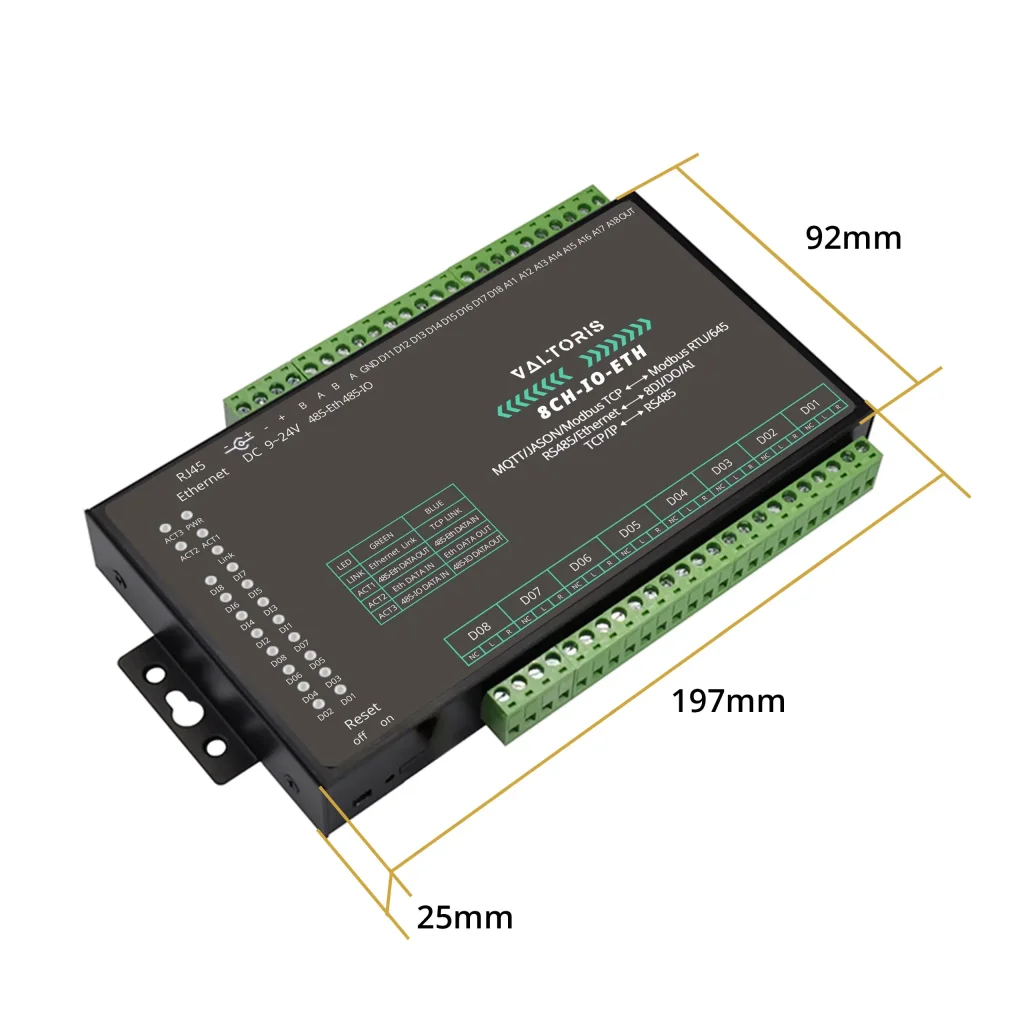
Dimensions générales
Guide de sélection du contrôleur d'E/S à distance

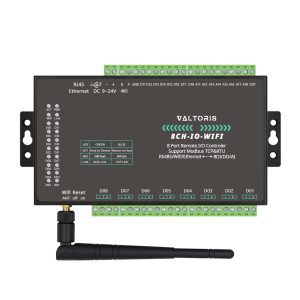
ModèleTYPE DE CONTRÔLE D'ENTRÉE/SORTIE À DISTANCEMéthode de communicationAlimentation électrique Plage de tensionDimensions (L × L × H)
(L × L × H)

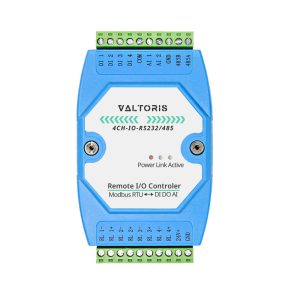
4CH-IO-RS232/485

2 AI 4 DI 4 DO Contrôleur d'E/S à distanceRS232/485Borne à visDC 9~24V121*72*34mm

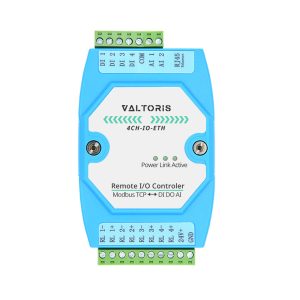
4CH-IO-ETH

2 AI 4 DI 4 DO Contrôleur d'E/S à distanceEthernetBorne à visDC 9~24V121*72*34mm

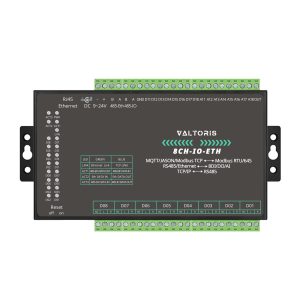
8CH-IO-ETH

8 AI 8 DI 8 DO Contrôleur d'E/S à distanceEthernetBorne à vis + port d'alimentation DC 5.5DC 9~24V197*92*25mm

8CH-IO-WE

8 AI 8 DI 8 DO Contrôleur d'E/S à distanceWIFIBorne à visDC 9~24V197*92*25mm

8CH-IO-LTE

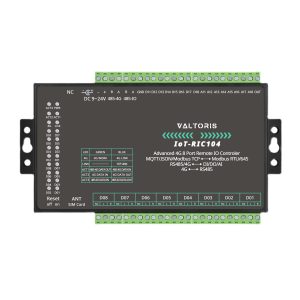
8 AI 8 DI 8 DO Contrôleur d'E/S à distance4GBorne à vis + port d'alimentation DC 5.5DC 9~24V197*92*25mm


External interface
Size:L x W x H =9.2cm×19.7cm×2.5cm
Software
Network protocolModbus TCP/MQTT/JSON/HTTP
RS485 protocolModbus RTU
485-IO Baud rateThe default baud rate is 115200bps
Parity bitnone
Data bit8 bits
Stop bit1 bit
AI Input Format
Current: 4~20mA,0~20mA

Votage: 0~5V,0~10V

Resister: 0~10K, temperature/humidity sensor

Power Consumption
Stable operating status: 30mA @12V

DO relay closed, DI input closed (maximum power consumption): 300mA@12V

Environment
Operating temperature-40~85℃
Storage temperature-45~165℃
Humidity range5~95% relative

Industrial factory floors rarely rely on a single data format. Engineers are often forced to deploy separate gateways to handle legacy RS485 instruments and raw analog/digital signals (like 4-20mA sensors or relay outputs), leading to bloated project costs and cluttered cabinet wiring.

The 8CH-IO-ETH resolves this bottleneck. It functions as a powerful hybrid edge node, consolidating mixed I/O telemetry and RS485 serial bridging into a single, compact DIN-rail device.

⚙️ Core Hybrid Acquisition Capabilities

  • All-in-One Data Collection: Simultaneously captures Digital Inputs (DI), executes Digital Outputs (DO), reads Analog Inputs (AI: 4~20mA, 0~10V) and an independent RS485 bus.

  • Unified Modbus/MQTT Up-link: Translates raw I/O terminal states and daisy-chained RS485 slave data into standardized Modbus TCP, MQTT or JSON payloads to your central SCADA or cloud dashboard.

  • Built-in Web Server: No complicated ladder logic programming needed. Set AI inputs ranges, I/O mapping and network parameters in a snap through a standard web browser.

  • Ultra-Low Power Consumption: It efficiently works with just 30mA (@12V) in stable status, perfect for solar-powered or off-grid remote telemetry enclosures.

Q1: What happens to the Digital Outputs (DO) if the Ethernet connection to the SCADA/PLC is accidentally lost?

A: Our priority is industrial safety. 8CH-IO-ETH features a configurable network watchdog and “Safe State” mechanism. If the module detects a loss of Modbus TCP communication (heartbeat timeout) for a user-defined time period, it will automatically force all DO relays into a pre-configured safe state (e.g. all normally open). It can protect valves or motors from runaway during a network outage.

Q2: Can the DO relays directly drive high-power AC motors or large inductive solenoid valves?

A: Not at all. The internal relays are used for control level switching (typically up to 2A at 30VDC or 250VAC for resistive loads). AC motors driving high inductance loads such as large water pumps will cause inrush current and back-EMF that will damage the module. You will need to wire the DO to trip an external heavy-duty industrial contactor or a Solid State Relay (SSR) to control the main power load.

Q3: Does the RS485 port only serve to configure the module, or can it collect data from external sensors?

A: The RS485 port is built-in and is not just a configuration port, it is an active Modbus RTU gateway. This port can be daisy chained to third party external RS485 devices such as power meters or VFDs. The 8CH-IO-ETH polls them and maps their data into its own unified Modbus TCP register list. If your project requires connecting dozens of serial devices we recommend offloading that traffic to a dedicated [Industrial 8-Port Serial to Ethernet Server]

Q4: How fast can my PLC poll the Analog Inputs (4~20mA) over Modbus TCP without crashing the module?

A: The hardware utilizes a high-speed internal MCU to continuously sample the AI channels and update the holding registers. On a standard, un-congested factory Ethernet LAN, your master PLC can reliably poll the module at 20-50 millisecond intervals. This provides near real-time responsiveness for critical flow rate or pressure monitoring without causing network congestion.

REQUEST A QUOTE

SKU/Part No.