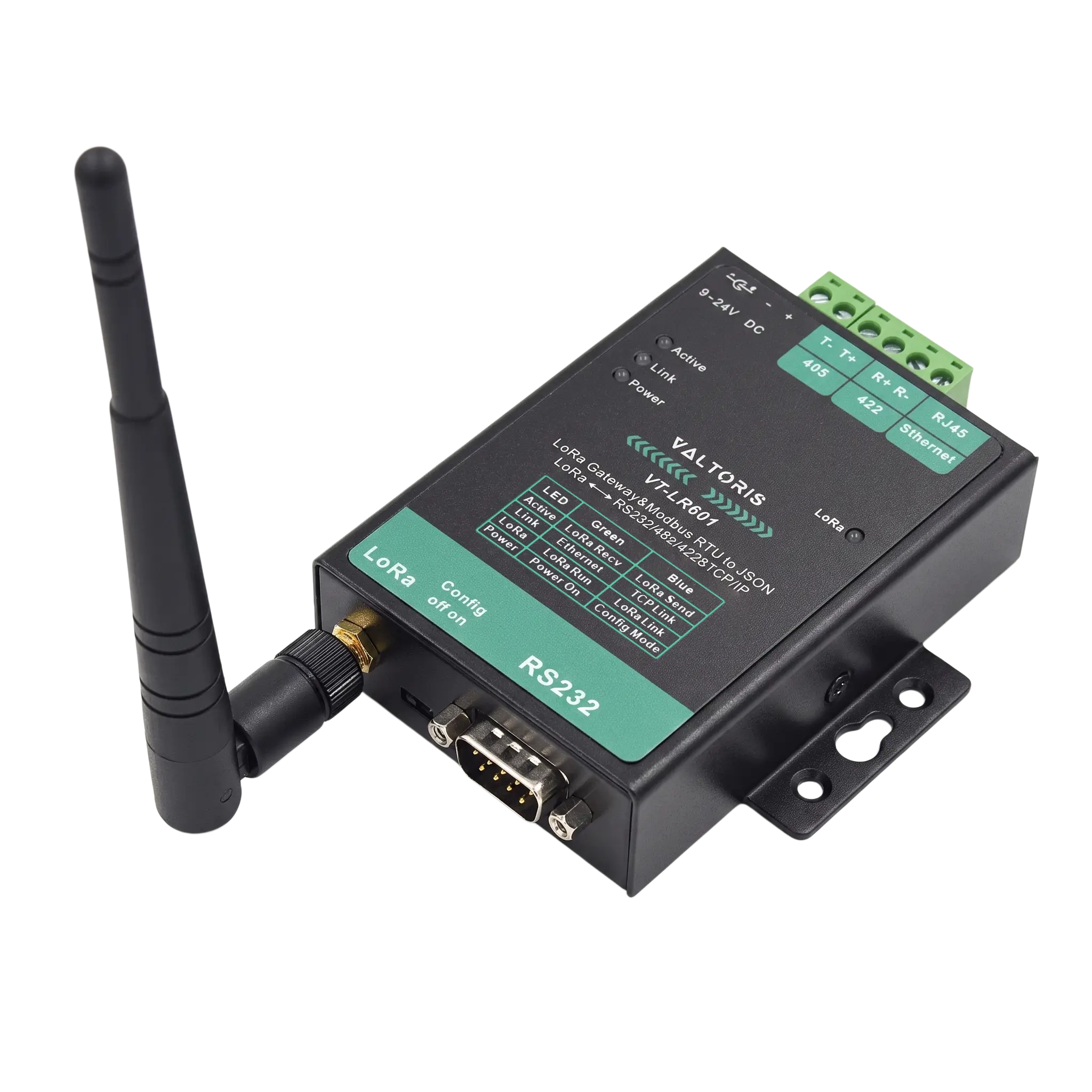
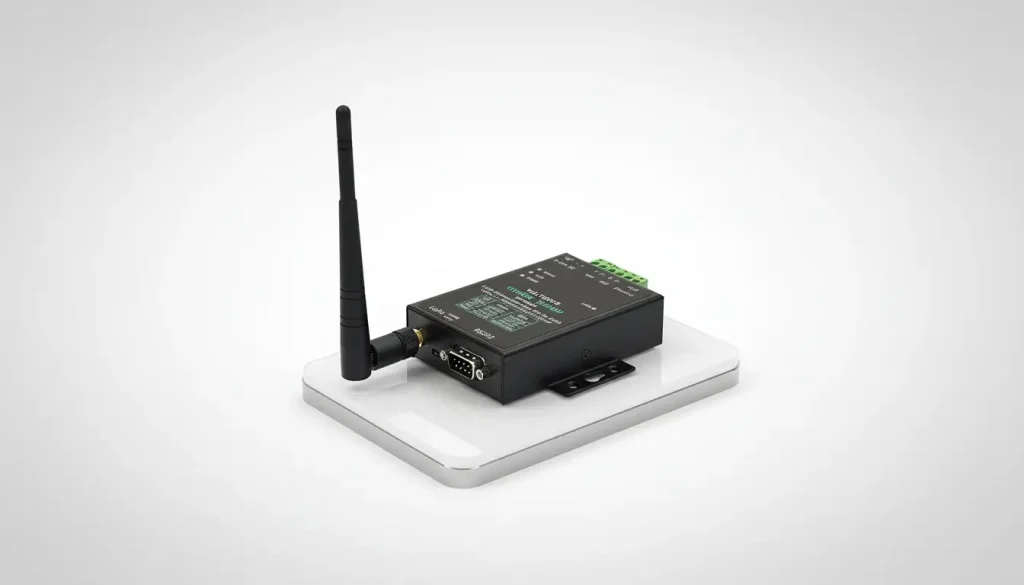
Diseñada para telemetría inalámbrica sin costes, esta pasarela industrial LoRa conecta de forma segura datos serie RS232/485/422 y Ethernet a redes TCP/IP estándar. Funciona como un sólido convertidor de Modbus TCP a RTU, lo que permite la integración perfecta de dispositivos de campo heredados remotos en sistemas SCADA centralizados sin costes recurrentes de telefonía móvil.
Nuestros adaptadores LoRa deben utilizarse por parejas:
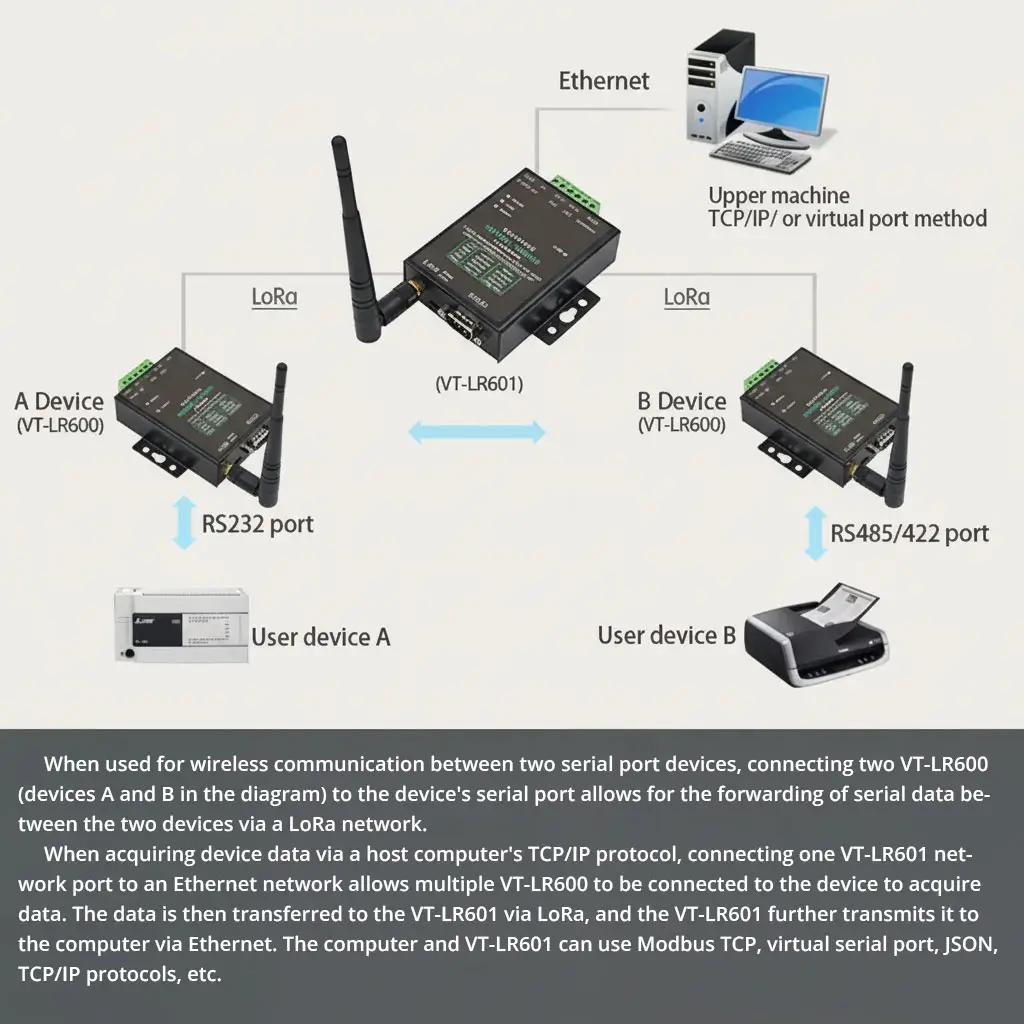
Para RS485/232/422 a LoRa a RS485/232/422, recomendamos VT-LR600 +VT-LR600.
Para adaptadores de RS485/232/422 a LoRa a Ethernet, recomendamos VT-LR600 + VT-LR601.
Por favor, compre VT-LR600 al mismo tiempo, enlace de compra como abajo:
Los productos Valtoris LORA pueden aplicarse a:
Electrónica de potencia, instrumentos inteligentes;
Sistema de automatización industrial;
Internet de las cosas; Vigilancia climática y geológica
Sistema de control de edificios/accesos/seguridad
Función principal
Esquema de comunicación LORA de larga distancia, alto rendimiento, alta estabilidad La distancia de comunicación al aire libre sin blindaje es de 6km~8km
Función inalámbrica más potente
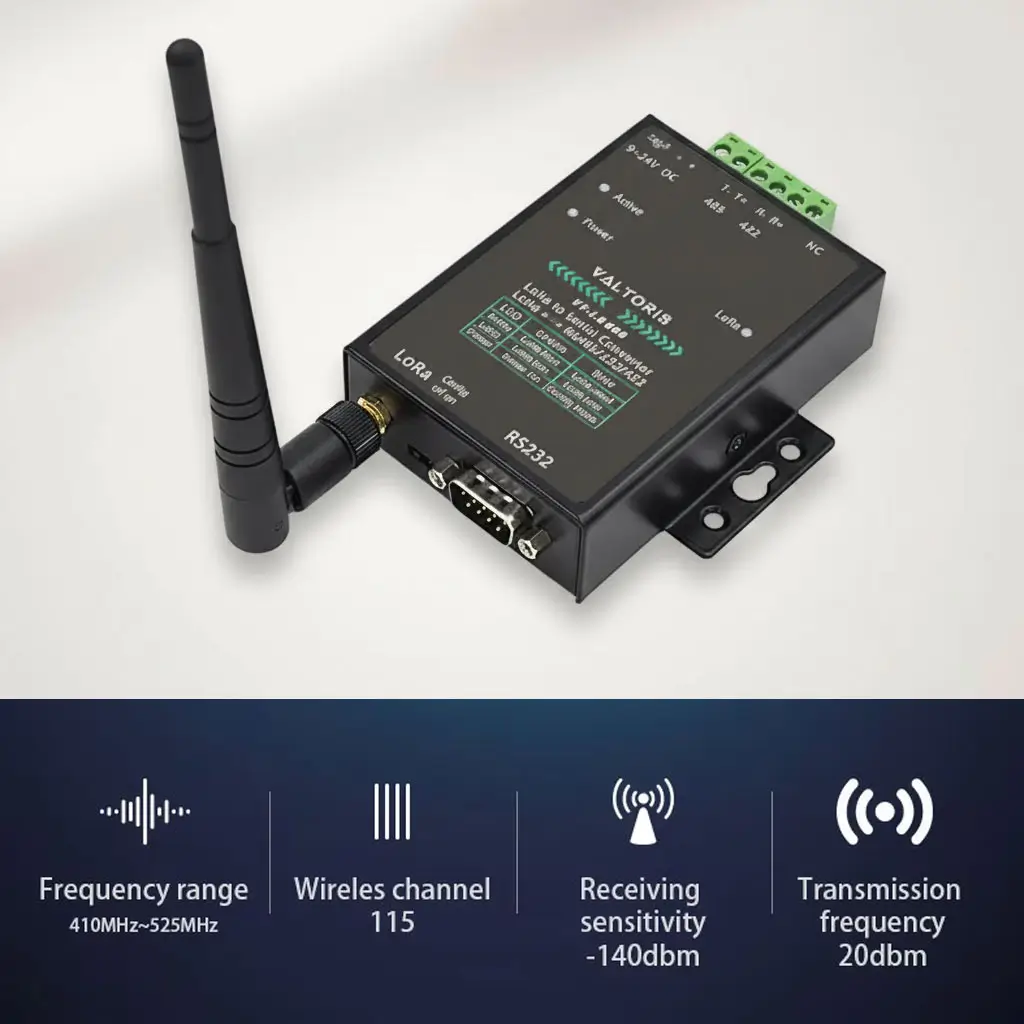
El VT-LR600 alcanza un alto nivel de rendimiento en comunicaciones inalámbricas, incluido el rango de frecuencia, el canal inalámbrico, la sensibilidad del receptor y la potencia de transmisión.
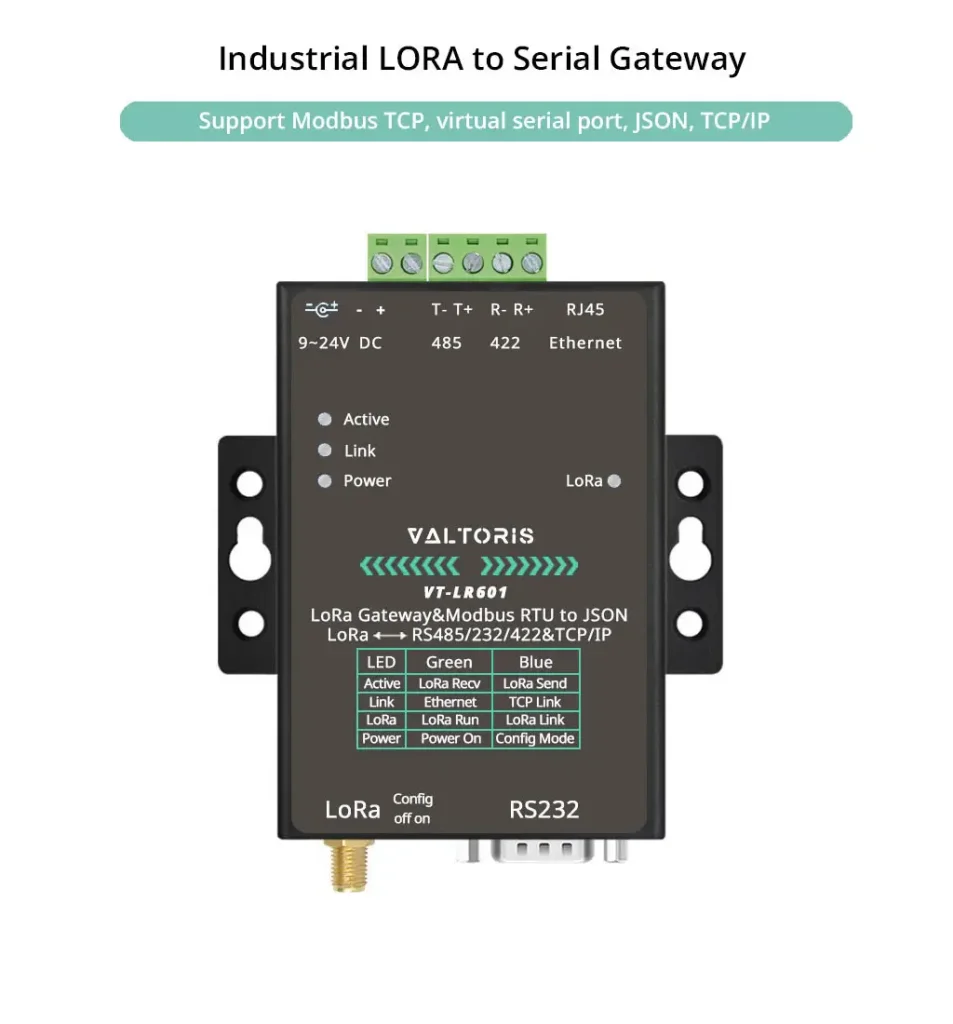
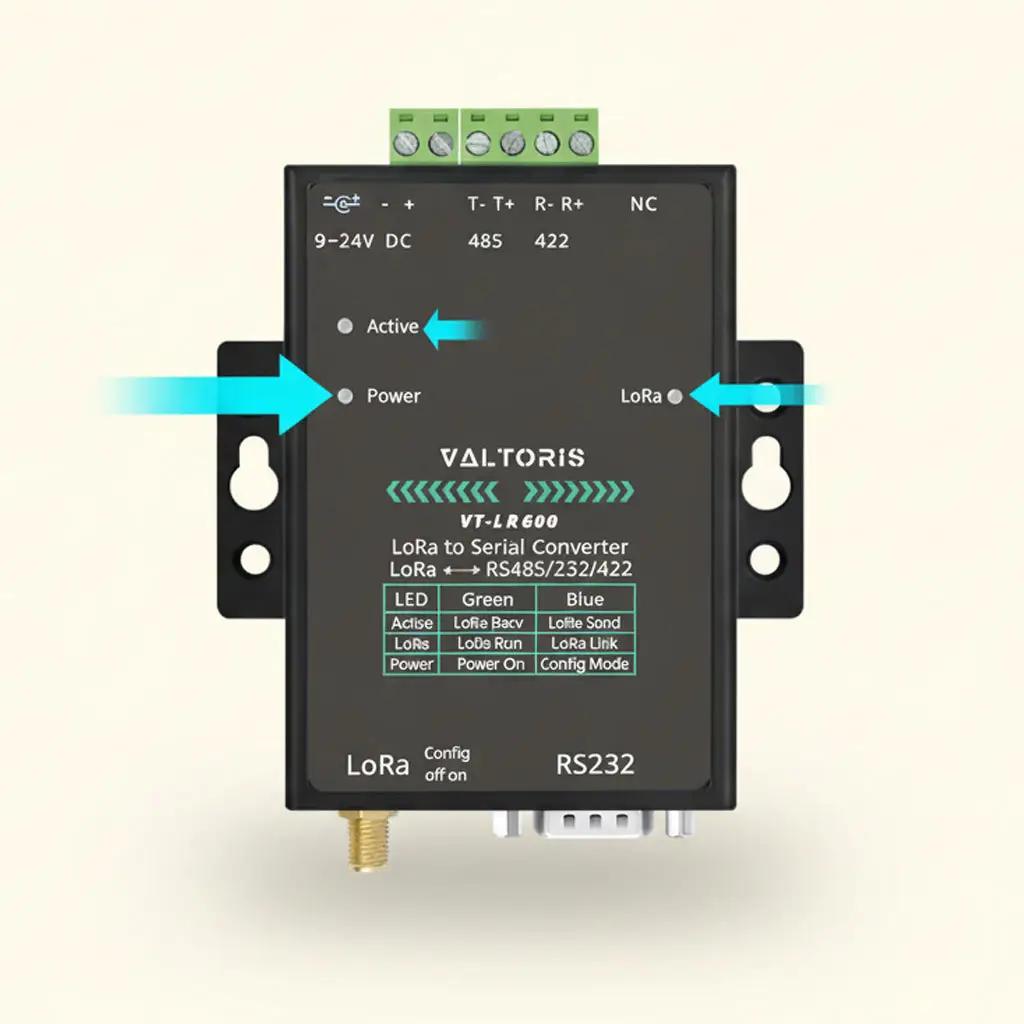
Indicadores luminosos
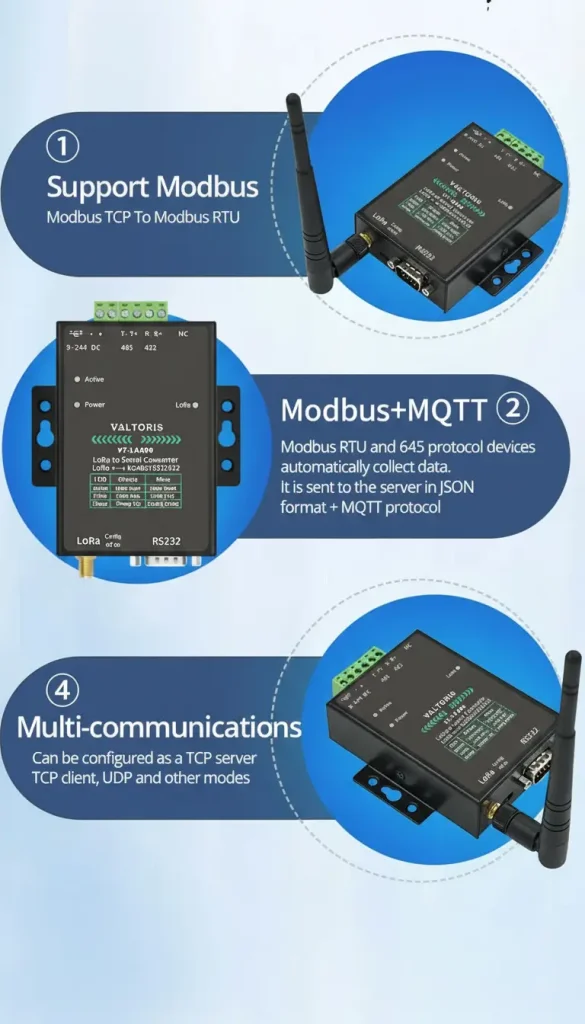
Multifunción
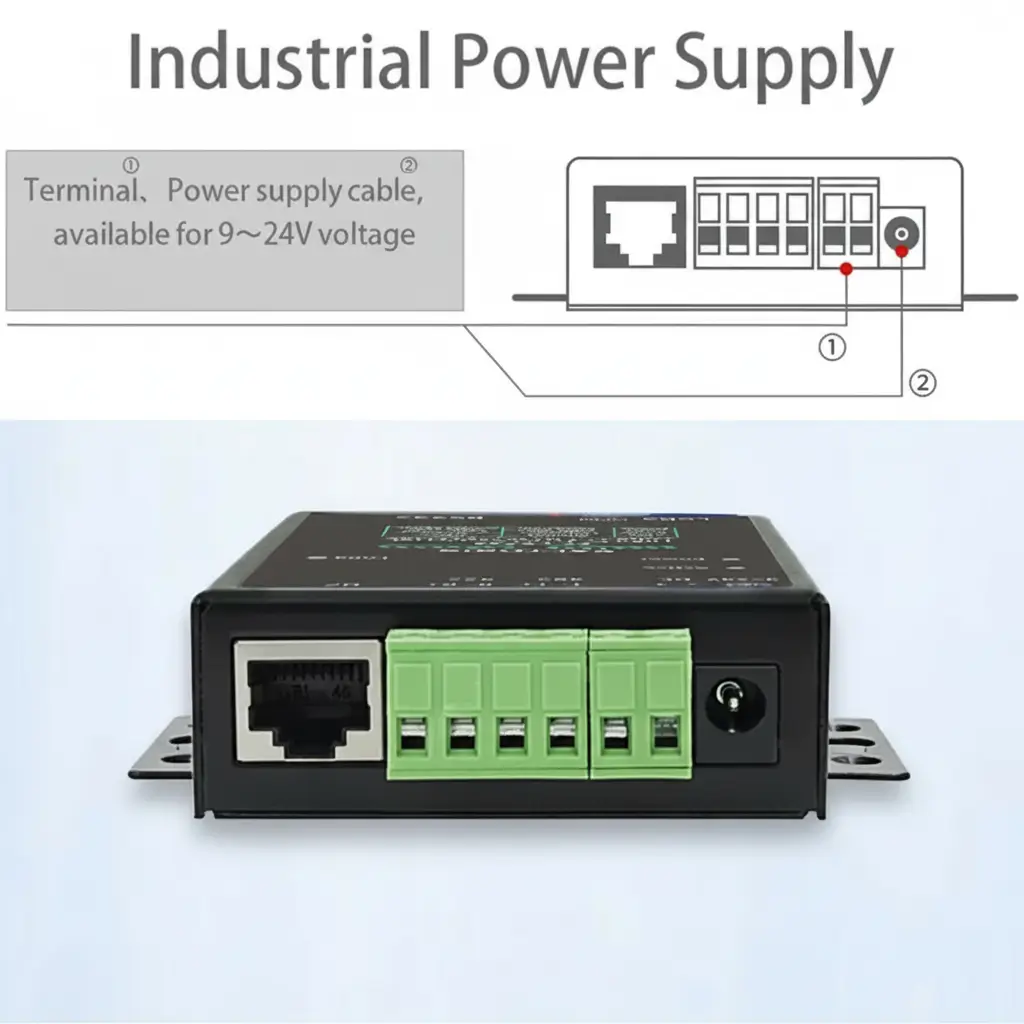
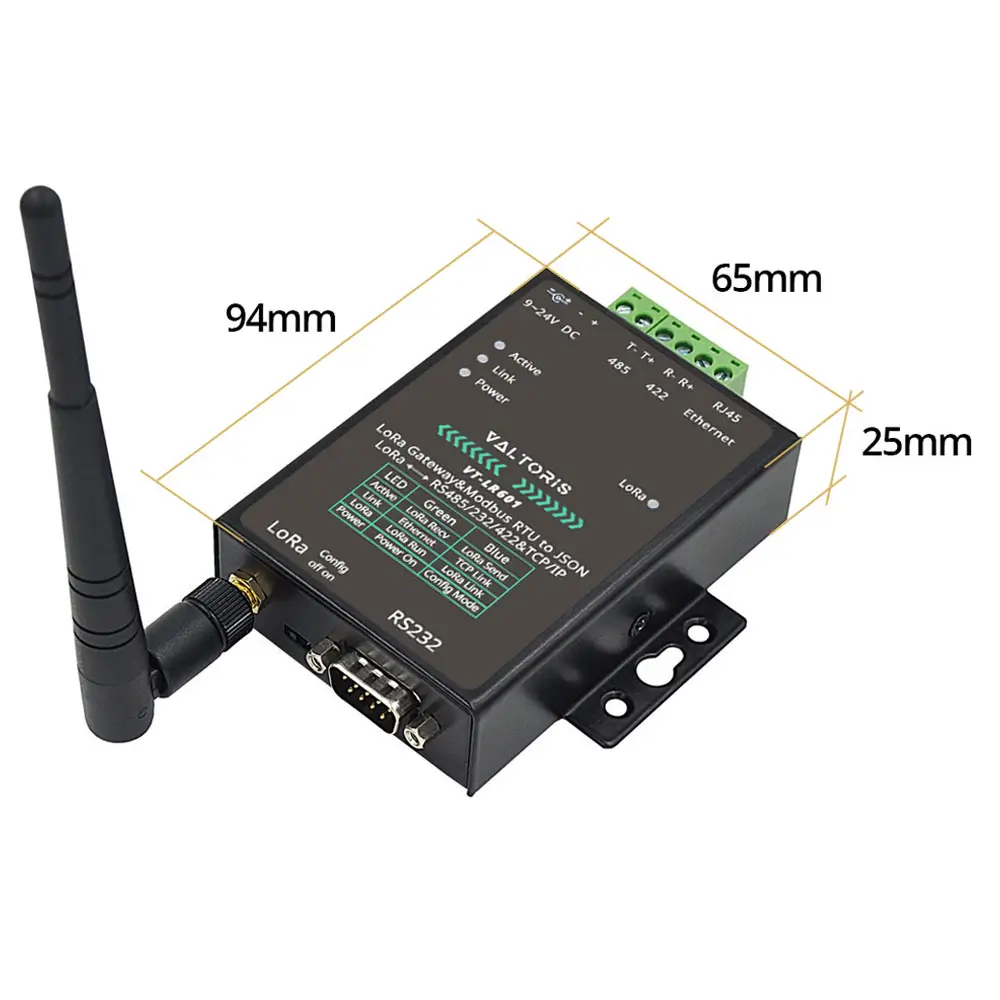
El VT-LR601, basado en el VT-LR600, ofrece conversión LoRa a Ethernet multifuncional, permitiendo la conversión LoRa a TCP/IP.
(Only VT-LR601 support TCP/IP protocol) ETHERNET, IP, TCP, UDP, HTTP, ARP, ICMP, DHCP, DNS
Environment
Operating temperature
-40~85℃
Storage temperature
-45~165℃
Humidity range
5~95% relative humidity
Summary:
LORA (Point-to-Point) is a long-distance wireless communication scheme. Compared with GPRS and 4G solutions, Lora does not require a monthly fee for access to the network, and it has a longer distance compared with WiFi and Zigbee. Therefore, LoRa is increasingly adopted for long-range, small-payload telemetry.
Features
LORA products adopt SX1287 chip and use Semtech’s patented LORA ™ modulation technology to achieve a receiving sensitivity of -140dBm and output power of +20dBm. The outdoor line-of-sight communication distance is 8km, featuring long distance, low power consumption and anti-interference.
Our LoRa product line consists of two main categories. The first is the serial-to-LoRa node (model VT-LR600), featuring three serial interfaces: RS232, RS485, and RS422. The second is the Ethernet (TCP/IP) to LoRa gateway (model VT-LR601), bridging LoRa networks with the Internet.
Q1: Do I need a third-party LoRaWAN Network Server (LNS) or cloud subscription to use this gateway?
A: Nope. The VT-LR series employs direct Point-to-Point (P2P) LoRa modulation, not the complex LoRaWAN protocol. The VT-LR601 is a stand-alone localized gateway. It takes radio telemetry and turns it directly into Modbus TCP/IP on your local Ethernet network, no external cloud servers, LNS configurations or monthly subscriptions required.
Q2: How does my central SCADA system address multiple remote serial nodes through this single Ethernet gateway?
A: The VT-LR601 operates as a transparent Modbus TCP to RTU bridge. Your SCADA system simply connects to the VT-LR601’s local IP address and uses standard Modbus Slave IDs to target specific remote sensors. The gateway automatically routes the TCP query over the LoRa network to the correct remote VT-LR600 node, and returns the serial response back as a TCP packet.
Q3: The spec indicates an 8km range, but will it work through thick concrete walls in an industrial plant?
A: The 8km rating applies to pure Line-of-Sight (LoS) outdoor environments. In heavy industrial settings with steel structures and concrete, the range decreases. However, thanks to the VT-LR601’s exceptional -140dBm receiving sensitivity, it can reliably penetrate approximately 5 standard building floors. For optimal indoor performance, we always recommend mounting the magnetic suction cup antenna outside of your metal control cabinets.
[What is an Industrial LoRa Device?] – Learn how to plan your RF network, bypass physical obstacles, and deploy P2P LoRa in heavy industrial environments.


 Documents
 Utilities