
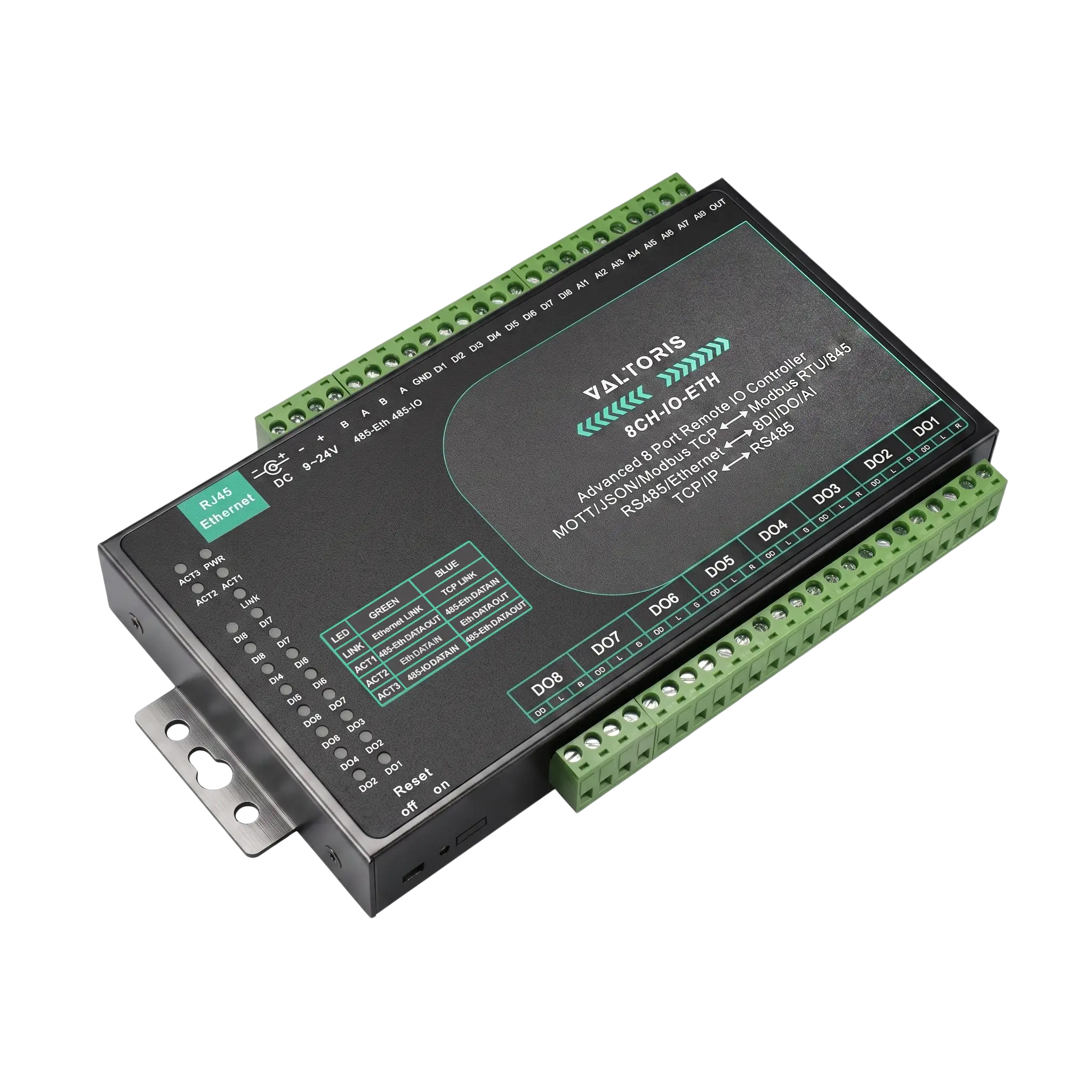
Módulo de E/S remotas industriales Ethernet de 8 canales y pasarela RS485
Diseñado para redes industriales híbridas, este nodo de E/S remotas Ethernet de 8 canales consolida la telemetría mixta analógica y digital con un puente serie RS485 integrado, ofreciendo una sólida conversión de protocolos Modbus y MQTT para una adquisición de datos SCADA unificada.
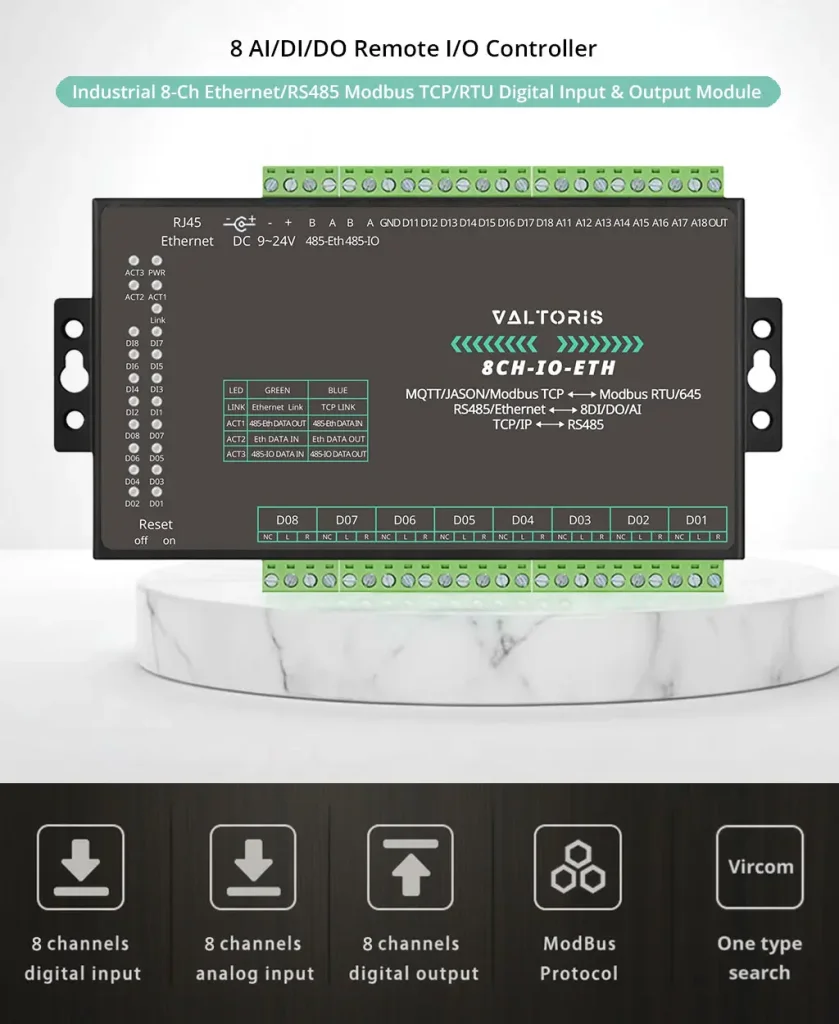
Función principal
Admite la lectura de la entrada digital mediante el envío de comandos del protocolo Modbus TCP/RTU a través de Ethernet/RS485 para el control de la salida digital
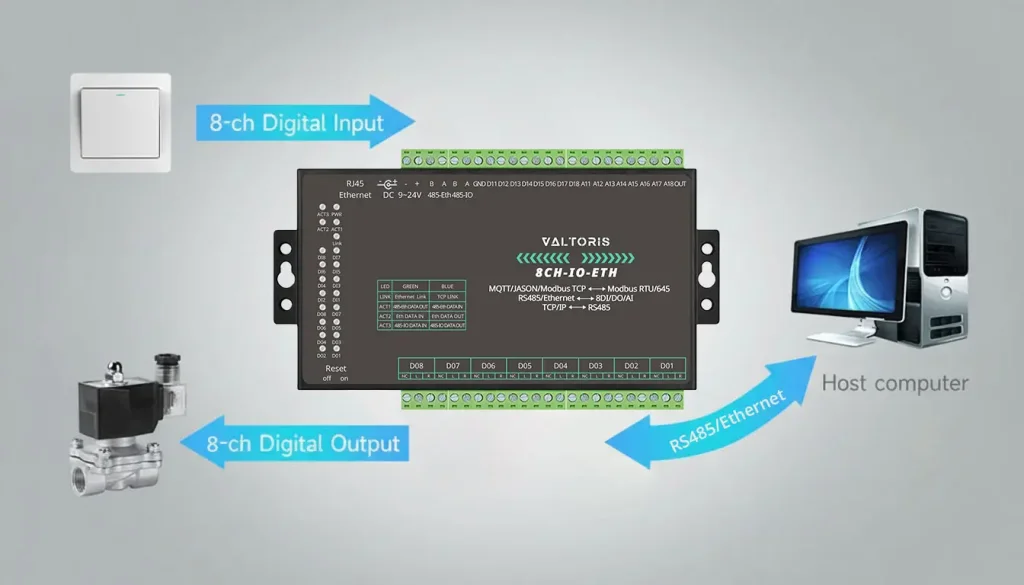
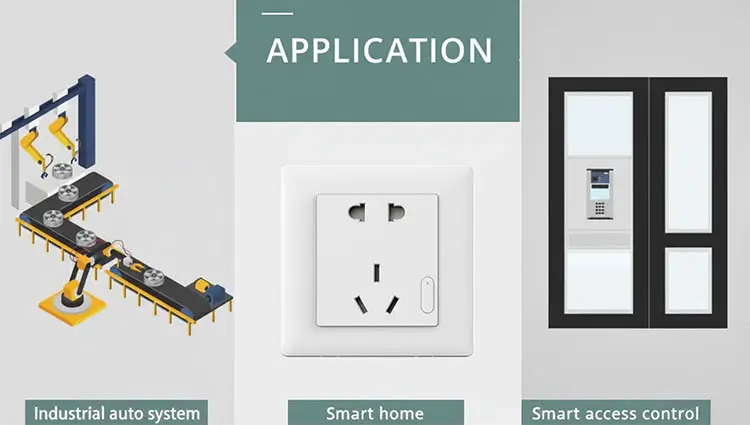
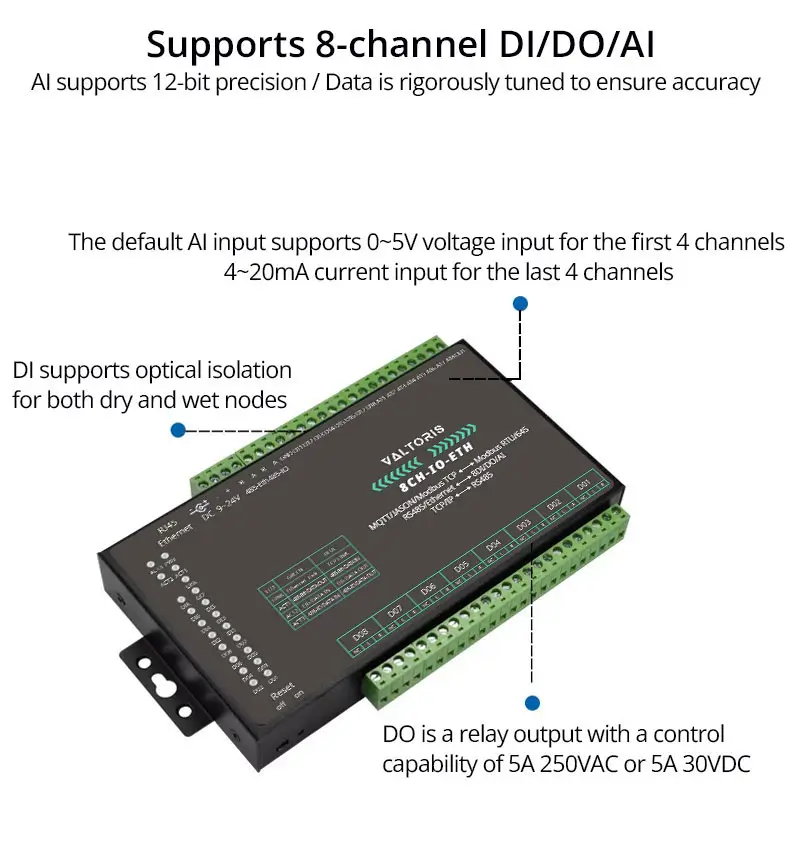
Protocolo de comunicación ModBus
Soporta ModBus TCP o ModBus RTU
Compatible con MQTT+JSON y HTTP
Proporciona un conjunto completo de comandos RS485 Modbus RTU para facilitar la integración y el desarrollo por parte de los ingenieros.
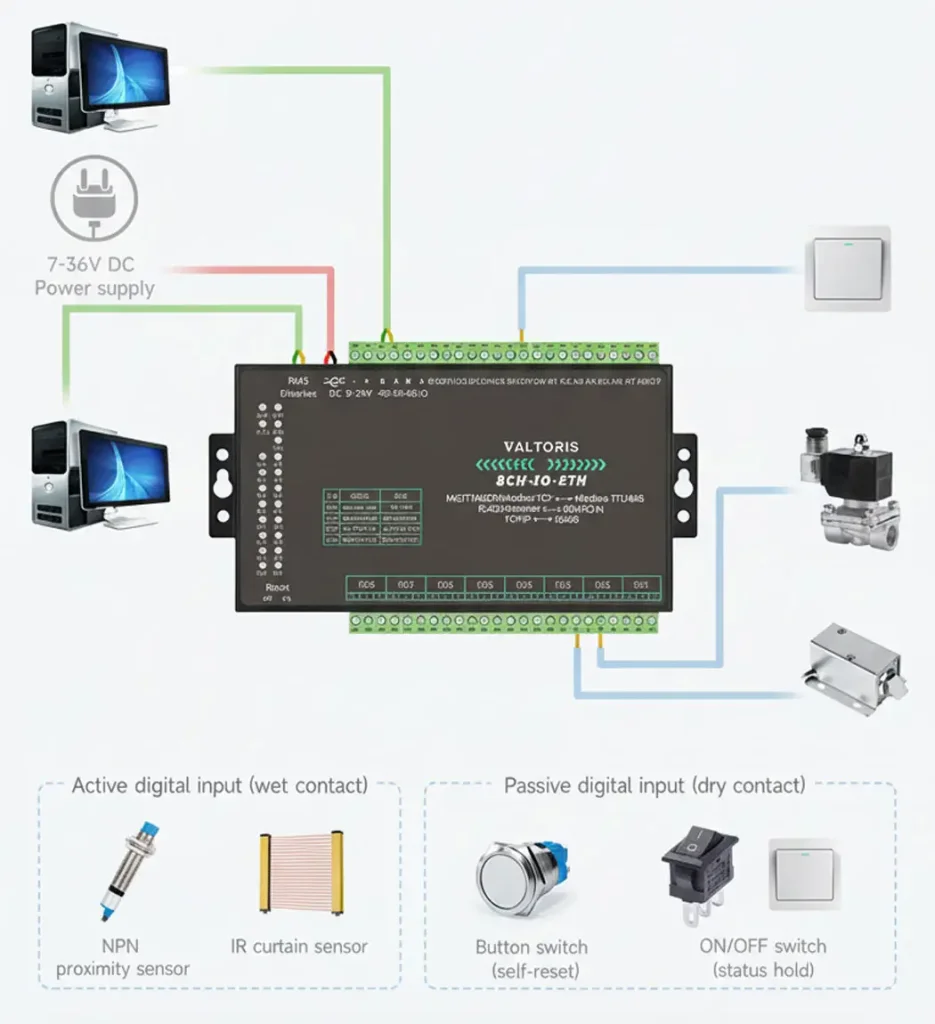
Luz indicadora de riqueza
Muestra el estado DI/DO, el estado de la red, el estado de la comunicación de datos, etc.
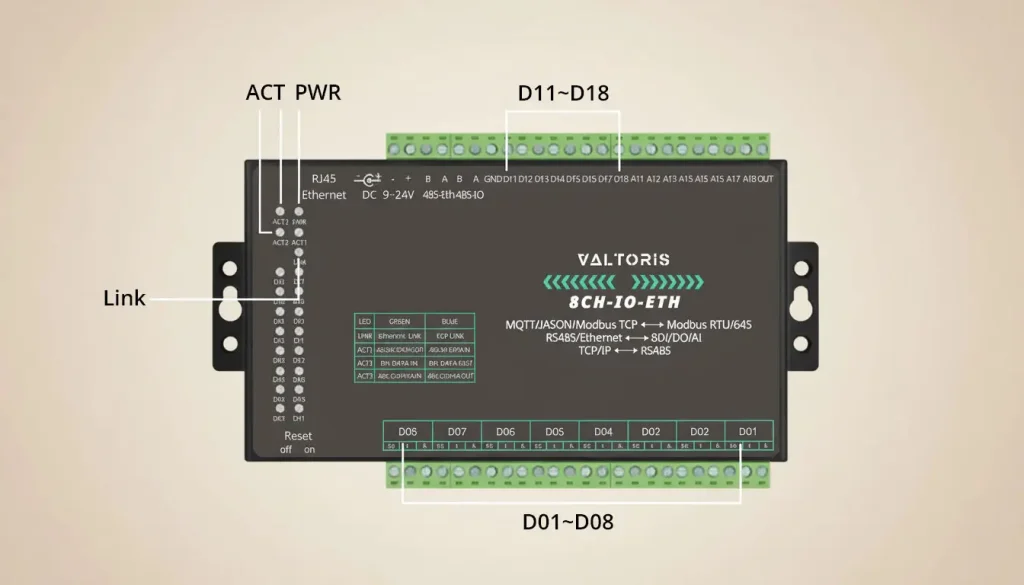
| Indicador luminoso | Nombredel indicador | Verde | Azul |
| PWR | Indicador luminoso de encendido | ||
| ACT3 | Luz de comunicación IO | 485-IO Interfaz de entrada de datos | Se devuelven los datos de la interfaz 485-IO, lo que indica que la instrucción de control IO enviada se identificó correctamente. |
| ACT2 | Indicador de red/telecomunicaciones | El extremo de la red recibe datos | El lado de la red envía datos; Este indicador parpadea durante la inicialización, lo que indica que durante la inicialización, el indicador se apaga después de la inicialización. |
| ACT1 | Indicador de comunicación serie | Salida de datos del puerto RS485 | Entrada de datos del puerto RS485 |
| ENLACE | Indicador de conexión TCP | Indica que el cable de red está correctamente conectado. | Encendido fijo cuando se establece la conexión TCP. |
| DI1~DI8 | Indicador luminoso DI | On indica que la entrada está baja o cerrada. | |
| DO1~DO8 | Encendido: El relé está cerrado. |
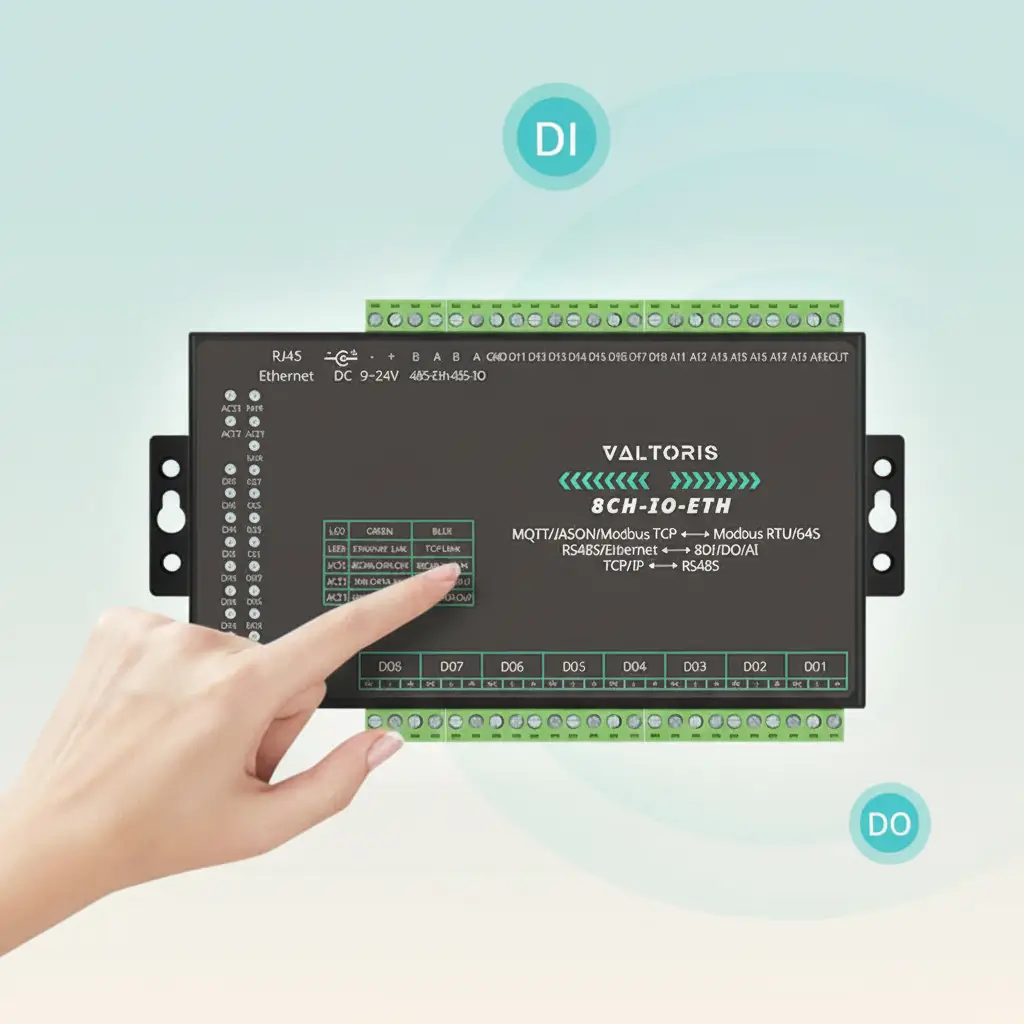
Admite control DI DO
Un par de dispositivos 8CH-IO-ETH pueden conectarse mediante comunicación Ethernet para controlarse mutuamente, lo que facilita su uso.
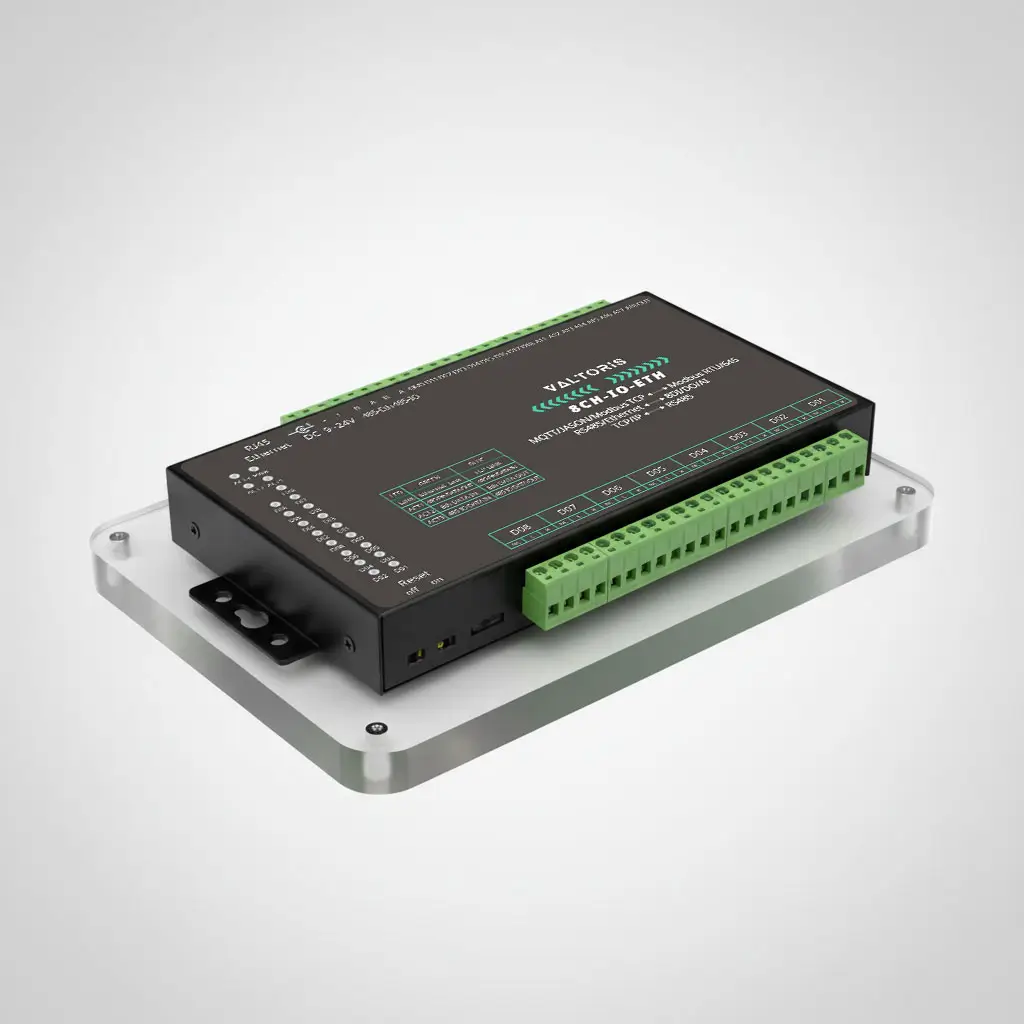
Productos
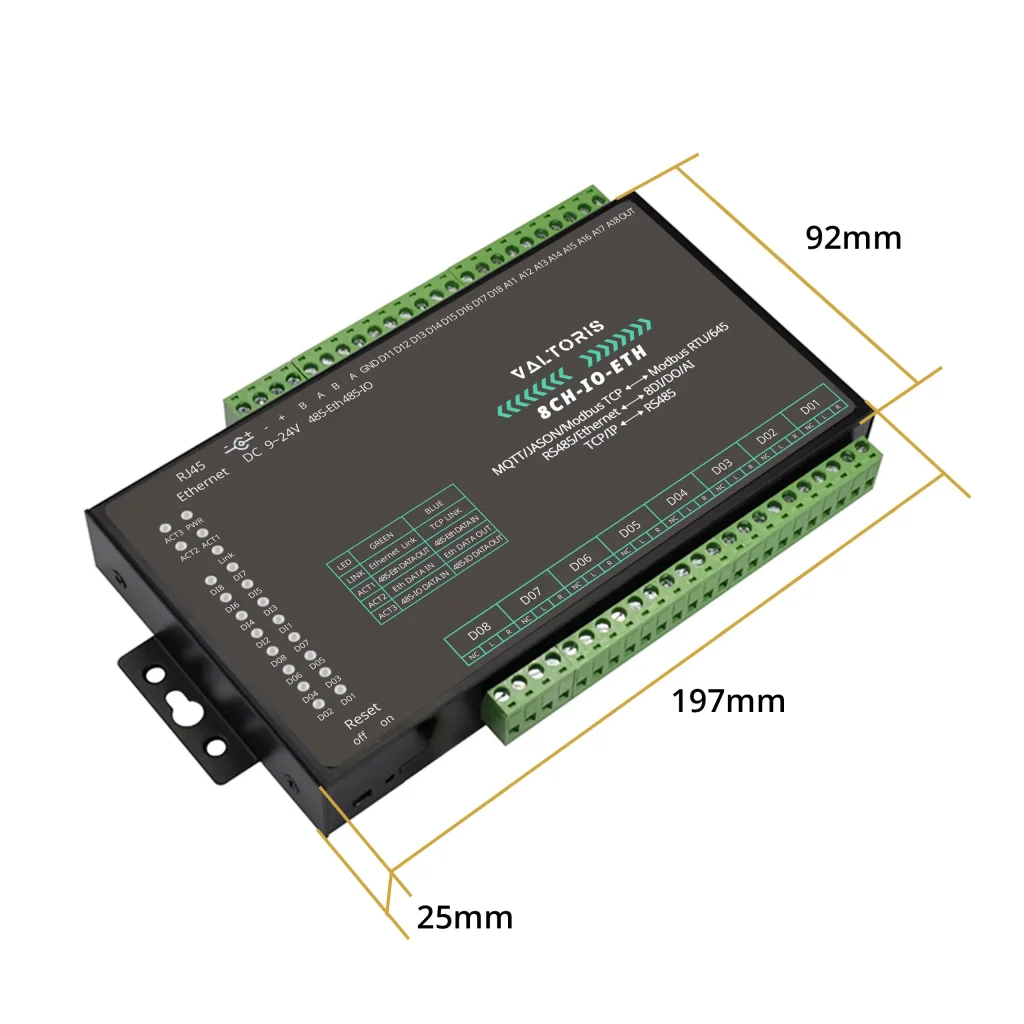
Dimensiones generales
Guía de selección del controlador de E/S remotas
| Modelo | TIPO DE CONTROL REMOTO I/O | Método de comunicación | Fuente de alimentación | Rango de tensión | Dimensiones (L × A × A) |
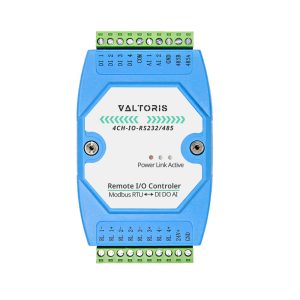 4CH-IO-RS232/485 | 2 AI 4 DI 4 DO Controlador remoto de E/S | RS232/485 | Terminal de tornillo | DC 9~24V | 121*72*34mm |
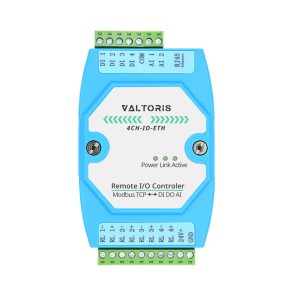 4CH-IO-ETH | 2 AI 4 DI 4 DO Controlador remoto de E/S | Ethernet | Terminal de tornillo | DC 9~24V | 121*72*34mm |
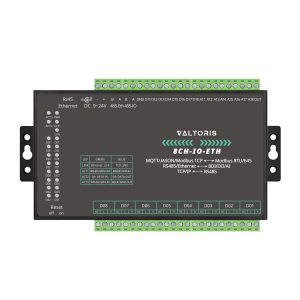 8CH-IO-ETH | 8 AI 8 DI 8 DO Controlador remoto de E/S | Ethernet | Terminal de tornillo + puerto de alimentación DC 5.5 | DC 9~24V | 197*92*25mm |
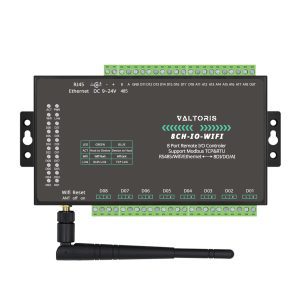 8CH-IO-WE | 8 AI 8 DI 8 DO Controlador remoto de E/S | WIFI | Terminal de tornillo | DC 9~24V | 197*92*25mm |
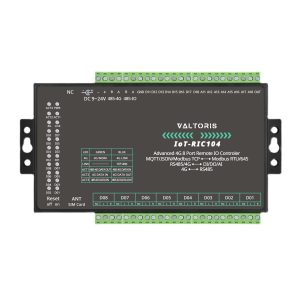 8CH-IO-LTE | 8 AI 8 DI 8 DO Controlador remoto de E/S | 4G | Terminal de tornillo + puerto de alimentación DC 5.5 | DC 9~24V | 197*92*25mm |
| External interface | |
| Size: | L x W x H =9.2cm×19.7cm×2.5cm |
| Software | |
| Network protocol | Modbus TCP/MQTT/JSON/HTTP |
| RS485 protocol | Modbus RTU |
| 485-IO Baud rate | The default baud rate is 115200bps |
| Parity bit | none |
| Data bit | 8 bits |
| Stop bit | 1 bit |
| AI Input Format | |
| Current: 4~20mA,0~20mA Votage: 0~5V,0~10V Resister: 0~10K, temperature/humidity sensor | |
| Power Consumption | |
| Stable operating status: 30mA @12V DO relay closed, DI input closed (maximum power consumption): 300mA@12V | |
| Environment | |
| Operating temperature | -40~85℃ |
| Storage temperature | -45~165℃ |
| Humidity range | 5~95% relative |
Industrial factory floors rarely rely on a single data format. Engineers are often forced to deploy separate gateways to handle legacy RS485 instruments and raw analog/digital signals (like 4-20mA sensors or relay outputs), leading to bloated project costs and cluttered cabinet wiring.
The 8CH-IO-ETH resolves this bottleneck. It functions as a powerful hybrid edge node, consolidating mixed I/O telemetry and RS485 serial bridging into a single, compact DIN-rail device.
⚙️ Core Hybrid Acquisition Capabilities
All-in-One Data Collection: Simultaneously captures Digital Inputs (DI), executes Digital Outputs (DO), reads Analog Inputs (AI: 4~20mA, 0~10V) and an independent RS485 bus.
Unified Modbus/MQTT Up-link: Translates raw I/O terminal states and daisy-chained RS485 slave data into standardized Modbus TCP, MQTT or JSON payloads to your central SCADA or cloud dashboard.
Built-in Web Server: No complicated ladder logic programming needed. Set AI inputs ranges, I/O mapping and network parameters in a snap through a standard web browser.
Ultra-Low Power Consumption: It efficiently works with just 30mA (@12V) in stable status, perfect for solar-powered or off-grid remote telemetry enclosures.
Q1: What happens to the Digital Outputs (DO) if the Ethernet connection to the SCADA/PLC is accidentally lost?
A: Our priority is industrial safety. 8CH-IO-ETH features a configurable network watchdog and “Safe State” mechanism. If the module detects a loss of Modbus TCP communication (heartbeat timeout) for a user-defined time period, it will automatically force all DO relays into a pre-configured safe state (e.g. all normally open). It can protect valves or motors from runaway during a network outage.
Q2: Can the DO relays directly drive high-power AC motors or large inductive solenoid valves?
A: Not at all. The internal relays are used for control level switching (typically up to 2A at 30VDC or 250VAC for resistive loads). AC motors driving high inductance loads such as large water pumps will cause inrush current and back-EMF that will damage the module. You will need to wire the DO to trip an external heavy-duty industrial contactor or a Solid State Relay (SSR) to control the main power load.
Q3: Does the RS485 port only serve to configure the module, or can it collect data from external sensors?
A: The RS485 port is built-in and is not just a configuration port, it is an active Modbus RTU gateway. This port can be daisy chained to third party external RS485 devices such as power meters or VFDs. The 8CH-IO-ETH polls them and maps their data into its own unified Modbus TCP register list. If your project requires connecting dozens of serial devices we recommend offloading that traffic to a dedicated [Industrial 8-Port Serial to Ethernet Server]
Q4: How fast can my PLC poll the Analog Inputs (4~20mA) over Modbus TCP without crashing the module?
A: The hardware utilizes a high-speed internal MCU to continuously sample the AI channels and update the holding registers. On a standard, un-congested factory Ethernet LAN, your master PLC can reliably poll the module at 20-50 millisecond intervals. This provides near real-time responsiveness for critical flow rate or pressure monitoring without causing network congestion.