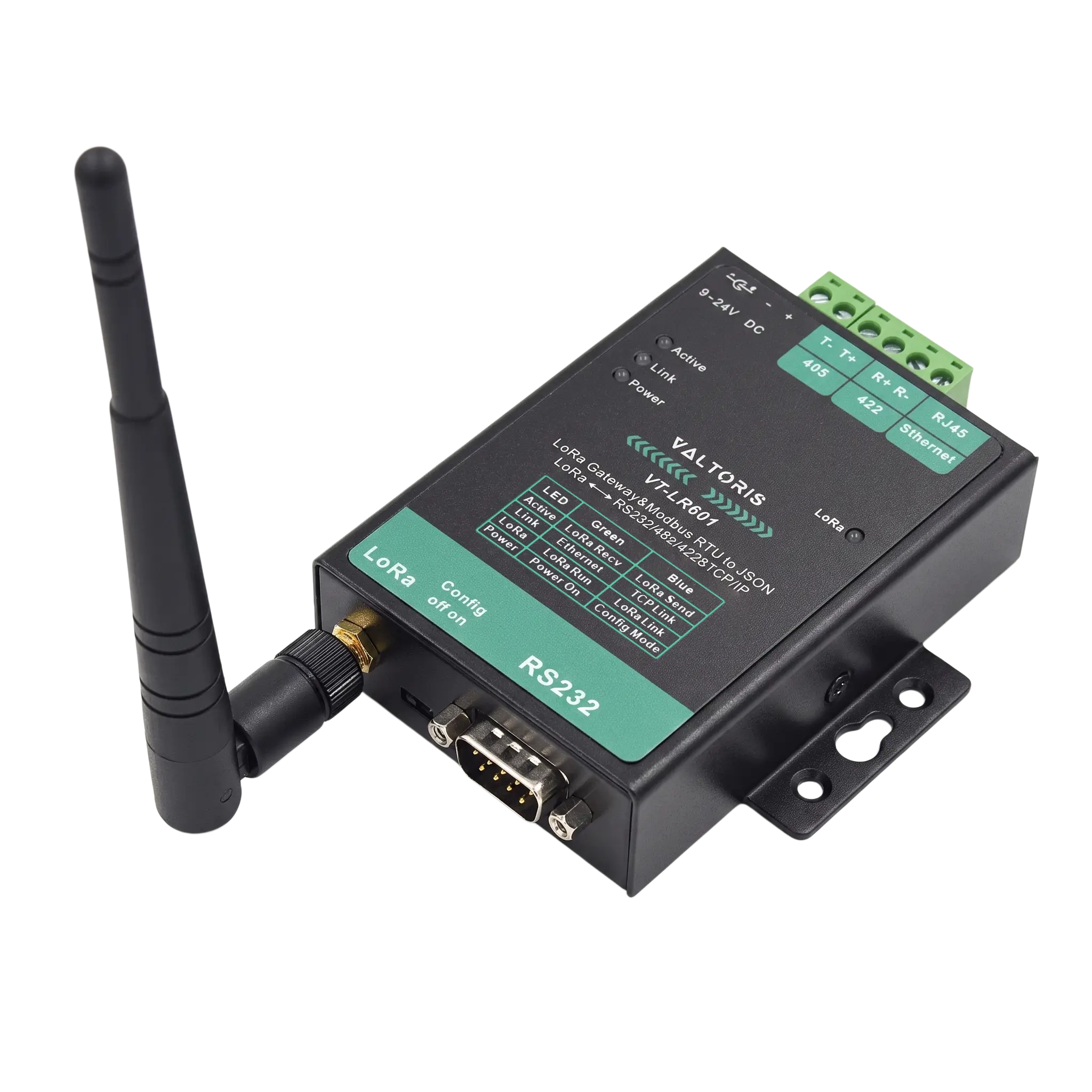
Passerelle industrielle LoRa vers Ethernet (VT-LR601)
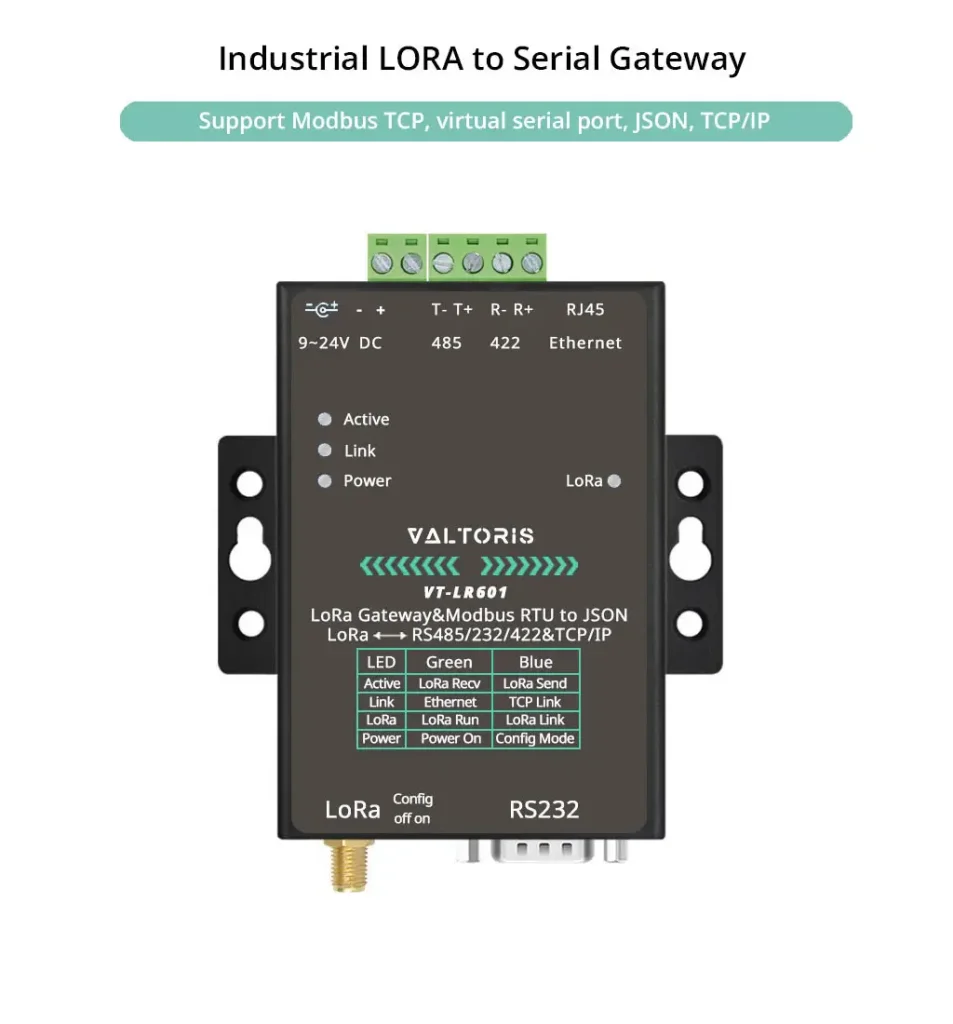
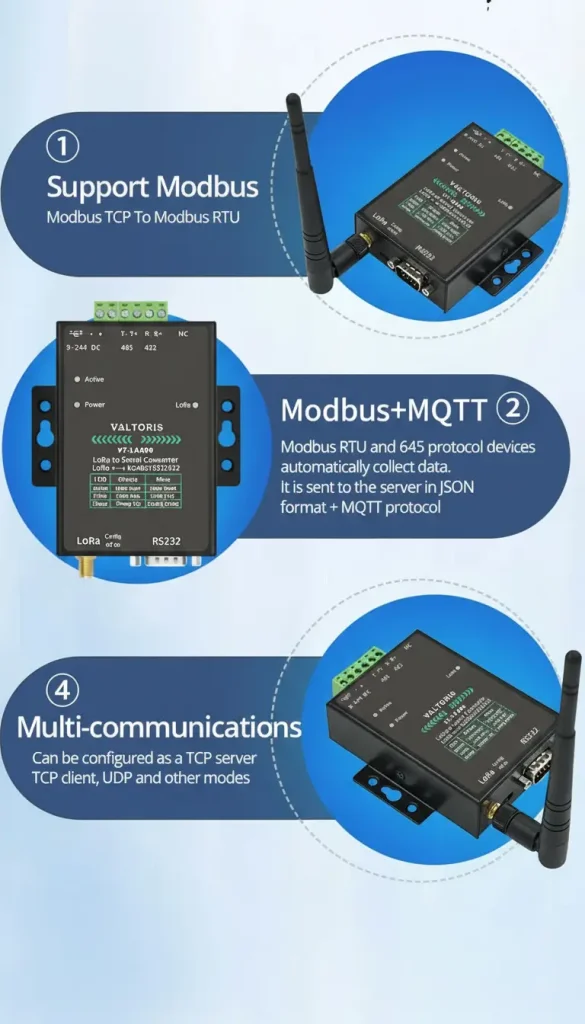
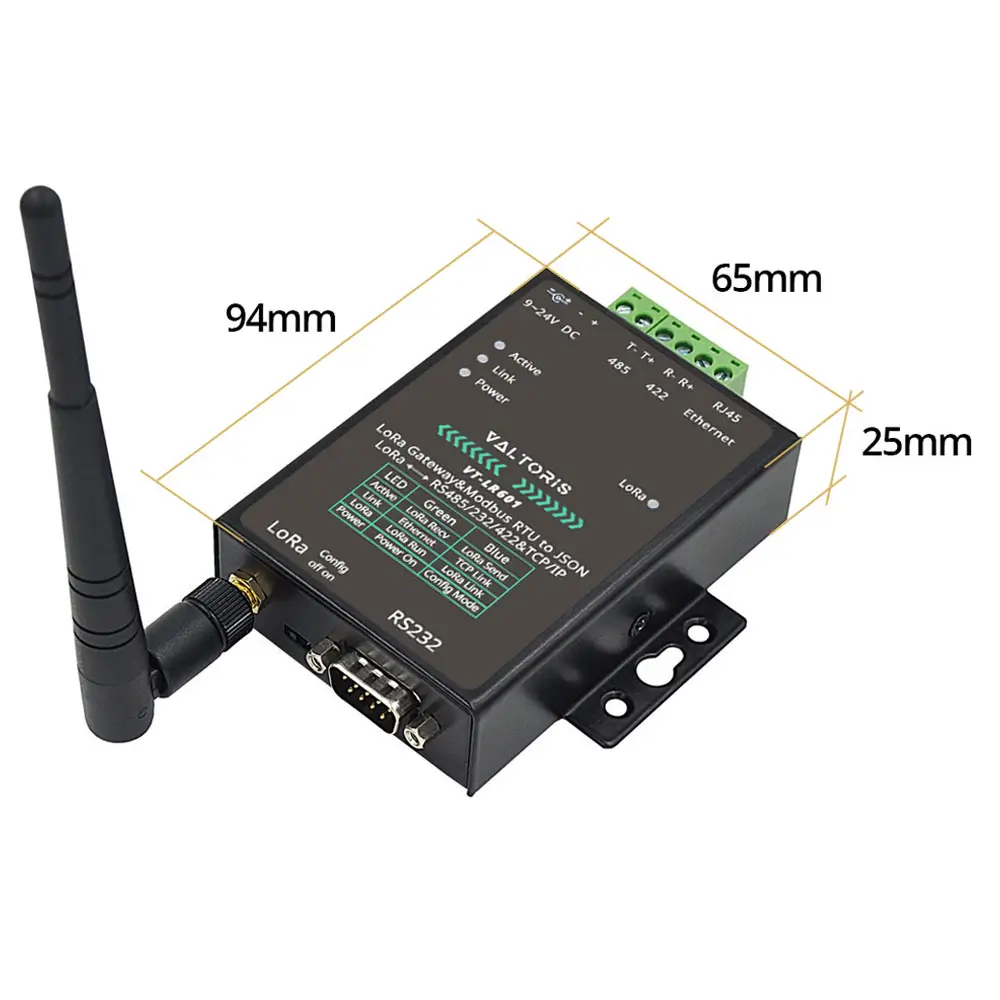
Conçue pour la télémétrie sans fil à coût zéro, cette passerelle industrielle LoRa permet de relier en toute sécurité les données série RS232/485/422 et Ethernet aux réseaux TCP/IP standard. Elle fonctionne comme un convertisseur Modbus TCP vers RTU robuste, permettant l’intégration transparente d’anciens appareils de terrain distants dans des systèmes SCADA centralisés sans coûts cellulaires récurrents.
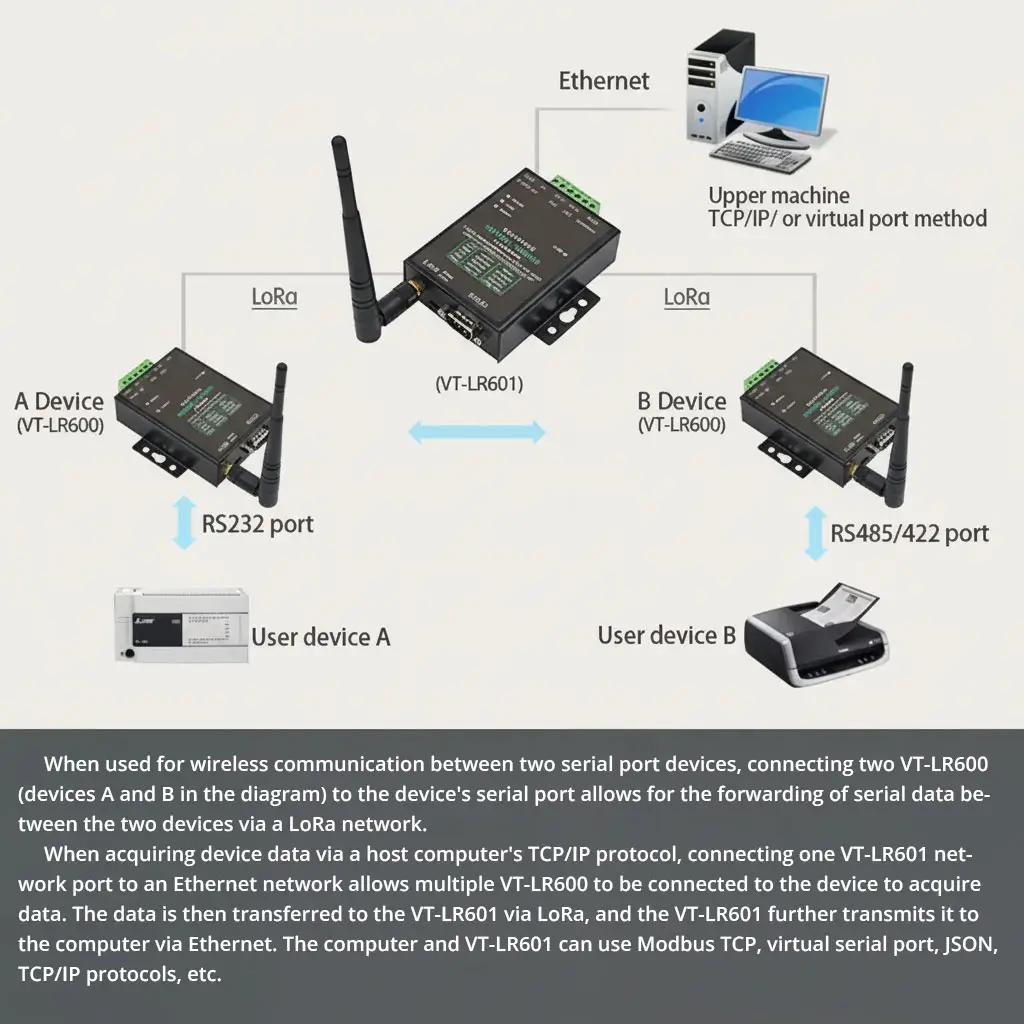
Nos adaptateurs LoRa doivent être utilisés par paire :
Pour les liaisons RS485/232/422 vers LoRa vers RS485/232/422, nous recommandons VT-LR600 +VT-LR600.
Pour les adaptateurs RS485/232/422 vers LoRa vers Ethernet, nous recommandons VT-LR600 + VT-LR601.
Veuillez acheter le VT-LR600 en même temps, le lien d'achat est indiqué ci-dessous :
Les produits Valtoris LORA peuvent être appliqués à :
Électronique de puissance, instruments intelligents ;
Système d'automatisation industrielle ;
L'internet des objets ; surveillance du climat et de la géologie
Système de contrôle des bâtiments, des accès et de la sécurité
Fonction principale
Schéma de communication LORA à longue distance, haute performance, haute stabilité La distance de communication extérieure non blindée est de 6 km~8 km.
Fonction sans fil renforcée
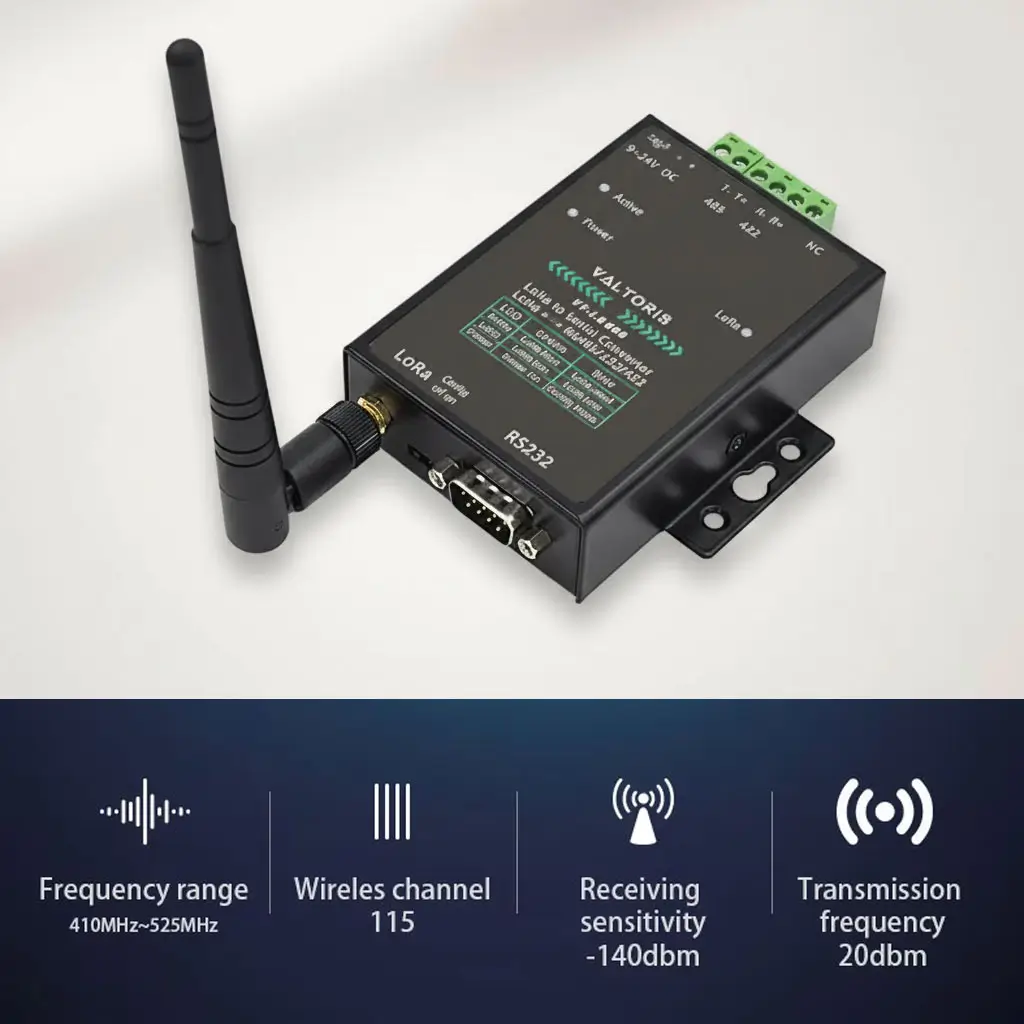
Le VT-LR600 répond à des normes élevées en matière de performances de communication sans fil, notamment en ce qui concerne la portée de la fréquence, le canal sans fil, la sensibilité du récepteur et la puissance d'émission.
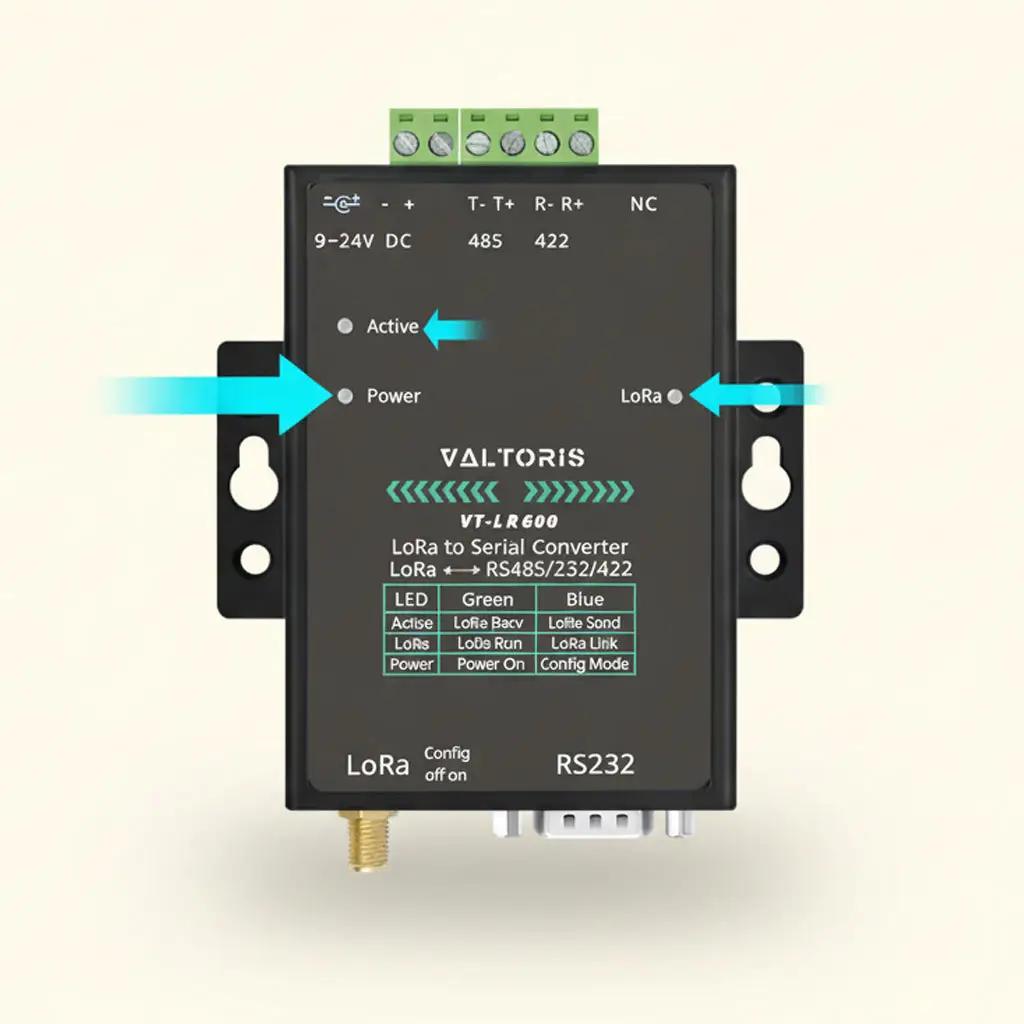
Indicateurs de richesse
Multifonction
Le VT-LR601, basé sur le VT-LR600, est doté d'une conversion multifonctionnelle LoRa-Ethernet, permettant la conversion LoRa-TCP/IP.
(Only VT-LR601 support TCP/IP protocol) ETHERNET, IP, TCP, UDP, HTTP, ARP, ICMP, DHCP, DNS
Environment
Operating temperature
-40~85℃
Storage temperature
-45~165℃
Humidity range
5~95% relative humidity
Summary:
LORA (Point-to-Point) is a long-distance wireless communication scheme. Compared with GPRS and 4G solutions, Lora does not require a monthly fee for access to the network, and it has a longer distance compared with WiFi and Zigbee. Therefore, LoRa is increasingly adopted for long-range, small-payload telemetry.
Features
LORA products adopt SX1287 chip and use Semtech’s patented LORA ™ modulation technology to achieve a receiving sensitivity of -140dBm and output power of +20dBm. The outdoor line-of-sight communication distance is 8km, featuring long distance, low power consumption and anti-interference.
Our LoRa product line consists of two main categories. The first is the serial-to-LoRa node (model VT-LR600), featuring three serial interfaces: RS232, RS485, and RS422. The second is the Ethernet (TCP/IP) to LoRa gateway (model VT-LR601), bridging LoRa networks with the Internet.
Q1: Do I need a third-party LoRaWAN Network Server (LNS) or cloud subscription to use this gateway?
A: Nope. The VT-LR series employs direct Point-to-Point (P2P) LoRa modulation, not the complex LoRaWAN protocol. The VT-LR601 is a stand-alone localized gateway. It takes radio telemetry and turns it directly into Modbus TCP/IP on your local Ethernet network, no external cloud servers, LNS configurations or monthly subscriptions required.
Q2: How does my central SCADA system address multiple remote serial nodes through this single Ethernet gateway?
A: The VT-LR601 operates as a transparent Modbus TCP to RTU bridge. Your SCADA system simply connects to the VT-LR601’s local IP address and uses standard Modbus Slave IDs to target specific remote sensors. The gateway automatically routes the TCP query over the LoRa network to the correct remote VT-LR600 node, and returns the serial response back as a TCP packet.
Q3: The spec indicates an 8km range, but will it work through thick concrete walls in an industrial plant?
A: The 8km rating applies to pure Line-of-Sight (LoS) outdoor environments. In heavy industrial settings with steel structures and concrete, the range decreases. However, thanks to the VT-LR601’s exceptional -140dBm receiving sensitivity, it can reliably penetrate approximately 5 standard building floors. For optimal indoor performance, we always recommend mounting the magnetic suction cup antenna outside of your metal control cabinets.
[What is an Industrial LoRa Device?] – Learn how to plan your RF network, bypass physical obstacles, and deploy P2P LoRa in heavy industrial environments.



 Documents
 Utilities