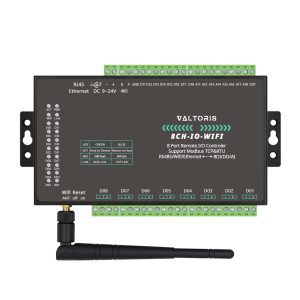
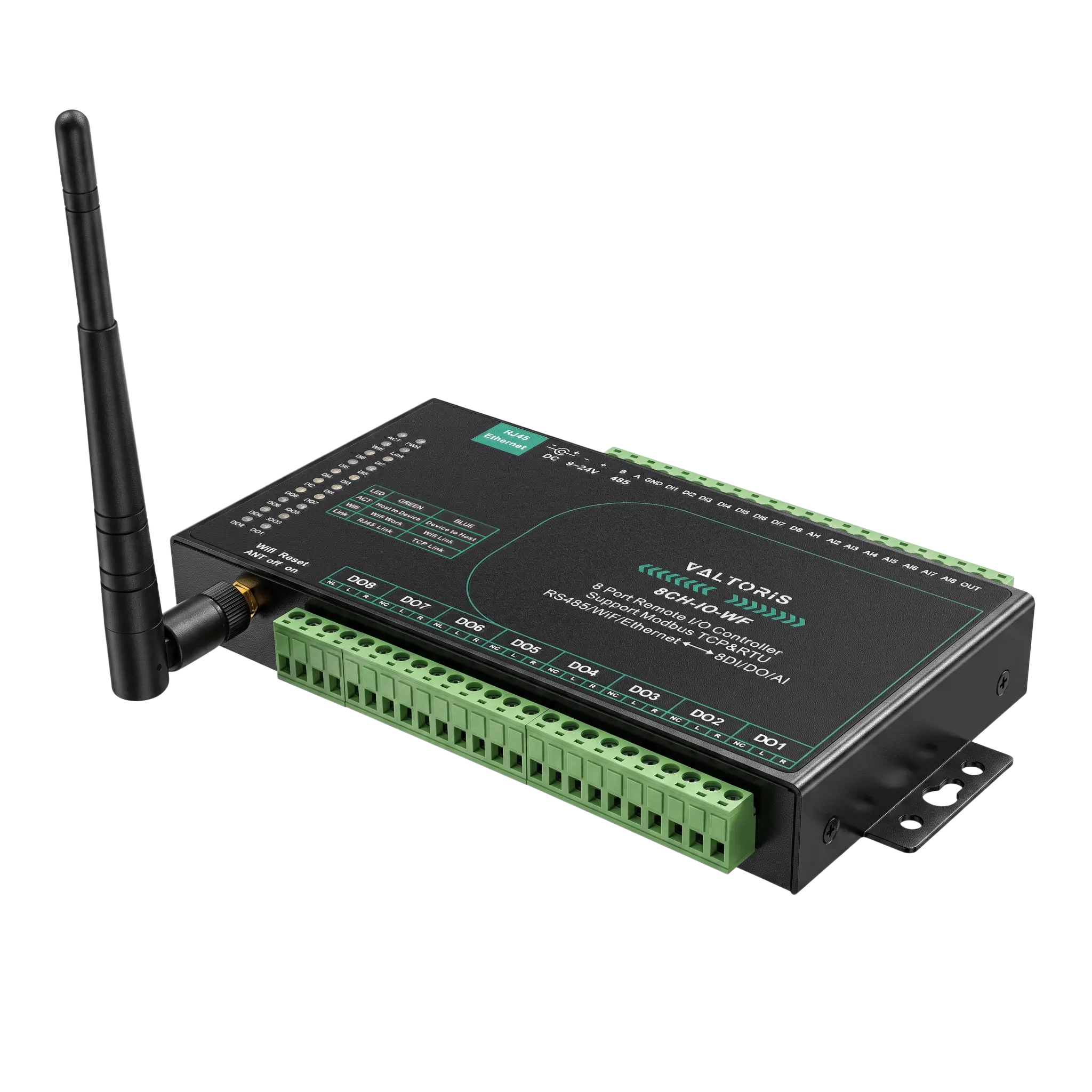
Módulo de E/S inalámbrico industrial de 8 canales (8DI/8AI/8DO), protección de aislamiento

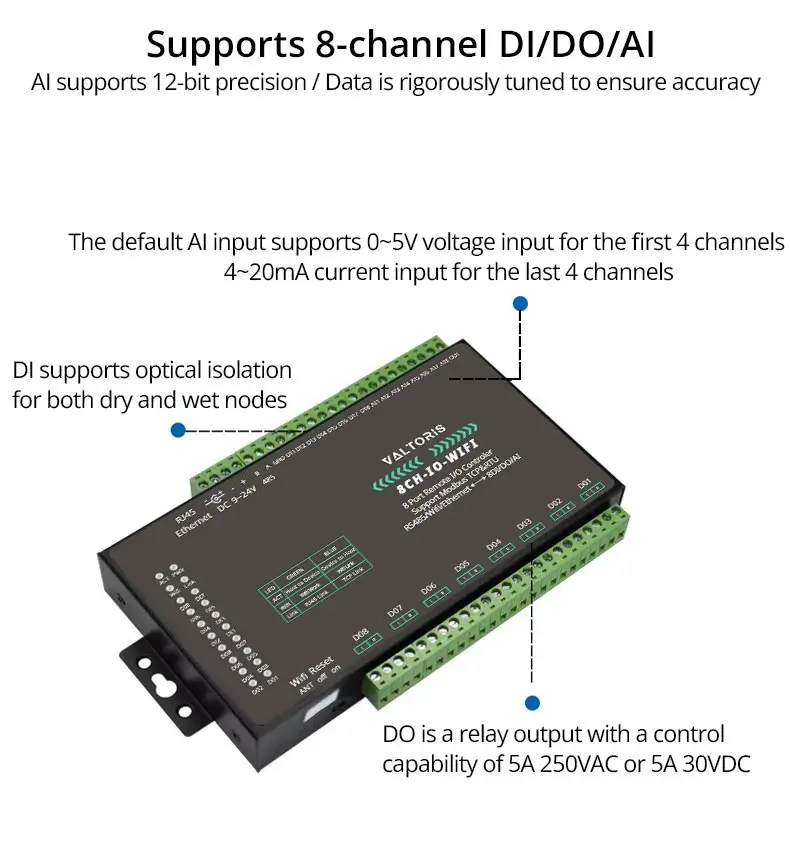
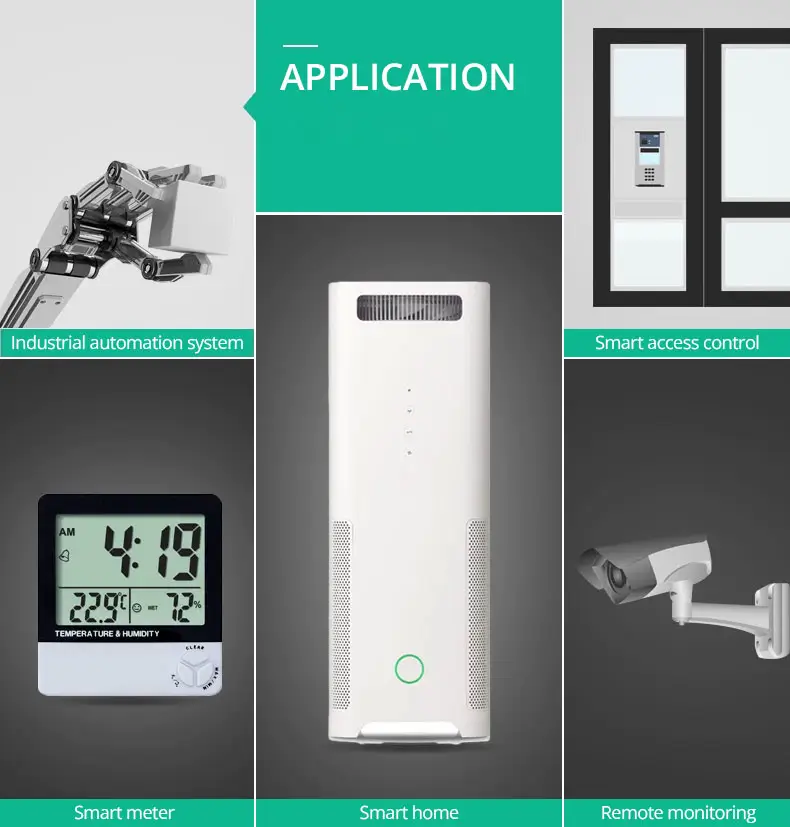
Elimine los prohibitivos costes de cableado en sus instalaciones. Este módulo de E/S remotas inalámbricas de 8 canales (8DI/8AI/8DO) está diseñado para la automatización distribuida y admite conexiones de par a par que permiten que una señal DI en un edificio active directamente un relé DO en otro, sin necesidad de PLC central. Combina importantes señales digitales, analógicas y de relé en un nodo de borde , con Wi-Fi, Ethernet y conversión Modbus TCP/RTU para garantizar que todos los datos de telemetría lleguen sin problemas a entornos SCADA complejos.

 
sku :
INSTANT QUOTE

Función principal

Admite la lectura de entradas digitales mediante el envío de comandos del protocolo Modbus TCP/RTU a través de WiFi/Ethernet para el control de salidas digitales
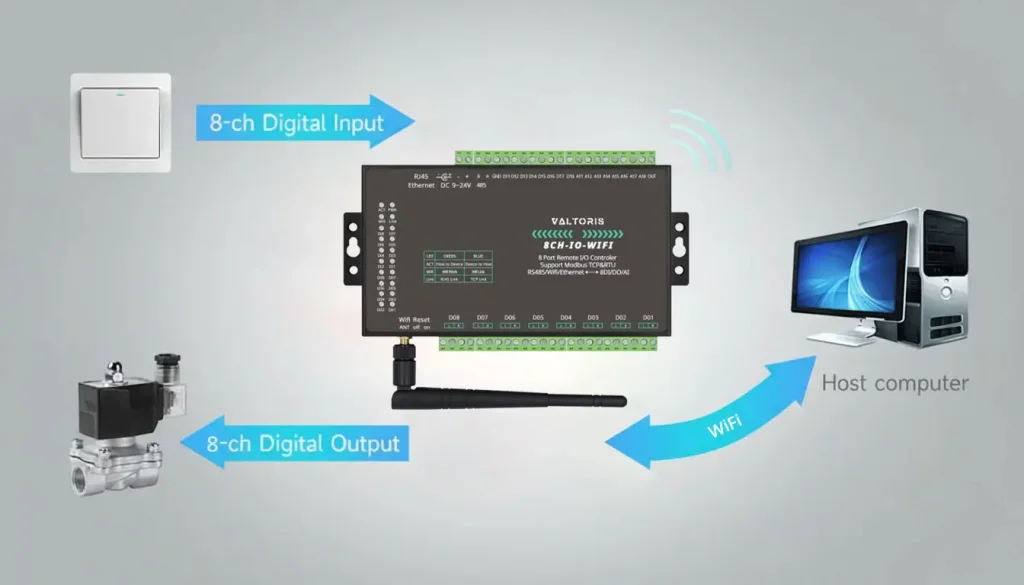
Protocolo de comunicación ModBus

Soporta ModBus TCP o ModBus RTU, se puede seleccionar manualmente

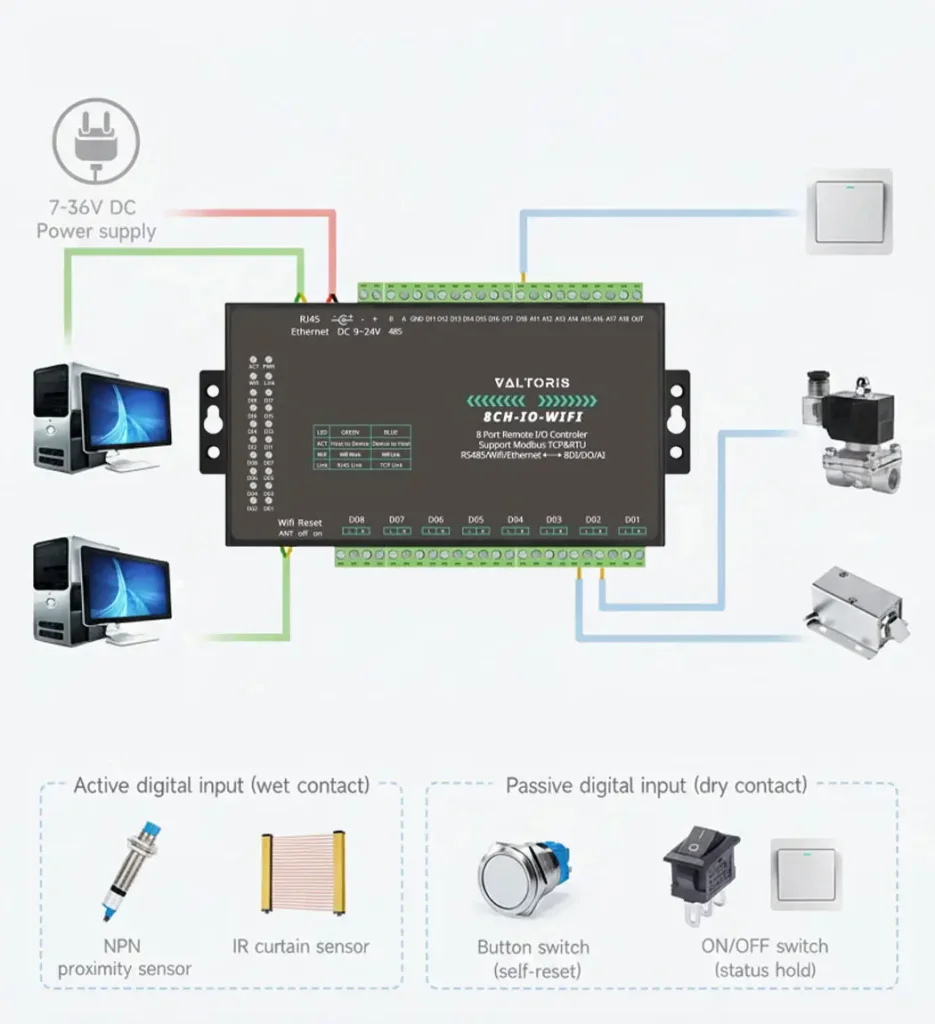
Control por WiFi y Ethernet
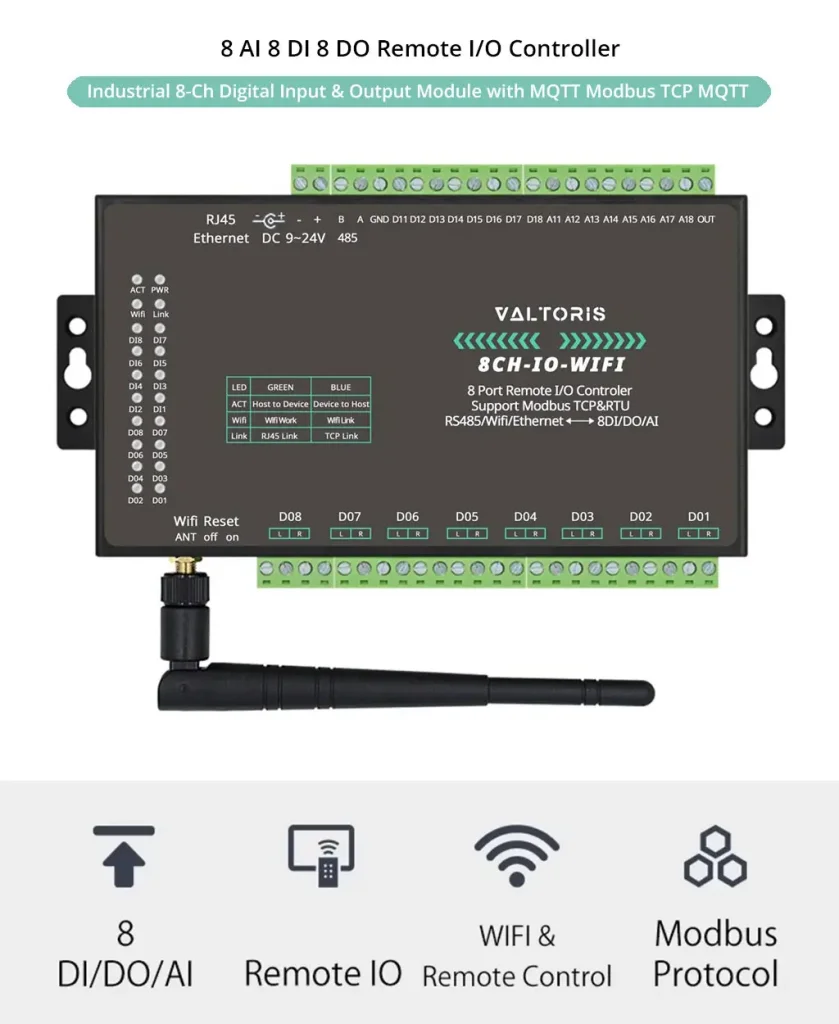
Luz indicadora de riqueza
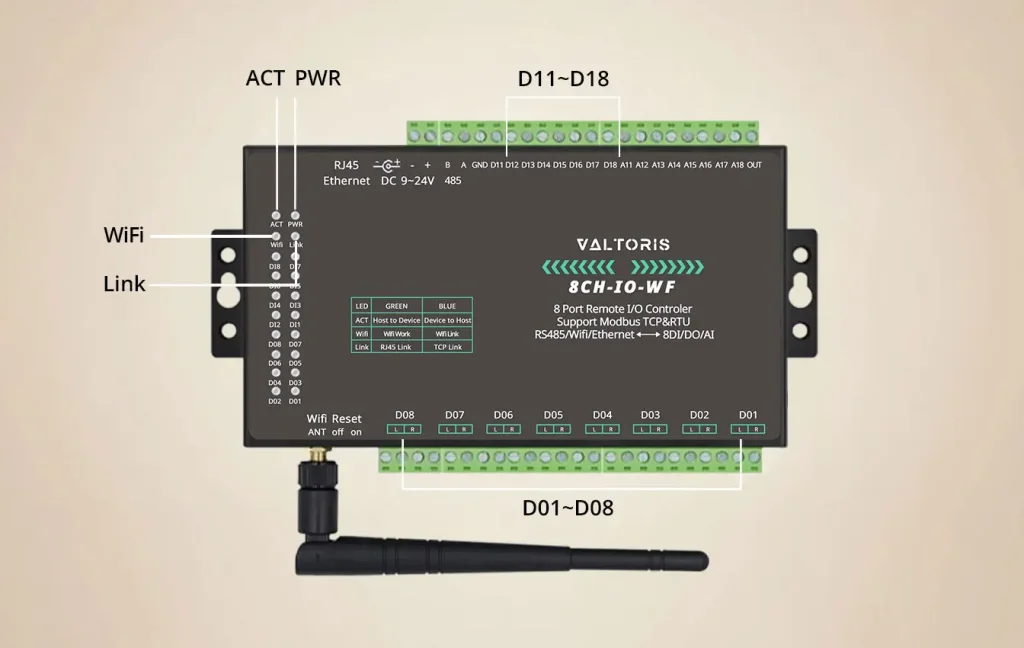
Indicador luminosoNombre del indicadorVerdeAzul
PWRIndicador luminoso de encendido  
ACTLuz activaEl dispositivo recibió instrucciones de Ethernet/WiFi en lugar de estar bien identificado.Instrucciones que se identifican y se devuelven al remitente
ENLACEIndicador de enlaceEthernet conectada cuando la luz cambia a verdedispositivo superior construido conexión TCP con el dispositivo cuando la luz se vuelve azul, se puede trabajar ahora.
WiFiIndicador WiFiEl WiFi funcionaConexión WiFi integrada
DI1~DI8Indicador luminoso DIOn indica que la entrada está baja o cerrada. 
DO1~DO8Indicador luminoso DOEncendido: El relé está cerrado. 

Mando a distancia WiFi

Conexión WiFi para evitar problemas de conexión a la red
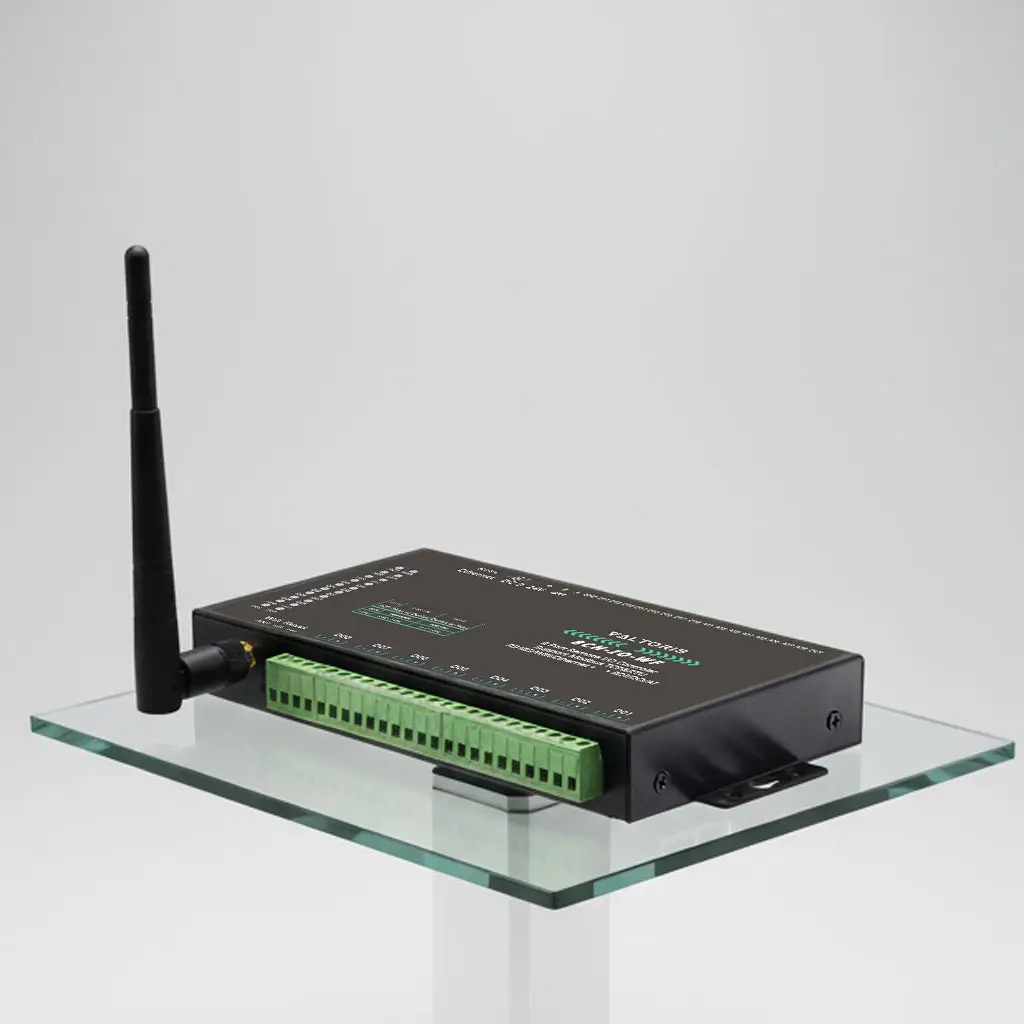
Productos
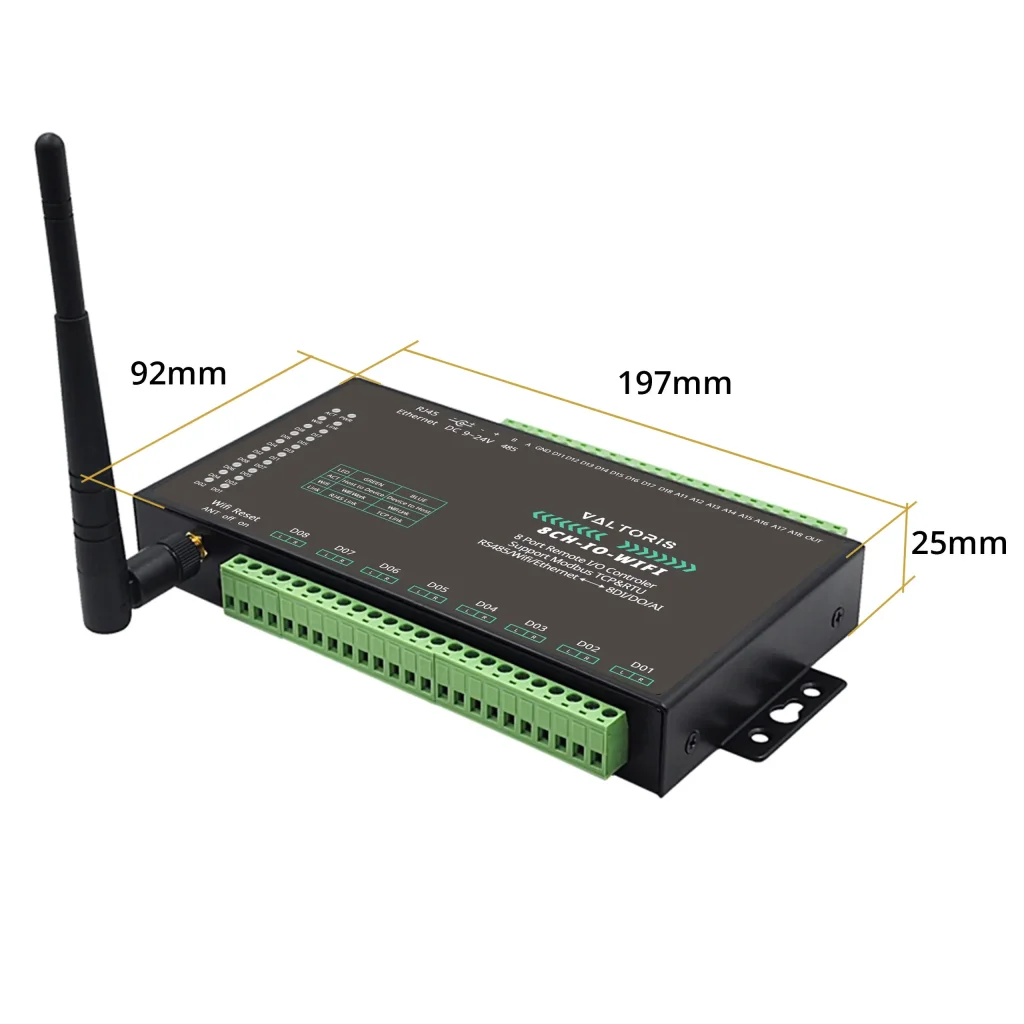
Dimensiones generales
Guía de selección del controlador de E/S remotas

Modelo

TIPO DE ENTRADA/SALIDA REMOTA

Método de comunicación

Fuente de alimentación

Rango de tensión

Dimensiones
(L × A × A)

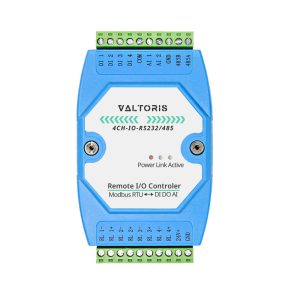
4CH-IO-RS232/485

2 AI 4 DI 4 DO Controlador remoto de E/S

RS232/485

Terminal de tornillo

DC 9~24V

121*72*34mm

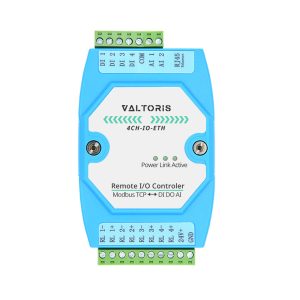
4CH-IO-ETH

2 AI 4 DI 4 DO Controlador remoto de E/S

Ethernet

Terminal de tornillo

DC 9~24V

121*72*34mm

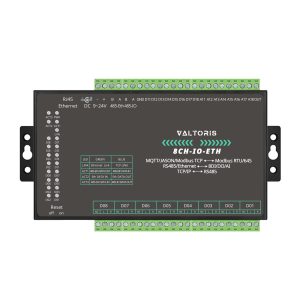
8CH-IO-ETH

8 AI 8 DI 8 DO Controlador remoto de E/S

Ethernet

Terminal de tornillo + puerto de alimentación DC 5.5

DC 9~24V

197*92*25mm

8CH-IO-WE

8 AI 8 DI 8 DO Controlador remoto de E/S

WIFI

Terminal de tornillo

DC 9~24V

197*92*25mm

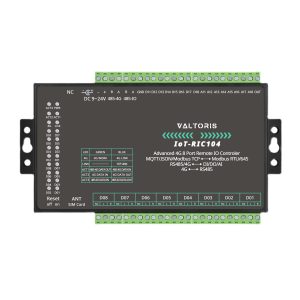
8CH-IO-LTE

8 AI 8 DI 8 DO Controlador remoto de E/S

4G

Terminal de tornillo + puerto de alimentación DC 5.5

DC 9~24V

197*92*25mm

¿Está listo para modernizar sus paneles de control? La integración de E/S inalámbricas en redes de PLC heredadas requiere precisión.

External interface
Size:L x W x H =9.2cm×19.7cm×2.5cm
Software
Network protocolModbus TCP/ Modbus RTU
Under protocolWiFi
Baud rate1200~115200bps (normal 9600bps)
Parity bitnone
Data bit8 bits
Stop bit1 bit
Response Time< 30ms
AI Input Format
Current: 4~20mA,0~20mA

Votage: 0~5V,0~10V

Resister: 0~10K, temperature/humidity sensor

Power Consumption
< 220mA@24V
Communication
Wireless standard802.11b /g
Frequency range2.412GHz-2.484GHZ
Transmit power802.11b:+20dBm(Max.);802.11g:+18dBm(Max.);
Receiving sensitivity802.11b:-89dBm; 802.11g:-81 DBM;
Environment
Operating temperature-40~85℃
Storage temperature-45~165℃
Humidity range5~95% relative

The 8CH-IO-WF Wireless Remote I/O Module lets you get digital and analog data over Wi-Fi and Ethernet connections that are always reliable. This remote I/O node connects to your network without any problems and has built-in Modbus TCP to Modbus RTU conversion.

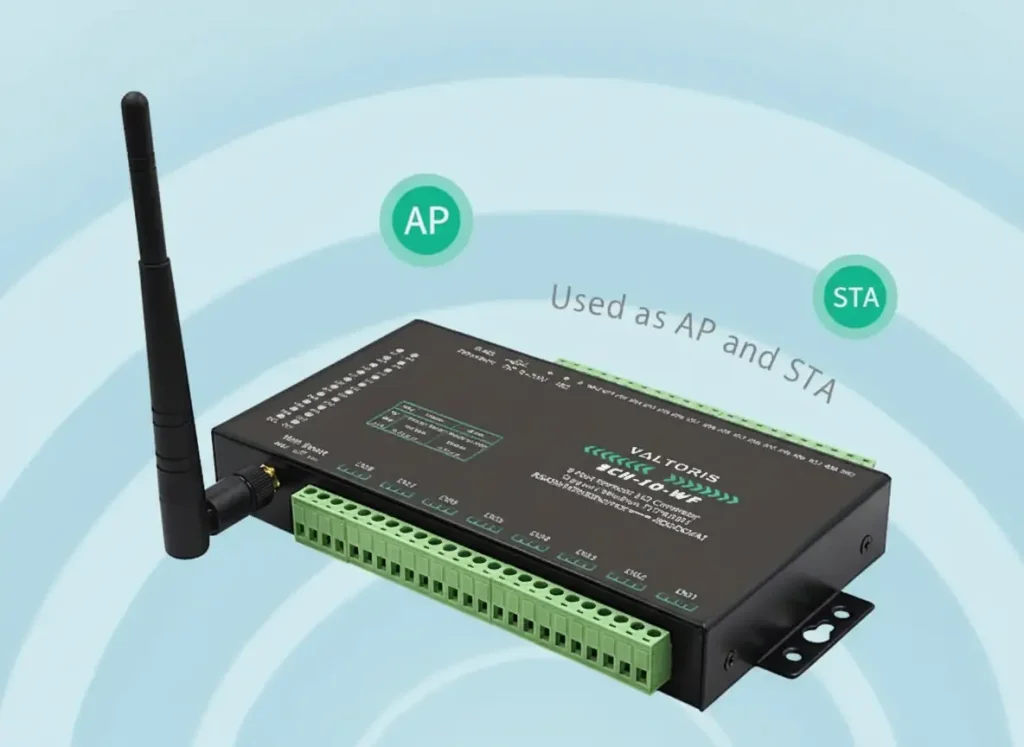
It simultaneously monitors 8 digital inputs (DI) and 8 analog inputs (AI), while actively controlling 8 relay outputs (DO). The built-in Wi-Fi can work in both Access Point (AP) and Station (STA) modes, so you can connect your existing industrial routers and data acquisition systems wirelessly in a variety of ways.

Q: Can I install this Wi-Fi module inside a closed metal control cabinet?

A: If you place the module inside a sealed metal enclosure, it will act as a Faraday cage and severely degrade the 2.4GHz Wi-Fi signal. For optimal performance, you should either use a non-metallic (polycarbonate/fiberglass) enclosure or route an external Wi-Fi antenna with a magnetic base to the outside of your metal cabinet.

Q: What is the practical difference between AP (Access Point) and STA (Station) modes for my SCADA setup?

A: * STA Mode (Most Common): The module acts like a client (just like your smartphone) and connects to your factory’s existing wireless network. This is ideal when you want multiple I/O nodes reporting back to a central SCADA server via a central router.

  • AP Mode: The module creates its own Wi-Fi hotspot. This is useful for localized troubleshooting, allowing an engineer with a laptop or Wi-Fi HMI to connect directly to the I/O module in the field without needing a broader factory network.

Q: Is the Wi-Fi connection fast and reliable enough for real-time PLC control loops?

A: For data acquisition, monitoring (temperature, tank levels), and slow-response control (turning on a pump), it is highly reliable. However, because Wi-Fi inherently involves minor packet jitter and latency (typically 10-50ms), we do not recommend using any wireless I/O for high-speed, deterministic safety loops or fast motion control. Keep your SCADA polling rates above 100ms for stable wireless telemetry.

Q: I have three older RS485 power meters at the same remote site. Can this module transmit their data over Wi-Fi too?

A: Yes. The 8CH-IO-WF features a built-in Modbus TCP-to-RTU gateway. You can daisy-chain those existing meters to the module’s RS485 serial port. The module will bridge their RTU data over your Wi-Fi network to the SCADA system, eliminating the need to pull hundreds of feet of new serial cables. (If you have multiple branches of meters, consider using an [Isolated RS485 Hub] to organize the local wiring before connecting to the I/O node).

Q: Does it support Wi-Fi roaming if installed on a moving vehicle like an AGV?

A: The standard 802.11b/g protocol supports basic connection handoffs, but it isn’t designed for seamless roaming between different factory routers with no delay. If your app uses fast-moving AGVs (Automated Guided Vehicles), we suggest making sure that there is strong, overlapping Wi-Fi coverage or asking us for help with AGV networking solutions.


📖 Definitive Guide: [ The Ultimate Guide to Remote I/O: Basics, Specs, and Selection ]

🔄 Concerned about severe wireless interference? If your factory environment cannot support Wi-Fi reliably, discover our [ Wired Ethernet Remote I/O Modules ] for rock-solid, cable-based Modbus communication.

REQUEST A QUOTE

SKU/Part No.