
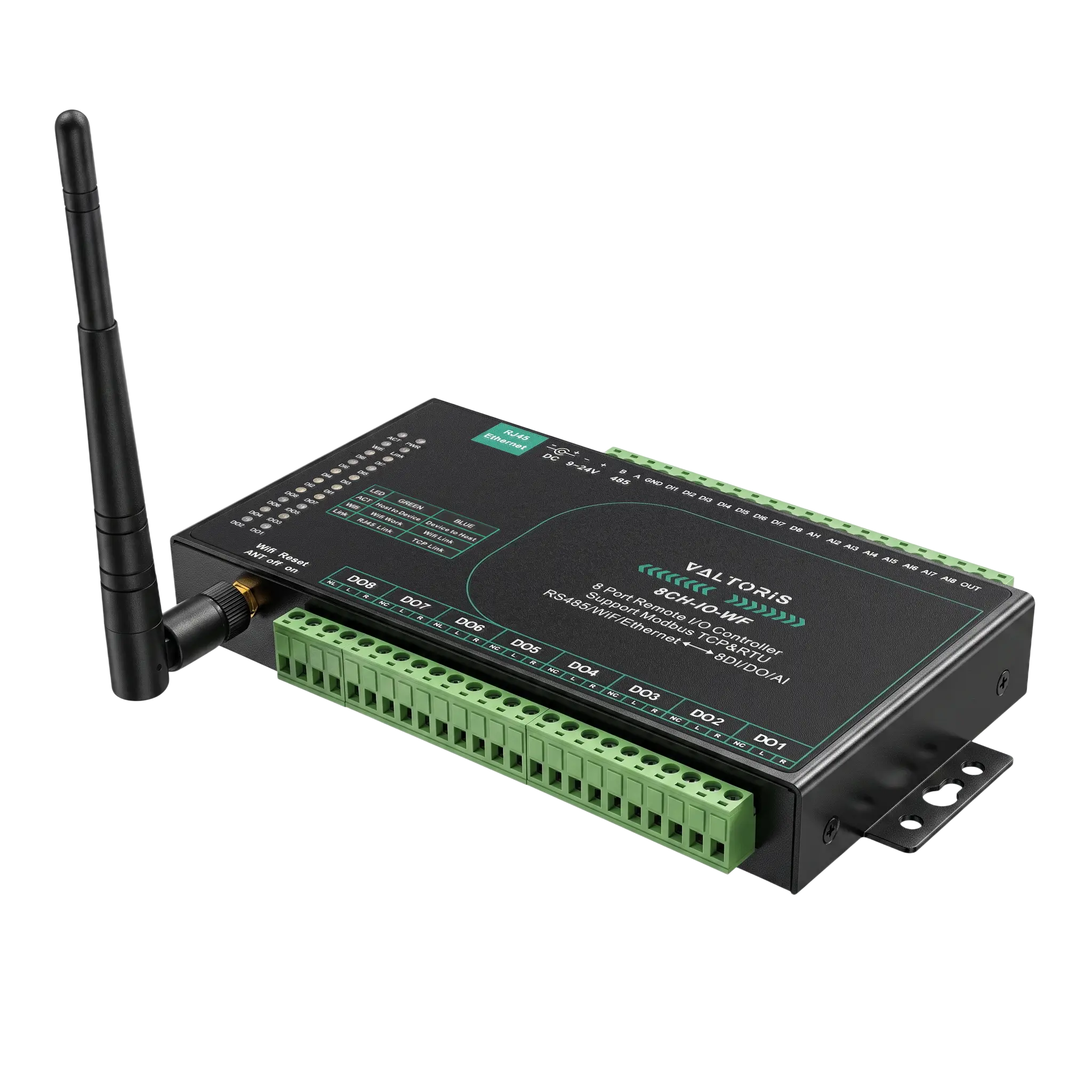
Módulo de E/S industrial sem fios de 8 canais (8DI/8AI/8DO), proteção de isolamento
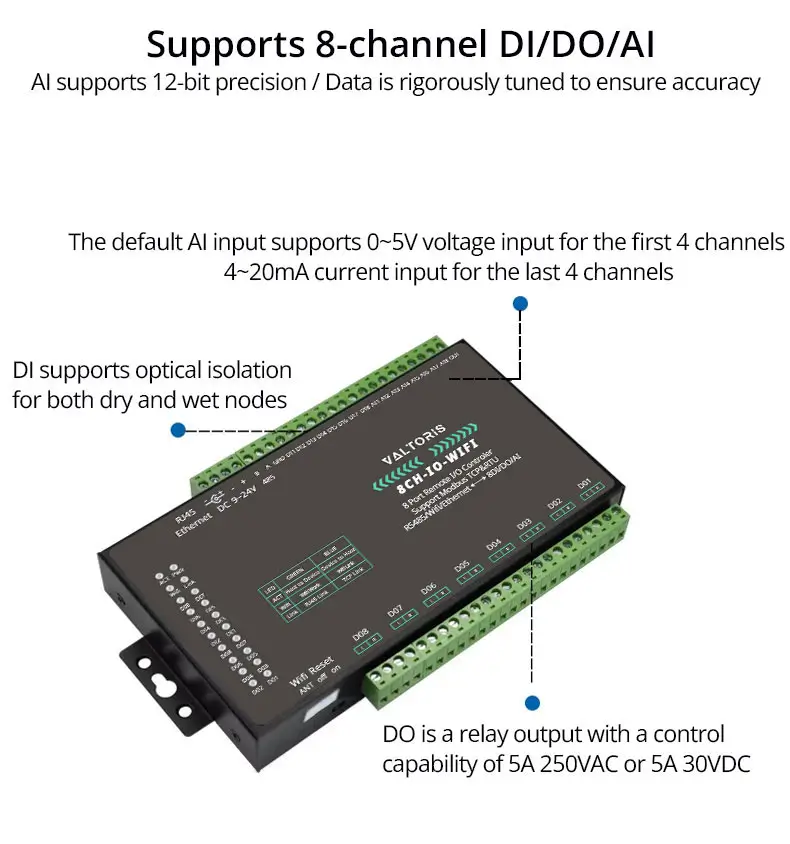
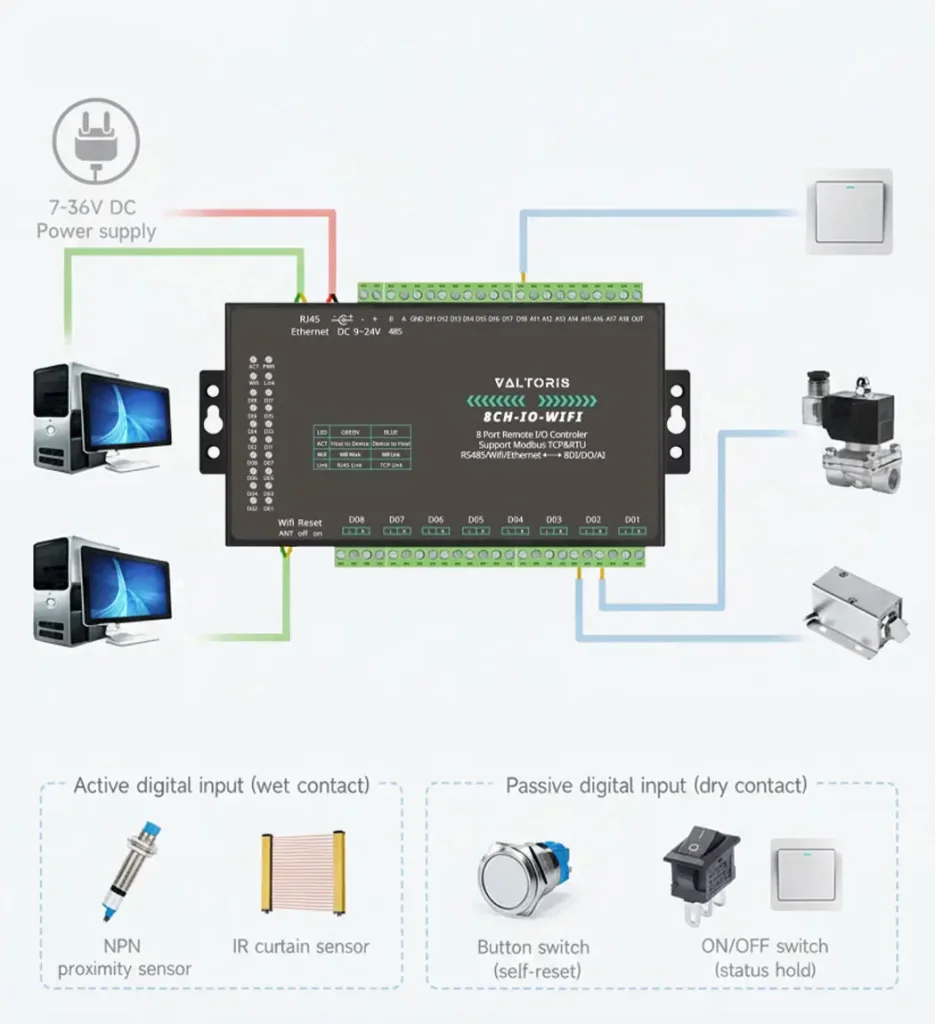
Elimine os custos proibitivos de puxar cabos nas suas instalações. Este módulo de E/S remota sem fios de 8 canais (8DI/8AI/8DO) foi concebido para a automatização distribuída, suportando ligações Peer-to-Peer (Pair) que permitem que um sinal DI num edifício accione diretamente um relé DO noutro – sem necessidade de um PLC central. Combina sinais digitais, analógicos e de relé importantes num único nó de extremidade , com conversão Wi-Fi, Ethernet e Modbus TCP/RTU para garantir que todos os dados de telemetria chegam sem problemas a ambientes SCADA complexos.
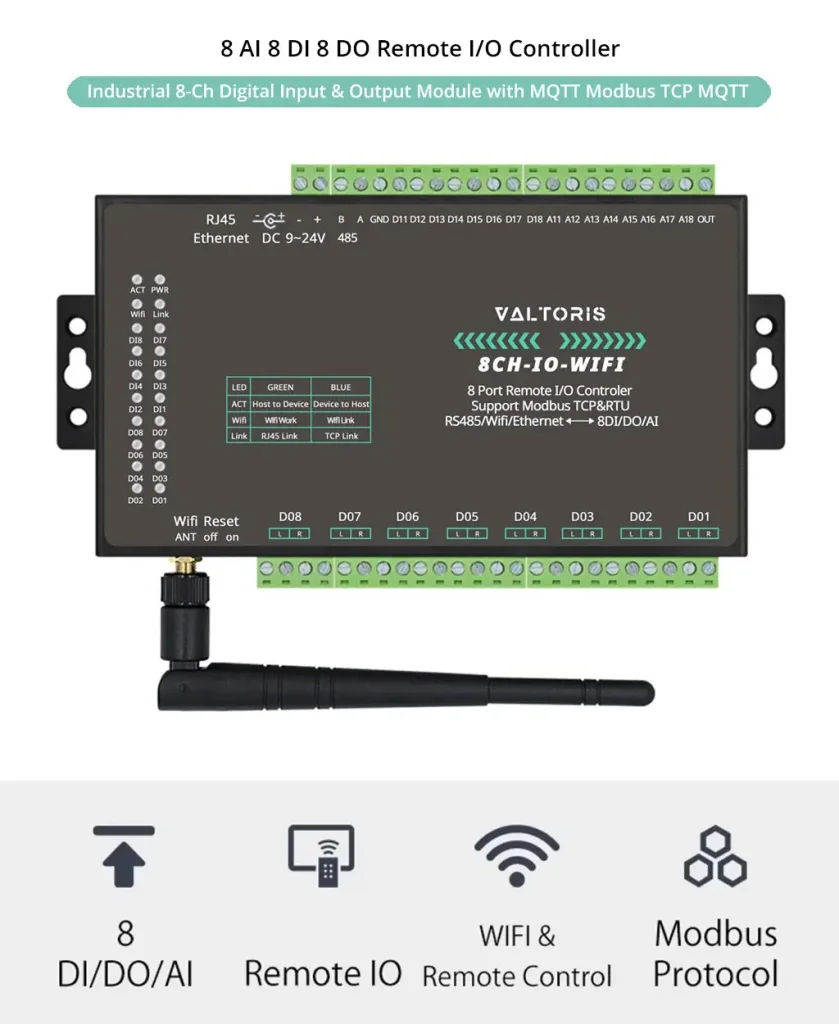
Função primária
Suporta a leitura de entradas digitais através do envio de comandos do protocolo Modbus TCP/RTU via WiFi/Ethernet para controlo de saídas digitais
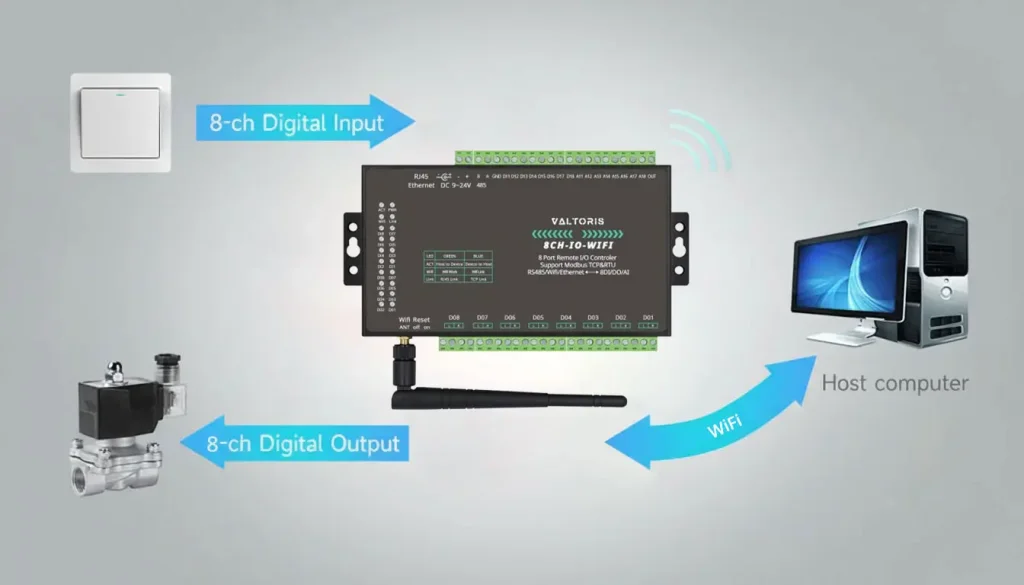
Protocolo de comunicação ModBus
Suporte ModBus TCP ou ModBus RTU, pode ser selecionado manualmente
Controlado por WiFi e Ethernet
Luz indicadora de riqueza
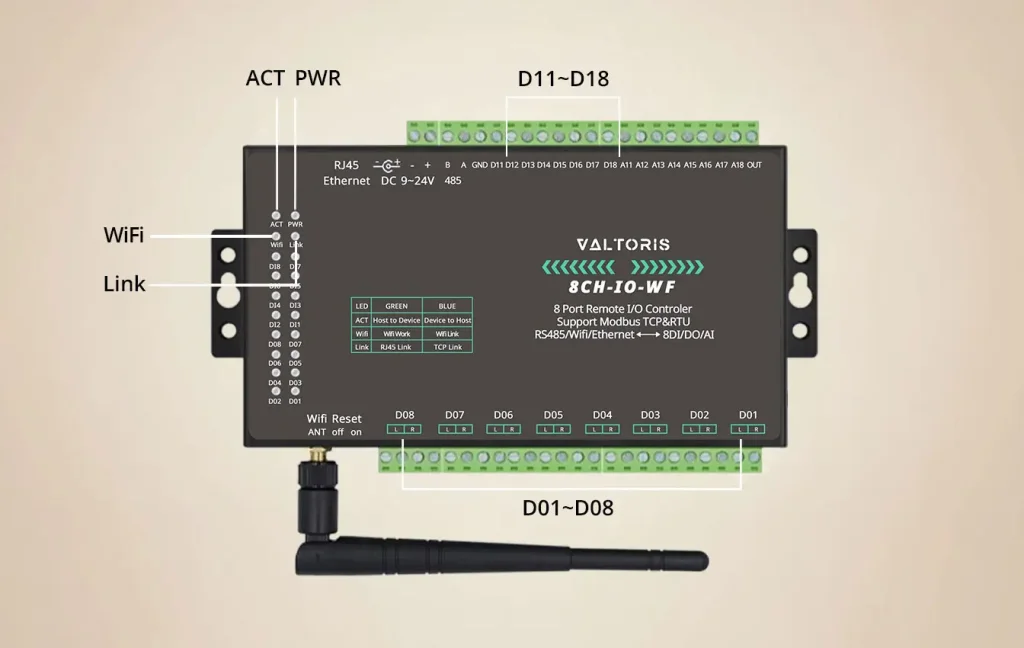
| Luz indicadora | Nome do indicador | Verde | Azul |
| PWR | Luz indicadora de alimentação | ||
| ACT | Luz ativa | O dispositivo recebeu instruções da Ethernet/WiFi em vez de ser bem identificado. | Instruções identificadas e devolvidas ao remetente |
| LINK | Indicador de ligação | A Ethernet está ligada quando a luz fica verde | O dispositivo superior estabelece uma ligação TCP com o dispositivo quando a luz fica azul, pode funcionar agora. |
| WiFi | Indicador WiFi | O WiFi está a funcionar | Ligação WiFi integrada |
| DI1~DI8 | Luz indicadora DI | Ligado indica que a entrada é baixa ou está fechada. | |
| DO1~DO8 | Luz indicadora DO | Ligado: O relé está fechado. |
Controlo remoto WiFi
Ligação WiFi para evitar problemas de ligação à rede
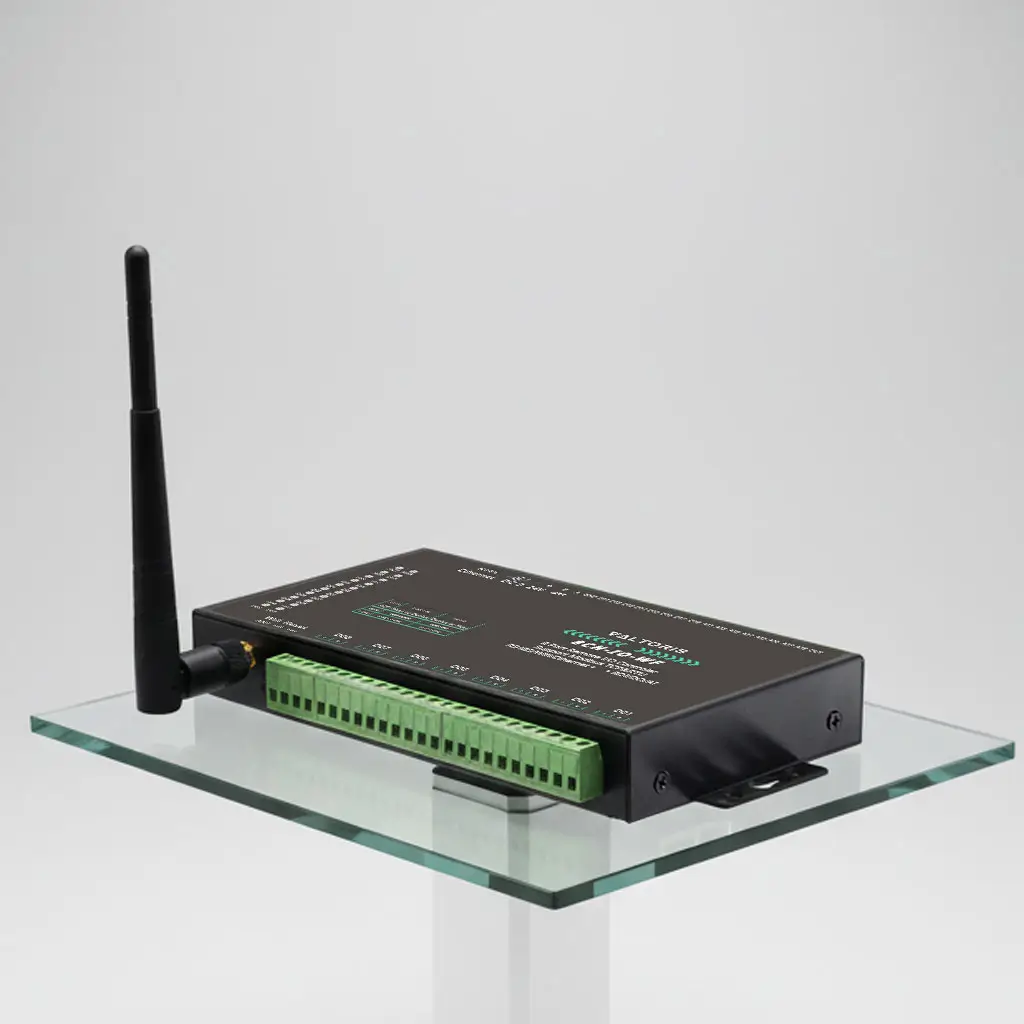
Apresentação do produto
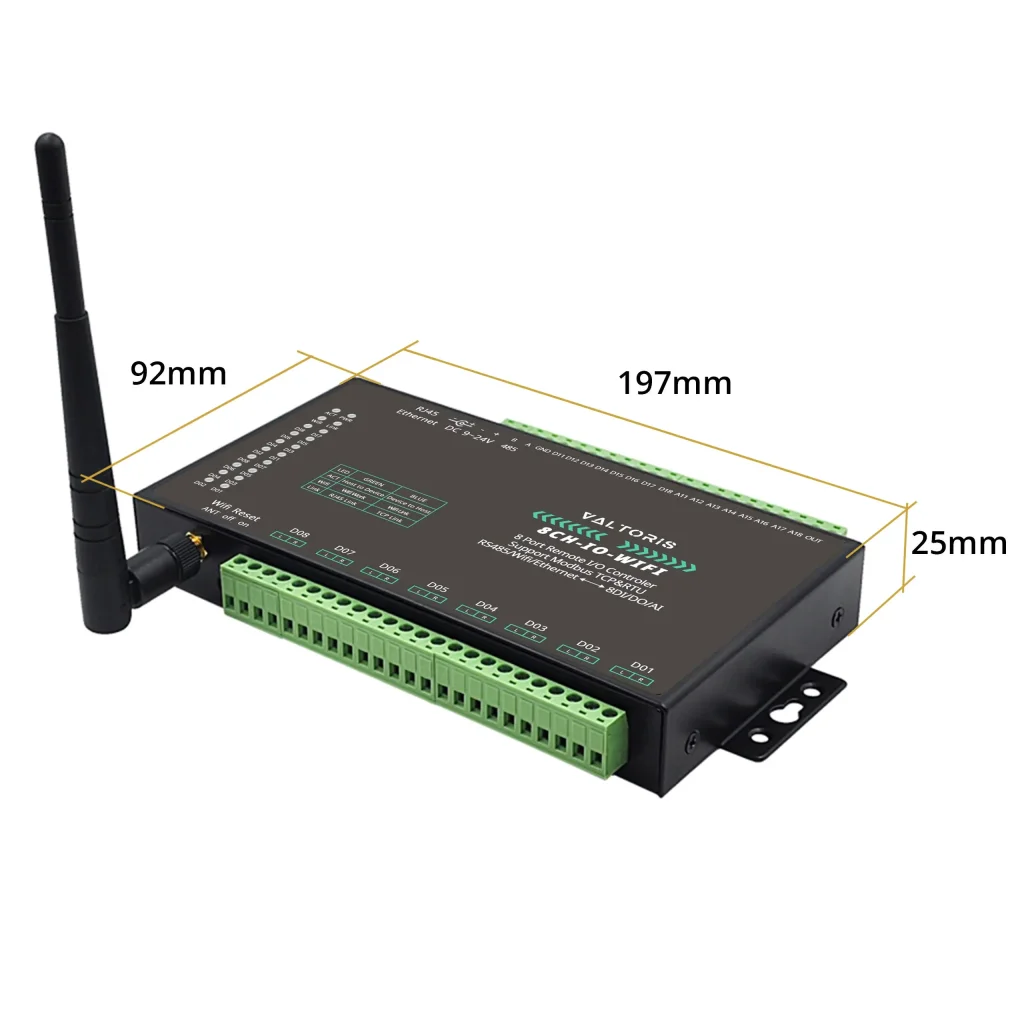
Dimensões de contorno
Guia de seleção do controlador de E/S remota
Modelo | TIPO DE I/O REMOTO | Método de comunicação | Fonte de alimentação | Gama de tensões | Dimensões |
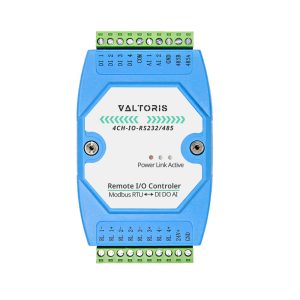 4CH-IO-RS232/485 | 2 AI 4 DI 4 DO Controlador remoto de E/S | RS232/485 | Terminal de parafuso | DC 9~24V | 121*72*34mm |
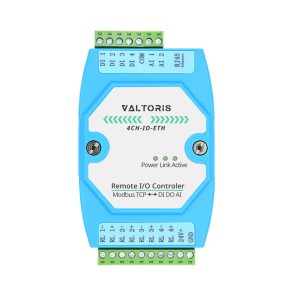 4CH-IO-ETH | 2 AI 4 DI 4 DO Controlador remoto de E/S | Ethernet | Terminal de parafuso | DC 9~24V | 121*72*34mm |
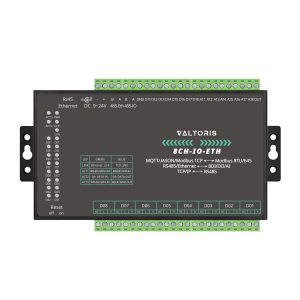 8CH-IO-ETH | 8 AI 8 DI 8 DO Controlador remoto de E/S | Ethernet | Terminal de parafuso + porta de alimentação DC 5.5 | DC 9~24V | 197*92*25mm |
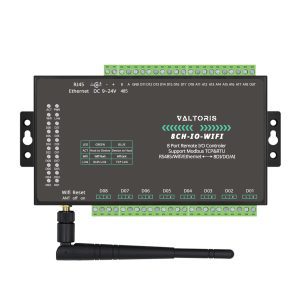 8CH-IO-WE | 8 AI 8 DI 8 DO Controlador remoto de E/S | WIFI | Terminal de parafuso | DC 9~24V | 197*92*25mm |
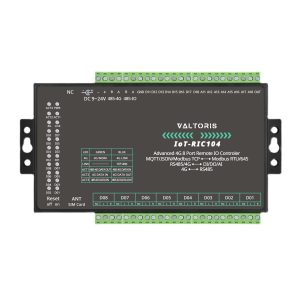 8CH-IO-LTE | 8 AI 8 DI 8 DO Controlador remoto de E/S | 4G | Terminal de parafuso + porta de alimentação DC 5.5 | DC 9~24V | 197*92*25mm |
Pronto para modernizar os seus painéis de controlo? A integração de E/S sem fios em redes PLC antigas requer precisão.
- [ Ação A ] 👉 Pedir ficha de dados completa e diagramas de cablagem (inclui esquemas detalhados para contactos secos/húmidos DI, saídas de relé e ligações de sensores analógicos de 2/3/4 fios)
- [Ação B ] 👉 Consultar um engenheiro para uma unidade de demonstração piloto
| External interface | |
| Size: | L x W x H =9.2cm×19.7cm×2.5cm |
| Software | |
| Network protocol | Modbus TCP/ Modbus RTU |
| Under protocol | WiFi |
| Baud rate | 1200~115200bps (normal 9600bps) |
| Parity bit | none |
| Data bit | 8 bits |
| Stop bit | 1 bit |
| Response Time | < 30ms |
| AI Input Format | |
| Current: 4~20mA,0~20mA Votage: 0~5V,0~10V Resister: 0~10K, temperature/humidity sensor | |
| Power Consumption | |
| < 220mA@24V | |
| Communication | |
| Wireless standard | 802.11b /g |
| Frequency range | 2.412GHz-2.484GHZ |
| Transmit power | 802.11b:+20dBm(Max.);802.11g:+18dBm(Max.); |
| Receiving sensitivity | 802.11b:-89dBm; 802.11g:-81 DBM; |
| Environment | |
| Operating temperature | -40~85℃ |
| Storage temperature | -45~165℃ |
| Humidity range | 5~95% relative |
The 8CH-IO-WF Wireless Remote I/O Module lets you get digital and analog data over Wi-Fi and Ethernet connections that are always reliable. This remote I/O node connects to your network without any problems and has built-in Modbus TCP to Modbus RTU conversion.
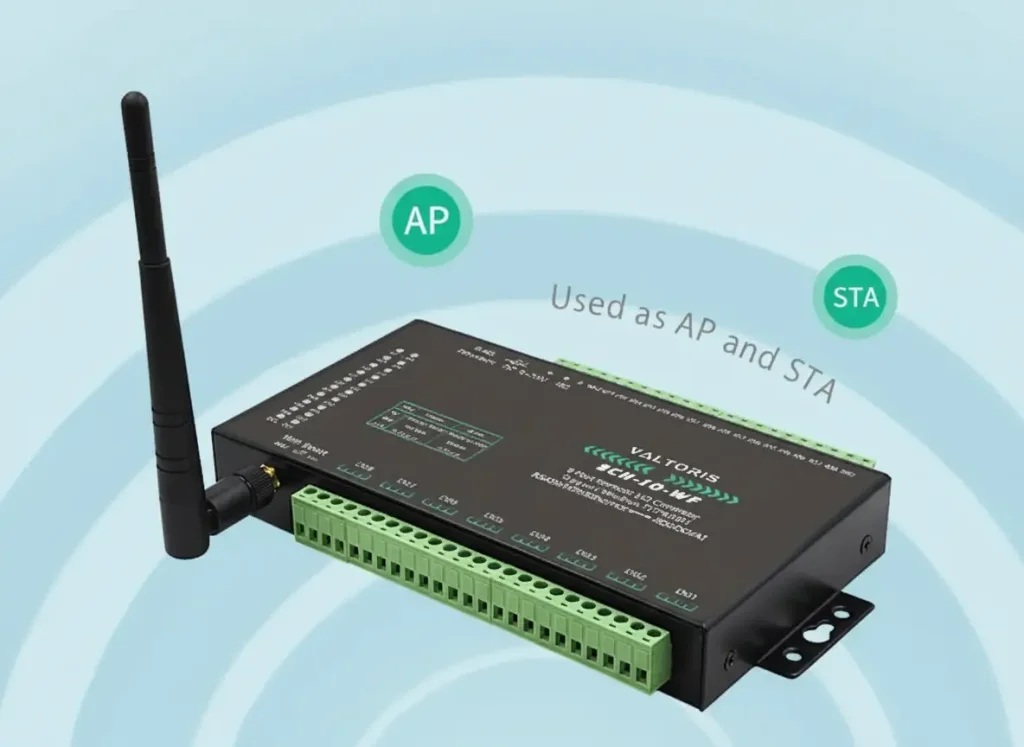
It simultaneously monitors 8 digital inputs (DI) and 8 analog inputs (AI), while actively controlling 8 relay outputs (DO). The built-in Wi-Fi can work in both Access Point (AP) and Station (STA) modes, so you can connect your existing industrial routers and data acquisition systems wirelessly in a variety of ways.
Q: Can I install this Wi-Fi module inside a closed metal control cabinet?
A: If you place the module inside a sealed metal enclosure, it will act as a Faraday cage and severely degrade the 2.4GHz Wi-Fi signal. For optimal performance, you should either use a non-metallic (polycarbonate/fiberglass) enclosure or route an external Wi-Fi antenna with a magnetic base to the outside of your metal cabinet.
Q: What is the practical difference between AP (Access Point) and STA (Station) modes for my SCADA setup?
A: * STA Mode (Most Common): The module acts like a client (just like your smartphone) and connects to your factory’s existing wireless network. This is ideal when you want multiple I/O nodes reporting back to a central SCADA server via a central router.
AP Mode: The module creates its own Wi-Fi hotspot. This is useful for localized troubleshooting, allowing an engineer with a laptop or Wi-Fi HMI to connect directly to the I/O module in the field without needing a broader factory network.
Q: Is the Wi-Fi connection fast and reliable enough for real-time PLC control loops?
A: For data acquisition, monitoring (temperature, tank levels), and slow-response control (turning on a pump), it is highly reliable. However, because Wi-Fi inherently involves minor packet jitter and latency (typically 10-50ms), we do not recommend using any wireless I/O for high-speed, deterministic safety loops or fast motion control. Keep your SCADA polling rates above 100ms for stable wireless telemetry.
Q: I have three older RS485 power meters at the same remote site. Can this module transmit their data over Wi-Fi too?
A: Yes. The 8CH-IO-WF features a built-in Modbus TCP-to-RTU gateway. You can daisy-chain those existing meters to the module’s RS485 serial port. The module will bridge their RTU data over your Wi-Fi network to the SCADA system, eliminating the need to pull hundreds of feet of new serial cables. (If you have multiple branches of meters, consider using an [Isolated RS485 Hub] to organize the local wiring before connecting to the I/O node).
Q: Does it support Wi-Fi roaming if installed on a moving vehicle like an AGV?
A: The standard 802.11b/g protocol supports basic connection handoffs, but it isn’t designed for seamless roaming between different factory routers with no delay. If your app uses fast-moving AGVs (Automated Guided Vehicles), we suggest making sure that there is strong, overlapping Wi-Fi coverage or asking us for help with AGV networking solutions.

📖 Definitive Guide: [ The Ultimate Guide to Remote I/O: Basics, Specs, and Selection ]
🔄 Concerned about severe wireless interference? If your factory environment cannot support Wi-Fi reliably, discover our [ Wired Ethernet Remote I/O Modules ] for rock-solid, cable-based Modbus communication.