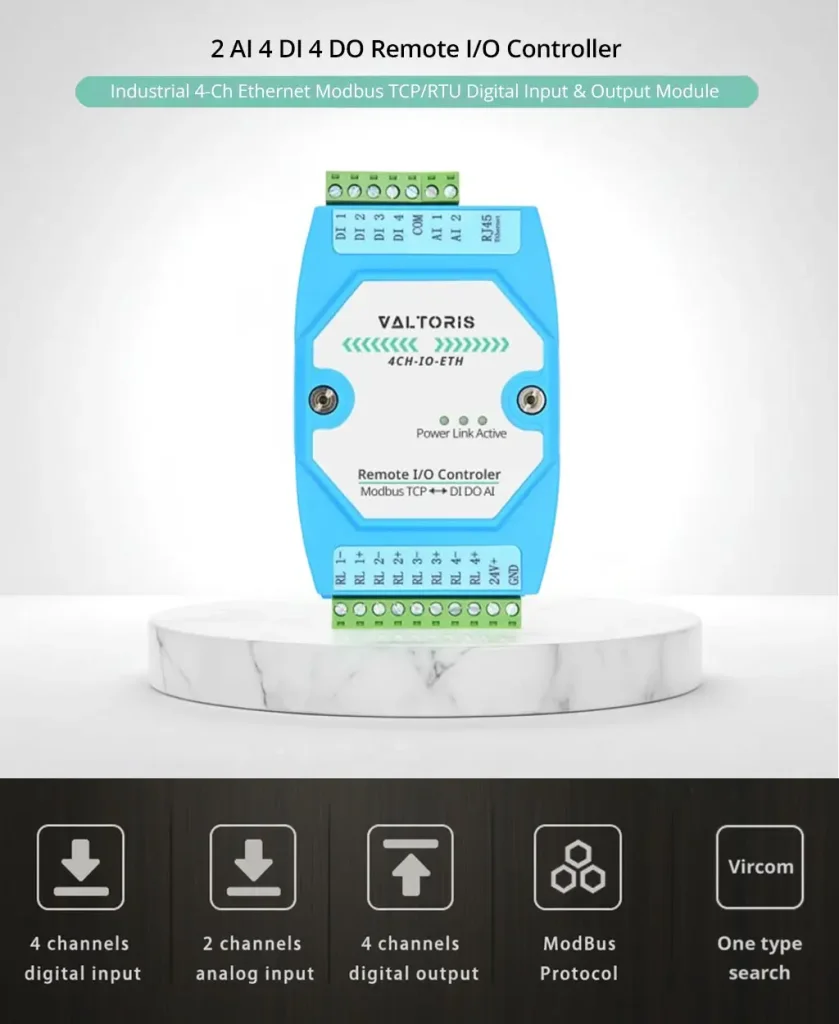
Módulo de E/S Ethernet industrial de 4 canales (4DI/2AI/4DO) y pasarela Modbus

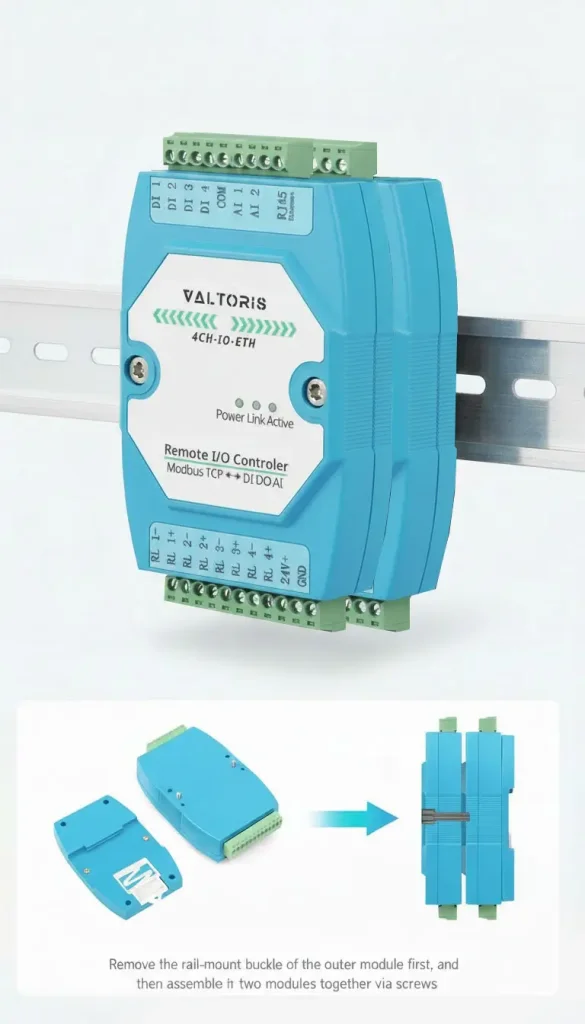
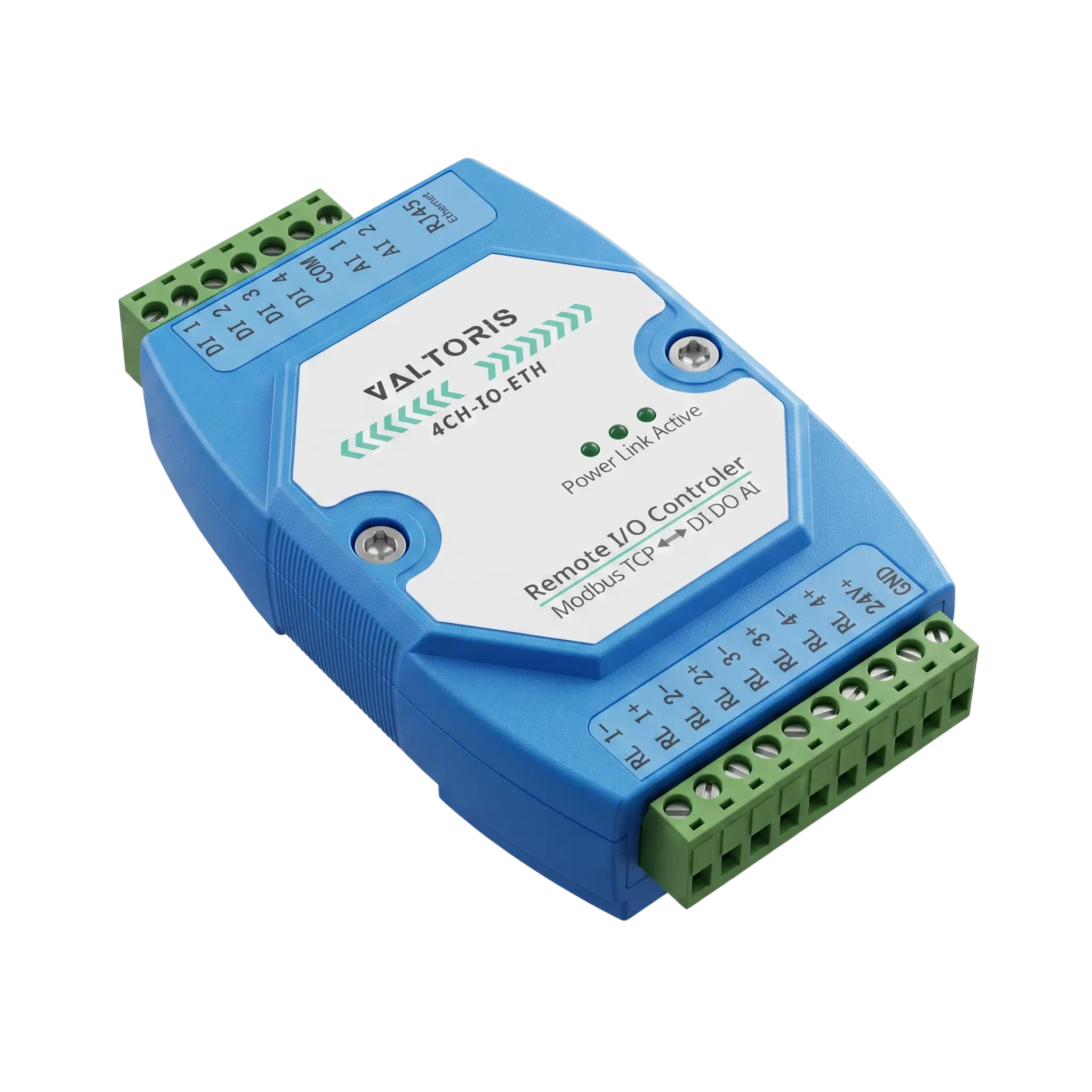
Diseñado para la automatización de campo localizada, este módulo de E/S Ethernet de 4 canales (4DI/2AI/4DO) consolida datos de sensores digitales y analógicos esenciales. Ofrece una sólida conversión Modbus TCP/RTU, que conecta sin problemas dispositivos de campo serie heredados a redes SCADA empresariales centralizadas para reducir los costes de cableado.

sku :
INSTANT QUOTE

Módulo de E/S Ethernet industrial de 4 canales

Función principal

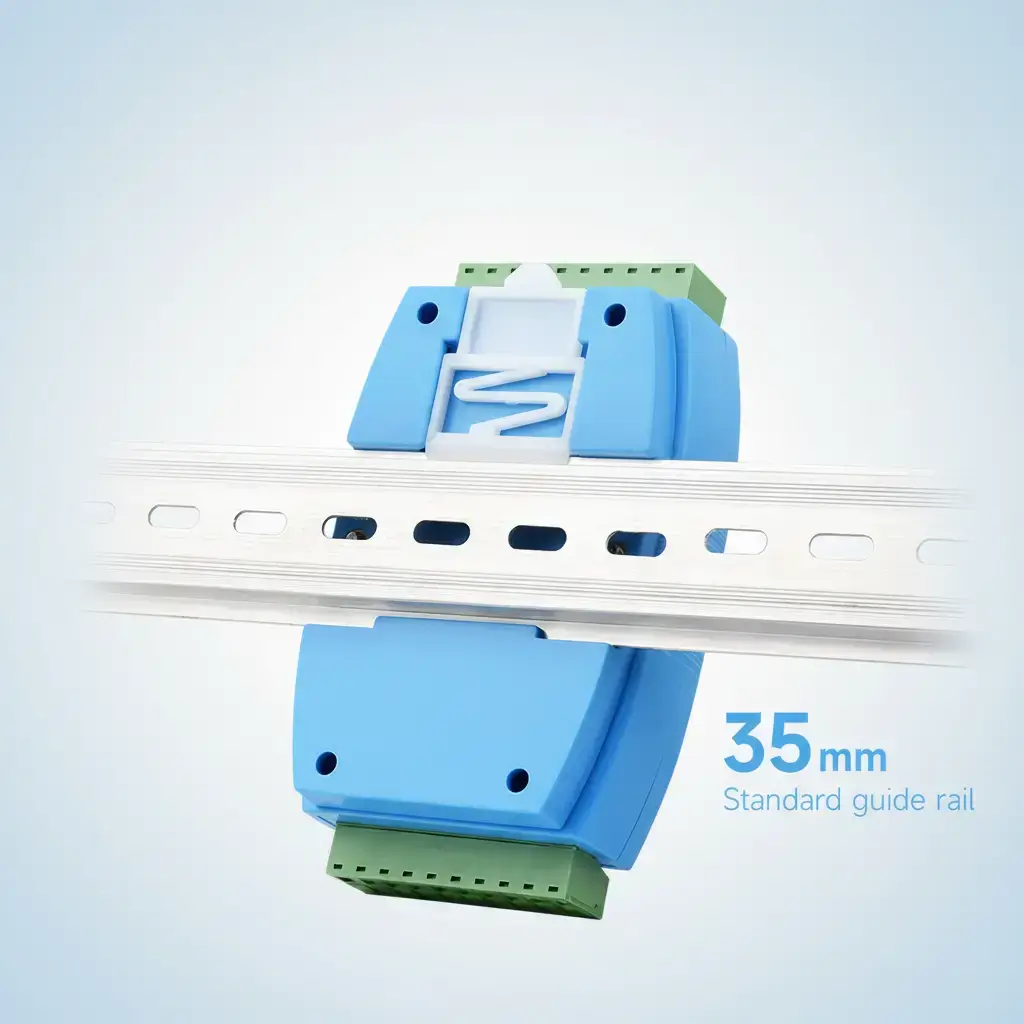
Admite carril guía estándar de 35 mm, con hebilla de montaje en carril, fácil de instalar.
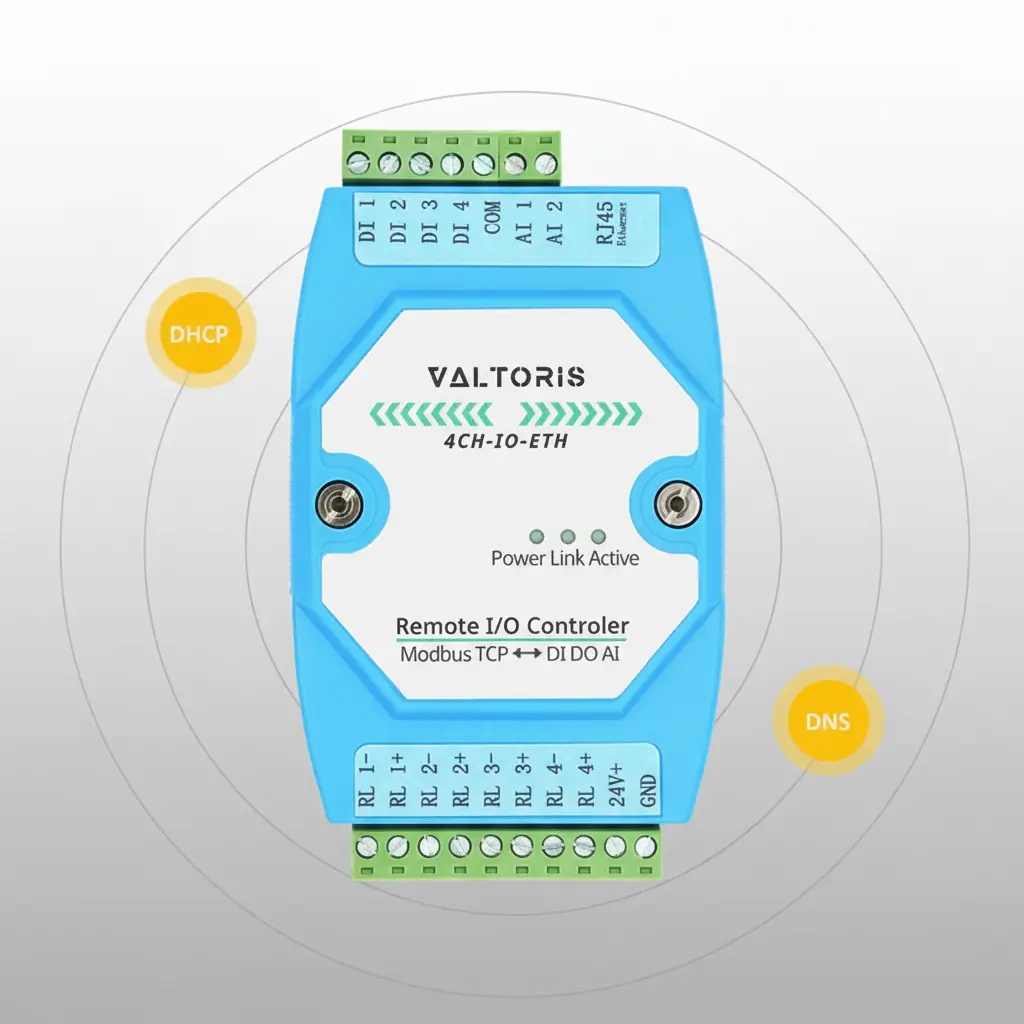
Soporta DHCP/DNS

  • Resolver la gestión de la propiedad intelectual, los conflictos de propiedad intelectual
  • Cumplir los requisitos de telecomunicación a través del nombre de dominio

Protocolo de comunicación ModBus

  • Soporta ModBus TCP o ModBus RTU
  • Admite el inicio con parámetros por defecto para evitar modificaciones accidentales.

Admite la instalación apilada

Soporte de montaje en carril

Admite carril guía estándar de 35 mm, con hebilla de montaje en carril, fácil de instalar.
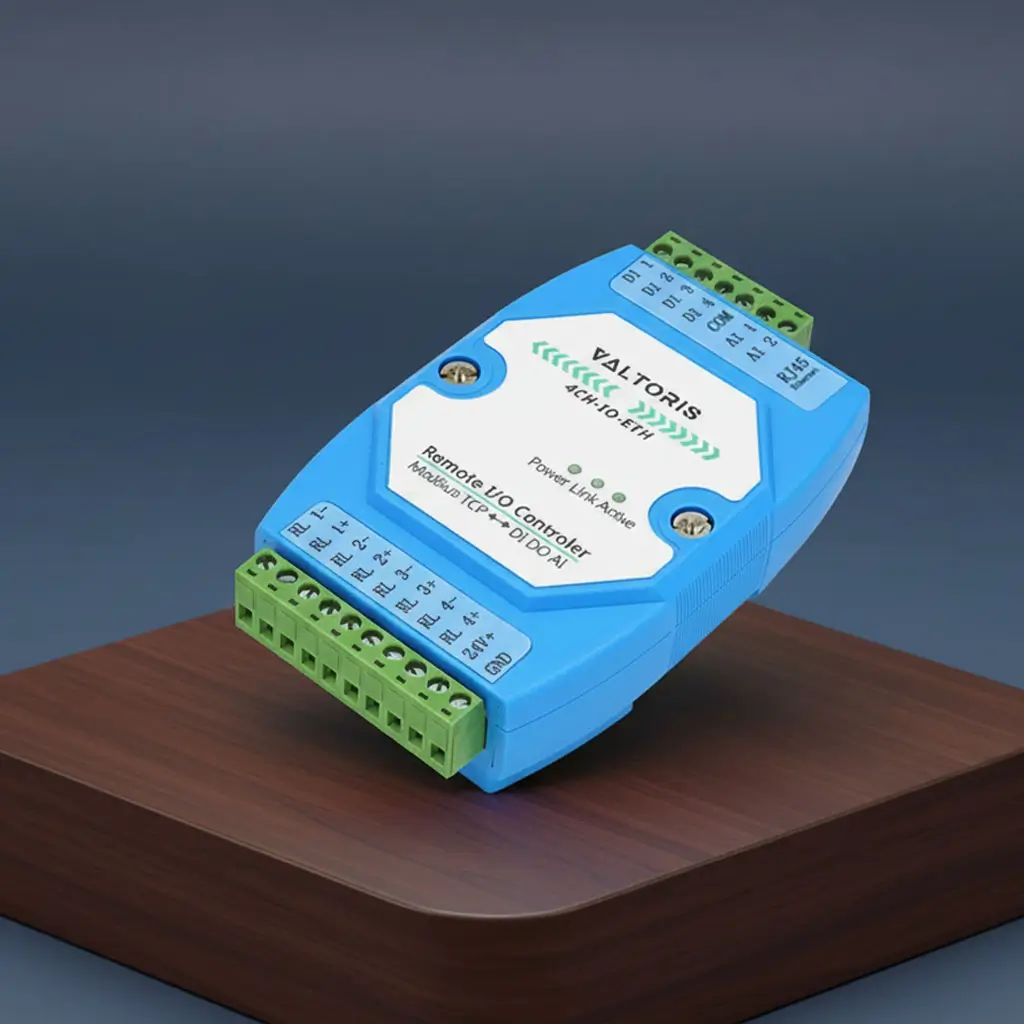
Productos
Dimensiones generales
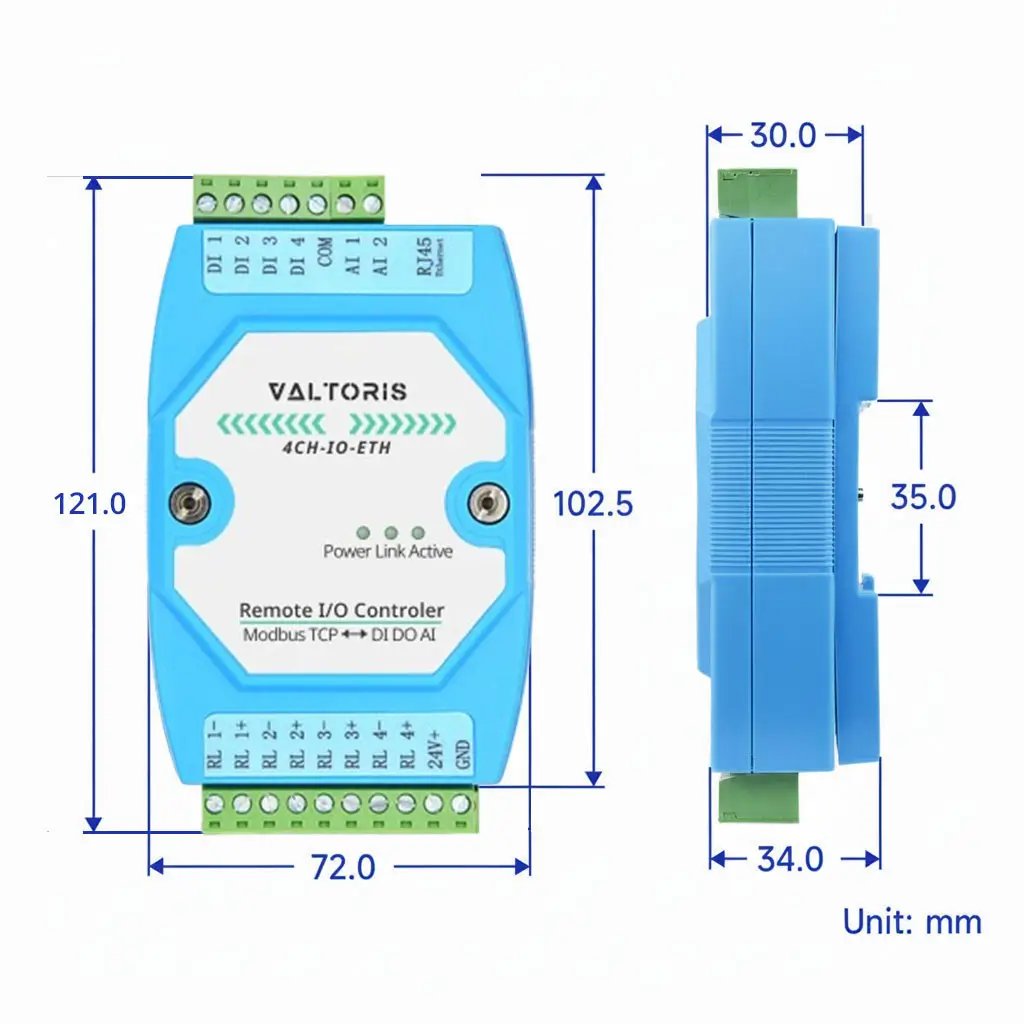
Guía de selección del controlador de E/S remotas

Modelo

TIPO DE ENTRADA/SALIDA REMOTA

Método de comunicación

Fuente de alimentación

Rango de tensión

Dimensiones
(L × A × A)

4CH-IO-RS232/485

2 AI 4 DI 4 DO Controlador remoto de E/S

RS232/485

Terminal de tornillo

DC 9~24V

121*72*34mm

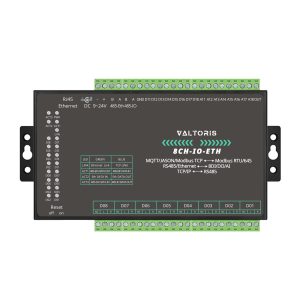
4CH-IO-ETH

2 AI 4 DI 4 DO Controlador remoto de E/S

Ethernet

Terminal de tornillo

DC 9~24V

121*72*34mm

8CH-IO-ETH

8 AI 8 DI 8 DO Controlador remoto de E/S

Ethernet

Terminal de tornillo + puerto de alimentación DC 5.5

DC 9~24V

197*92*25mm

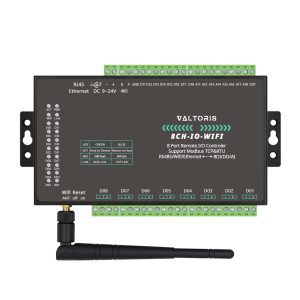
8CH-IO-WE

8 AI 8 DI 8 DO Controlador remoto de E/S

WIFI

Terminal de tornillo

DC 9~24V

197*92*25mm

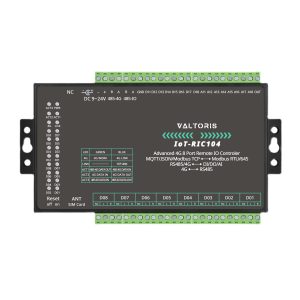
8CH-IO-LTE

8 AI 8 DI 8 DO Controlador remoto de E/S

4G

Terminal de tornillo + puerto de alimentación DC 5.5

DC 9~24V

197*92*25mm

ParameterSpecification
External interface 
SizeL x W x H = 12.2cm × 7.2cm × 3.4cm
Software 
App protocolModbus RTU / Modbus TCP
Physical protocolEthernet
Relay Transmission Time 
Response time< 30ms
I/O & Format 
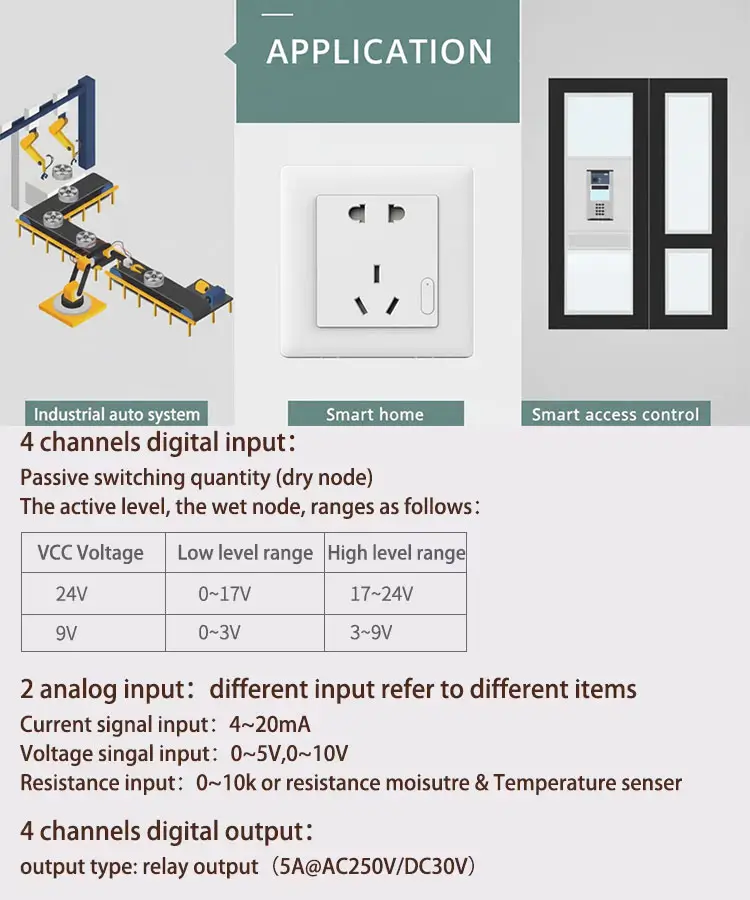
Configuration4× DI, 2× AI, 4× DO (Relay)
AI Input Format (Current)4~20mA, 0~20mA
AI Input Format (Voltage)0~5V, 0~10V
AI Input Format (Resistance)0~10KΩ, temperature/humidity sensor
Power Consumption 
Rating< 1.8W, < 75mA @ 24V DC
Environment 
Operating temperature-40~85℃
Storage temperature-45~165℃
Humidity range5~95% relative (non-condensing)

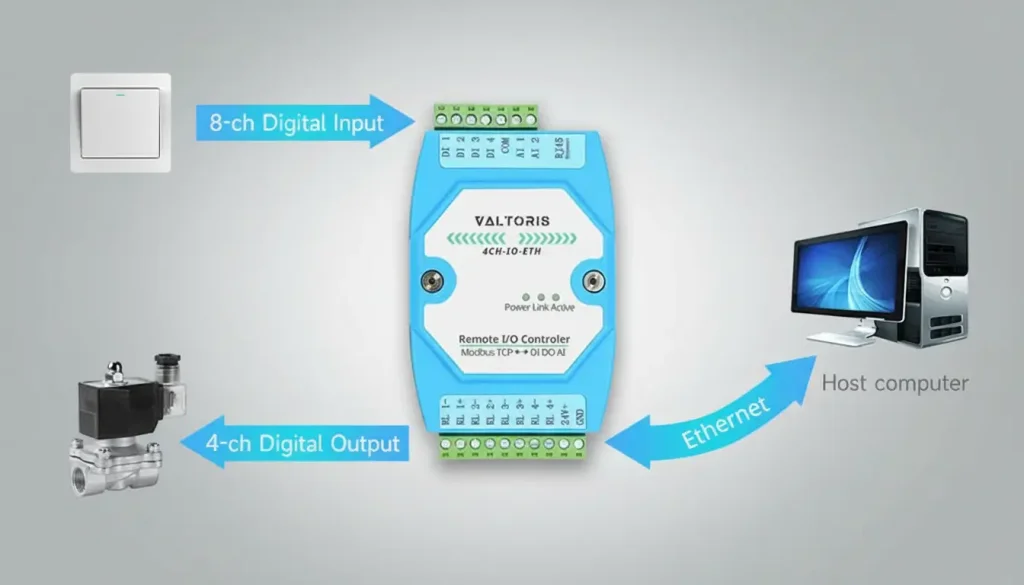
4CH-IO-ETH Network IO Module is an digital input output and analog input based on Ethernet. The remote IO controller can conveniently connect to Ethernet to realize accessing TCP connection, and web-page. 4CH-IO-ETH are the ideal choices for user realizing remote control and data acquisition.

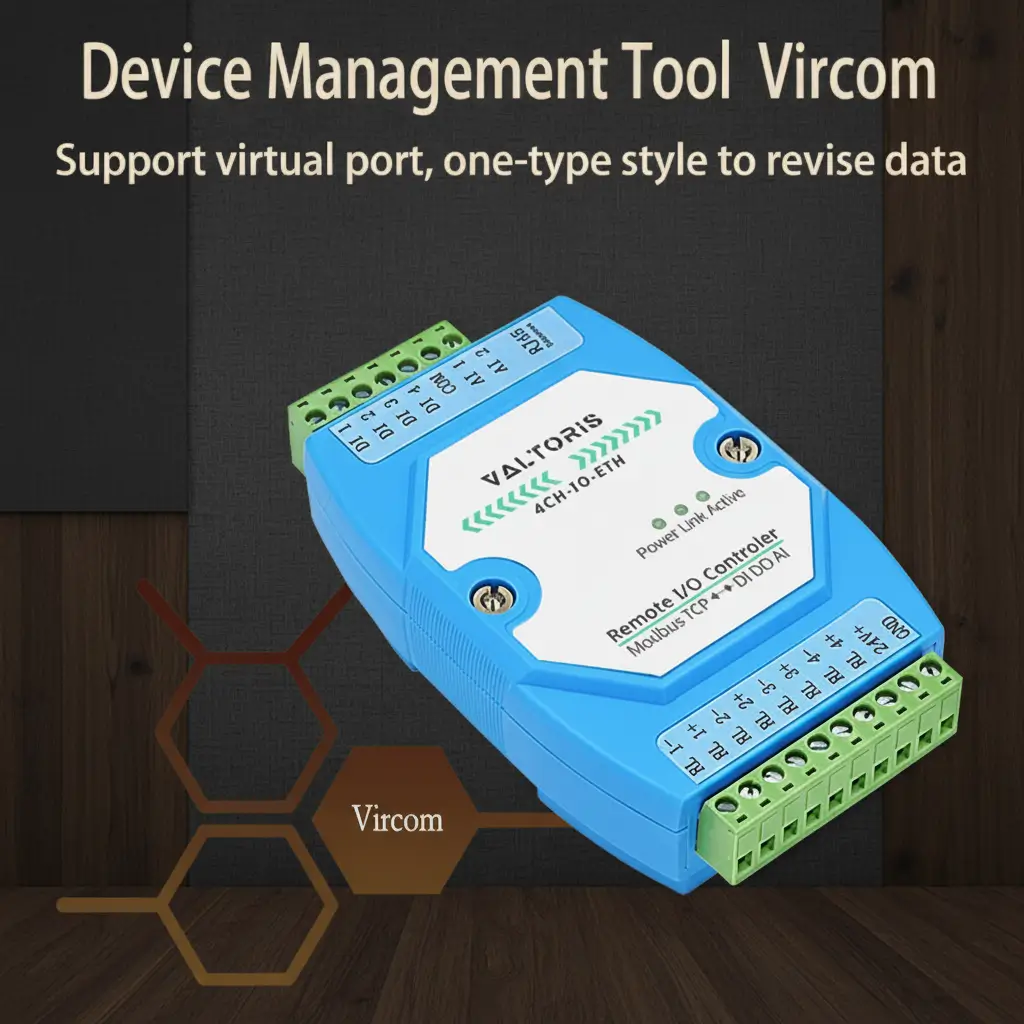
It based on Ethernet transmission, support Modbus TCP to Modbus RTU, support virtual serial port, can monitor 4 channels digital input, 2 channels analog input and control 4 channels relay output at the same time. The remote IO control and data acquisition use Modbus TCP protocol or Modbus RTU protocol.

Q: Can a SCADA system and a local HMI poll this 4-channel module simultaneously over Ethernet?

A: Yes. The module supports multi-master concurrent access. However, because this is a compact node designed for fast localized control (<30ms response time), we recommend limiting concurrent Modbus TCP client connections to four or fewer to prevent network congestion and timeout errors.

Q: Can the built-in relay outputs (DO) directly drive field motors or large pumps?

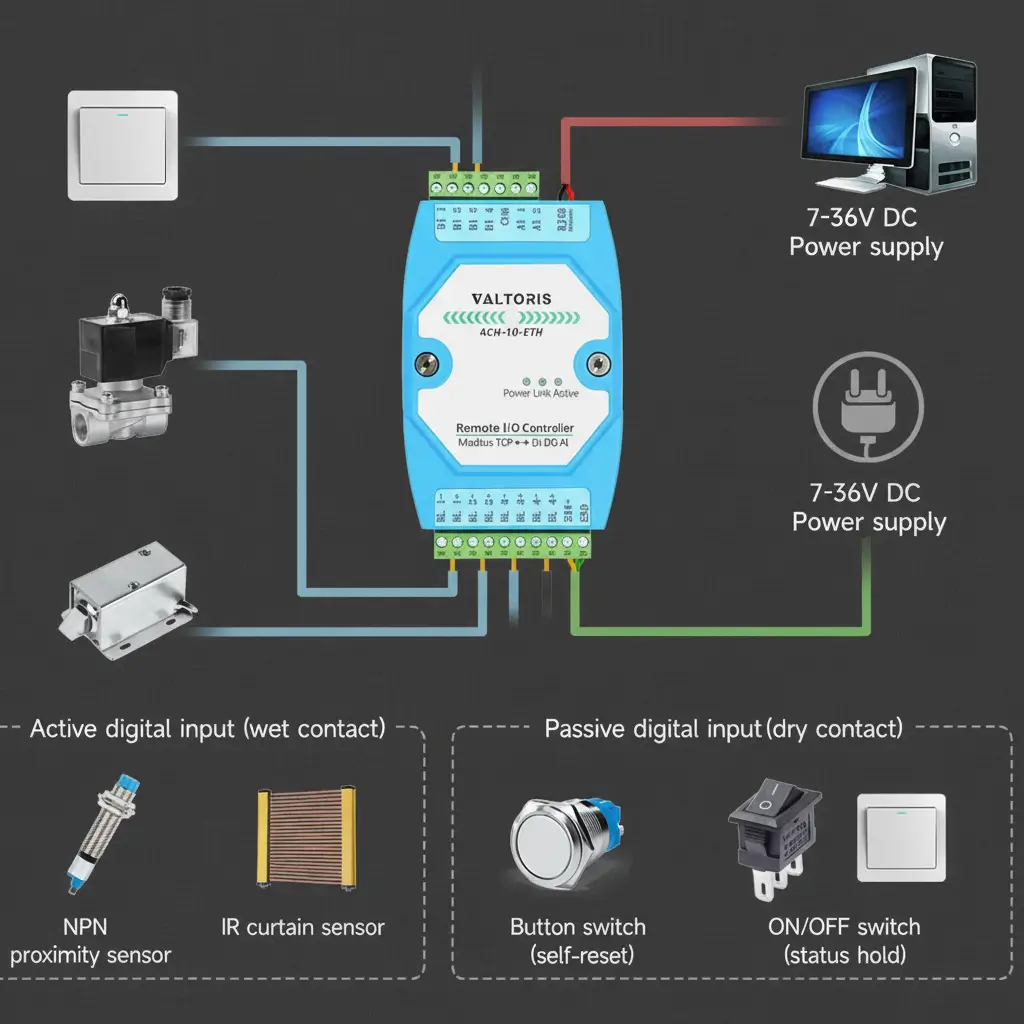
A: Not recommended. The internal relays are designed for control-level switching (e.g., indicator lights, small solenoid valves, or alarm buzzers). To drive large industrial motors or heavy inductive loads, you must wire these relay outputs to external, appropriately sized AC contactors or solid-state relays (SSRs). This prevents inrush currents from arcing and destroying the internal contacts.

Q: How do I switch the 2 analog inputs (AI) between 4-20mA and 0-10V?

A: To switch signal types, you need to set up physical jumpers on the internal circuit board as well as the Web UI settings. Before wiring your sensors, always check the jumper positions in the downloads section of the Hardware Installation Guide. If you don’t, you could damage the sampling circuit.

Q: If I just want to connect an old RS485 flow meter to Ethernet, can I use this purely as a gateway without wiring any local I/Os?

A: Absolutely. The Modbus TCP to RTU gateway function operates completely independently of the local I/O acquisition. However, if your upcoming project only requires protocol conversion with zero physical I/O points, specifying our dedicated Serial Communication Servers will be much more cost-effective and space-efficient.

Q: What happens to the field relays if the factory network drops or the master PLC crashes?

A: The module features an industrial communications watchdog timer. If it detects a Modbus TCP heartbeat timeout, all relay outputs (DO) will automatically disconnect or revert to your pre-configured «Safe State.» This critical safety feature completely prevents field equipment from operating out of control during network failures.

👑 Definitive Guide: [ The Ultimate Guide to Remote I/O: Basics, Specs, and Selection ]

🚀 Application Note: [ PLC Alternative: Automating Battery Production with Remote I/O ]

🔄 Looking for a wireless alternative? Check out our [ Wi-Fi & Ethernet Remote I/O Module ] to eliminate local cabling entirely.


REQUEST A QUOTE

SKU/Part No.