
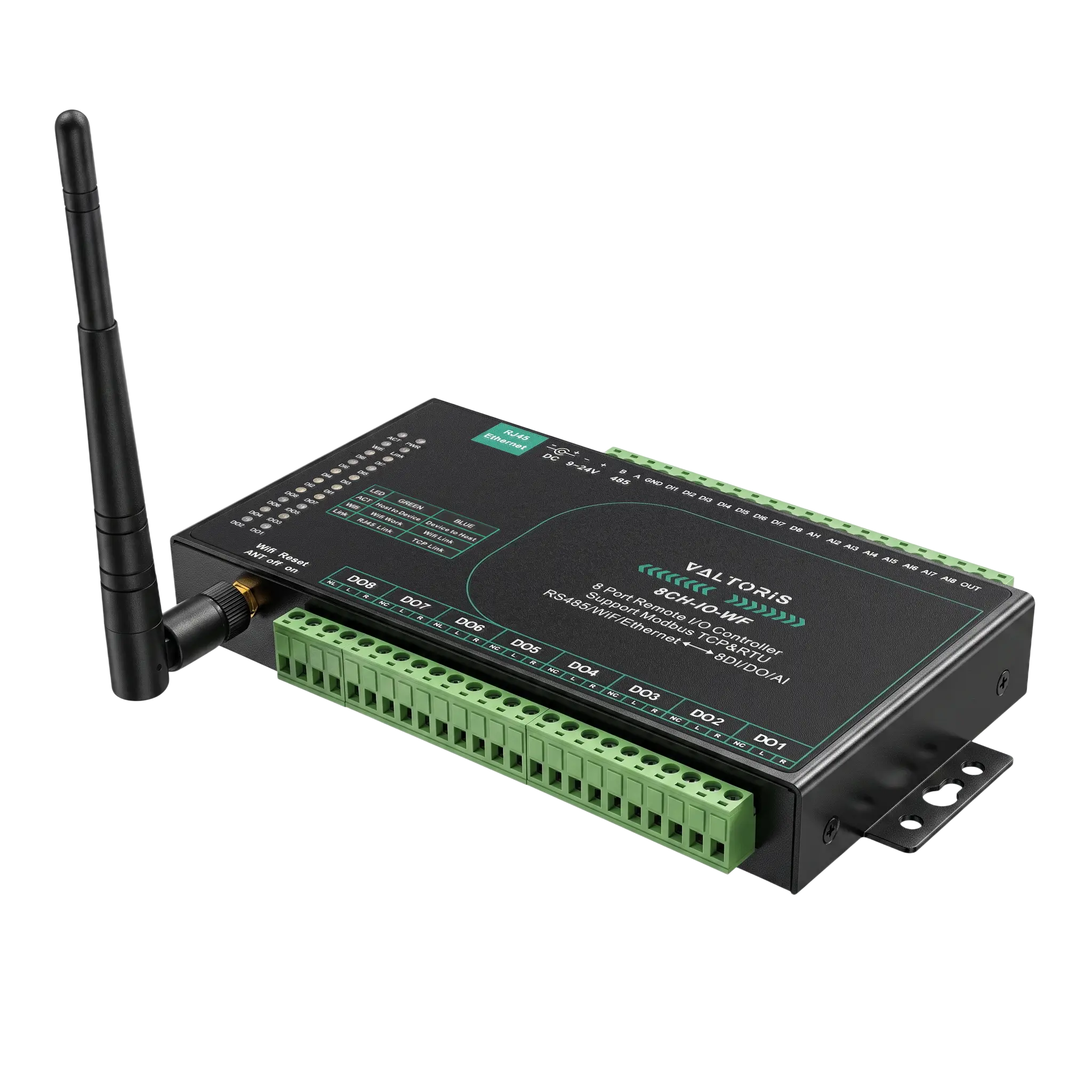
Industrielles 8-Kanal-Funk-E/A-Modul (8DI/8AI/8DO), Isolationsschutz
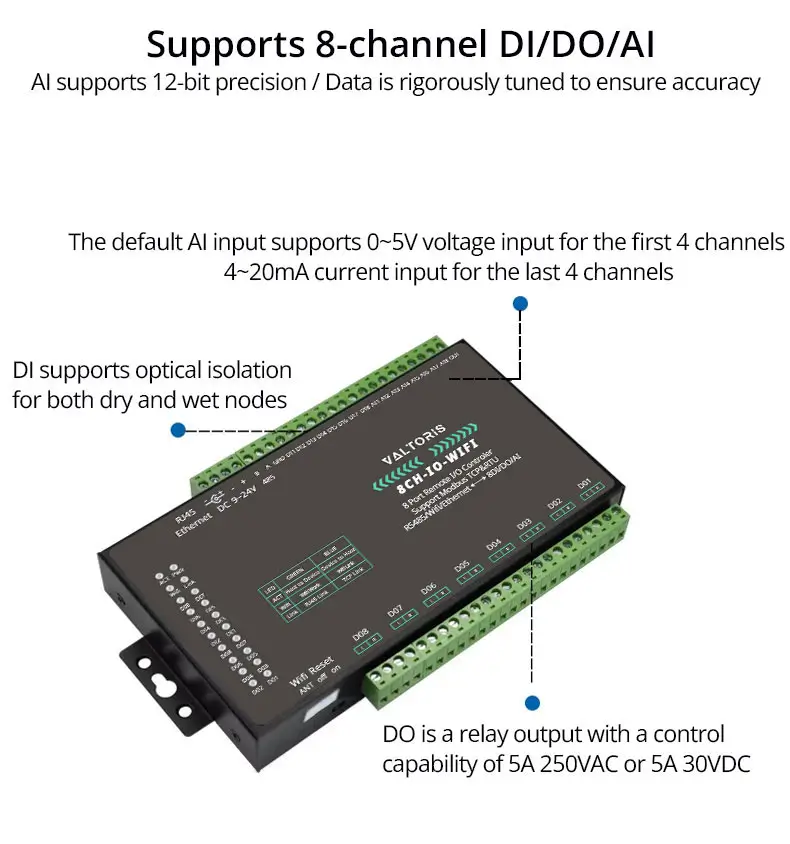
Eliminieren Sie unerschwingliche Kosten für das Ziehen von Kabeln in Ihrer Anlage. Dieses drahtlose 8-Kanal-Remote-I/O-Modul (8DI/8AI/8DO) wurde für die verteilte Automatisierung entwickelt und unterstützt Peer-to-Peer (Pair)-Verbindungen, mit denen ein DI-Signal in einem Gebäude direkt ein DO-Relais in einem anderen Gebäude auslösen kann – eine zentrale SPS ist nicht erforderlich. Es kombiniert wichtige digitale, analoge und Relaissignale in einem Edge Node und bietet Wi-Fi, Ethernet und Modbus TCP/RTU-Konvertierung, um sicherzustellen, dass alle Telemetriedaten nahtlos in komplexe SCADA-Umgebungen gelangen.
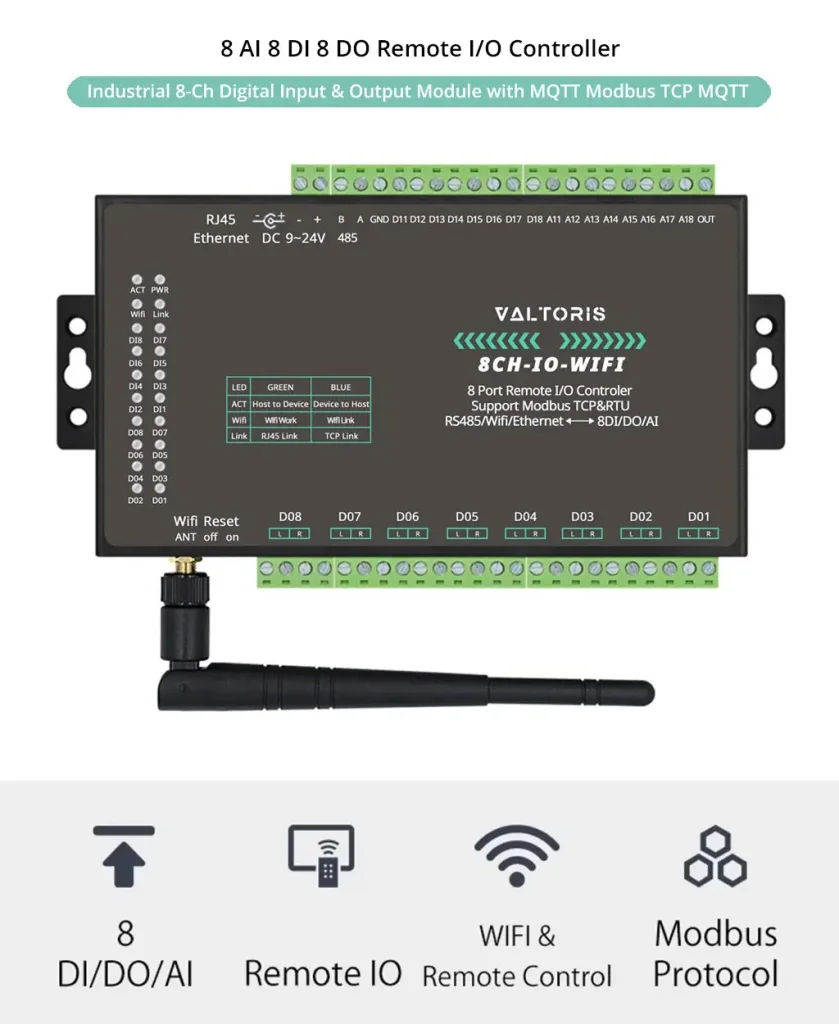
Primäre Funktion
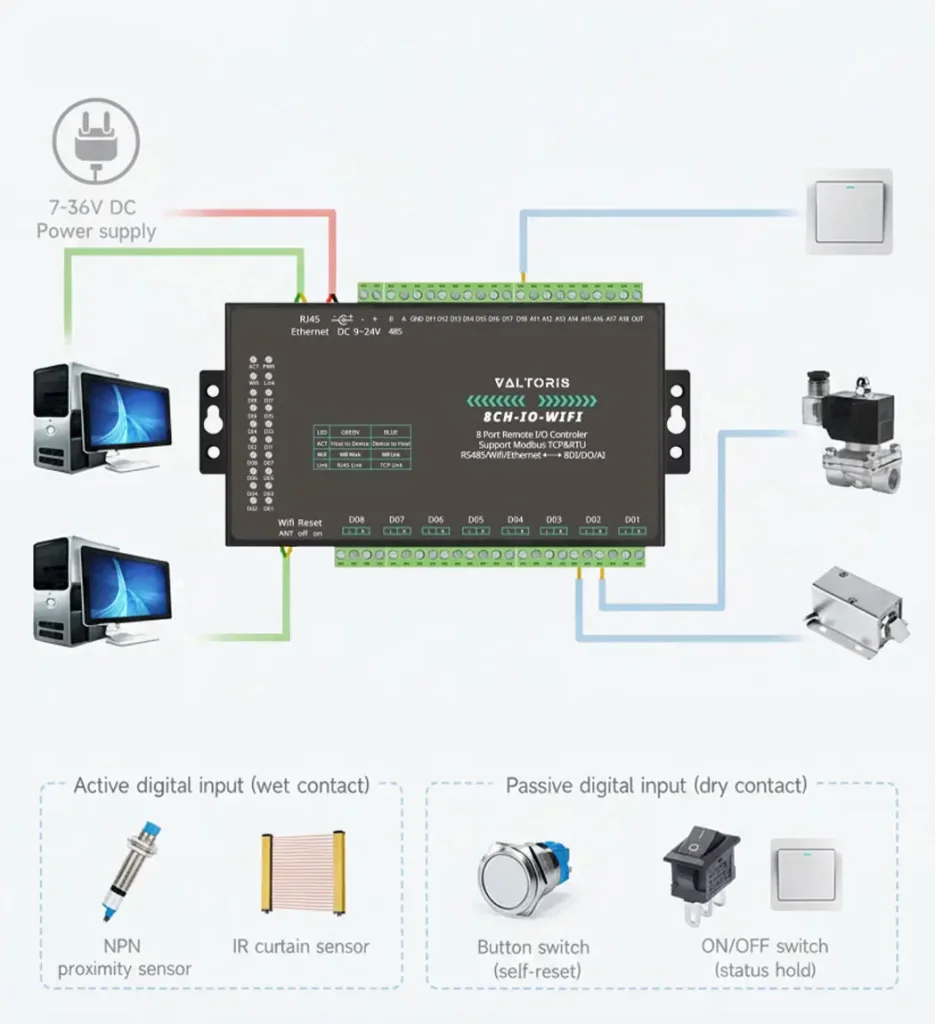
Unterstützt das Lesen digitaler Eingänge durch Senden von Modbus TCP/RTU-Protokollbefehlen über WiFi/Ethernet zur Steuerung digitaler Ausgänge
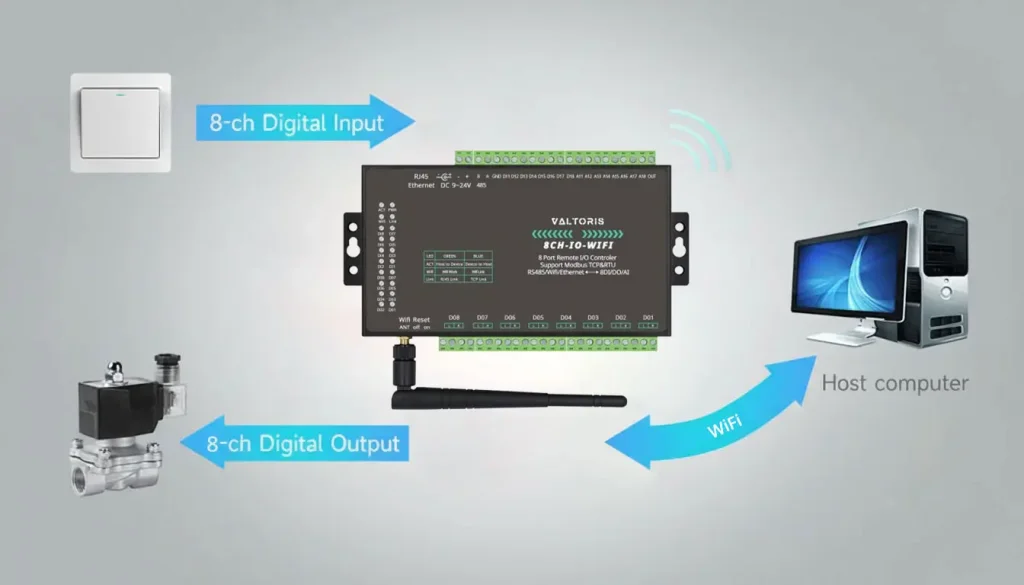
ModBus-Kommunikationsprotokoll
Unterstützt ModBus TCP oder ModBus RTU, kann manuell ausgewählt werden
Gesteuert über WiFi und Ethernet
Reichhaltiges Indikatorlicht
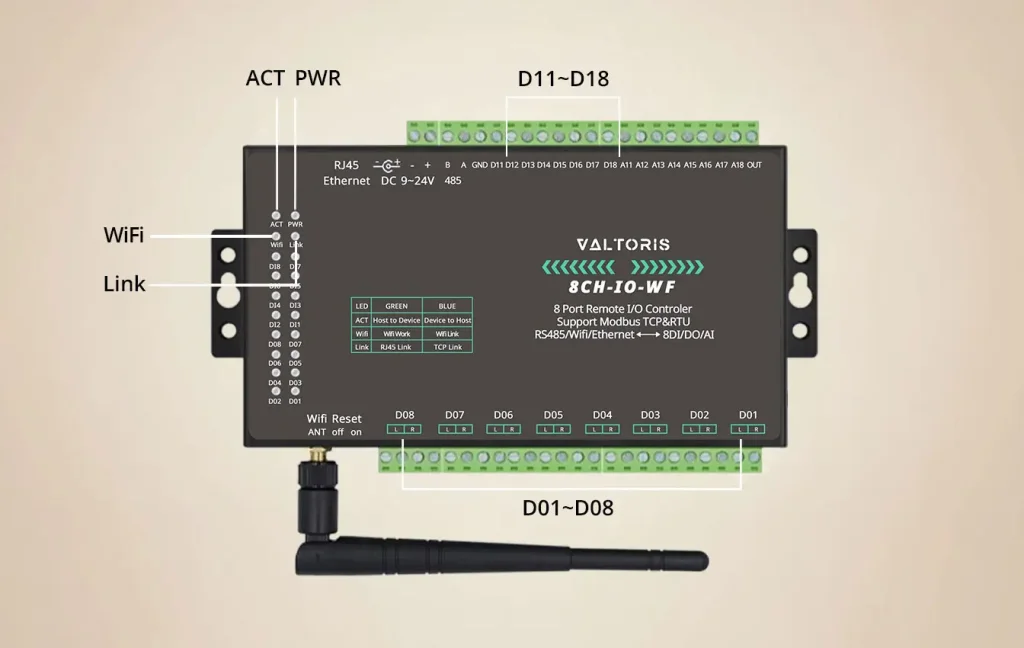
| Anzeigelampe | Indikator Name | Grün | Blau |
| PWR | Netzkontrollleuchte | ||
| ACT | Aktives Licht | Das Gerät hat Anweisungen von Ethernet/WiFi erhalten, anstatt richtig identifiziert zu werden. | Anweisungen werden identifiziert und an den Absender zurückgeschickt |
| LINK | Link-Indikator | Ethernet verbunden, wenn das Licht auf grün wechselt | Oberes Gerät baut TCP-Verbindung mit dem Gerät auf, wenn das Licht blau wird, kann es jetzt funktionieren. |
| WiFi | WiFi-Indikator | WiFi funktioniert | WiFi-basierte Verbindung |
| DI1~DI8 | DI-Kontrollleuchte | Ein zeigt an, dass der Eingang niedrig oder geschlossen ist. | |
| DO1~DO8 | DO-Kontrollleuchte | Ein: Das Relais ist geschlossen. |
WiFi-Fernbedienung
WiFi-Verbindung zur Vermeidung von Störungen der Netzverbindung
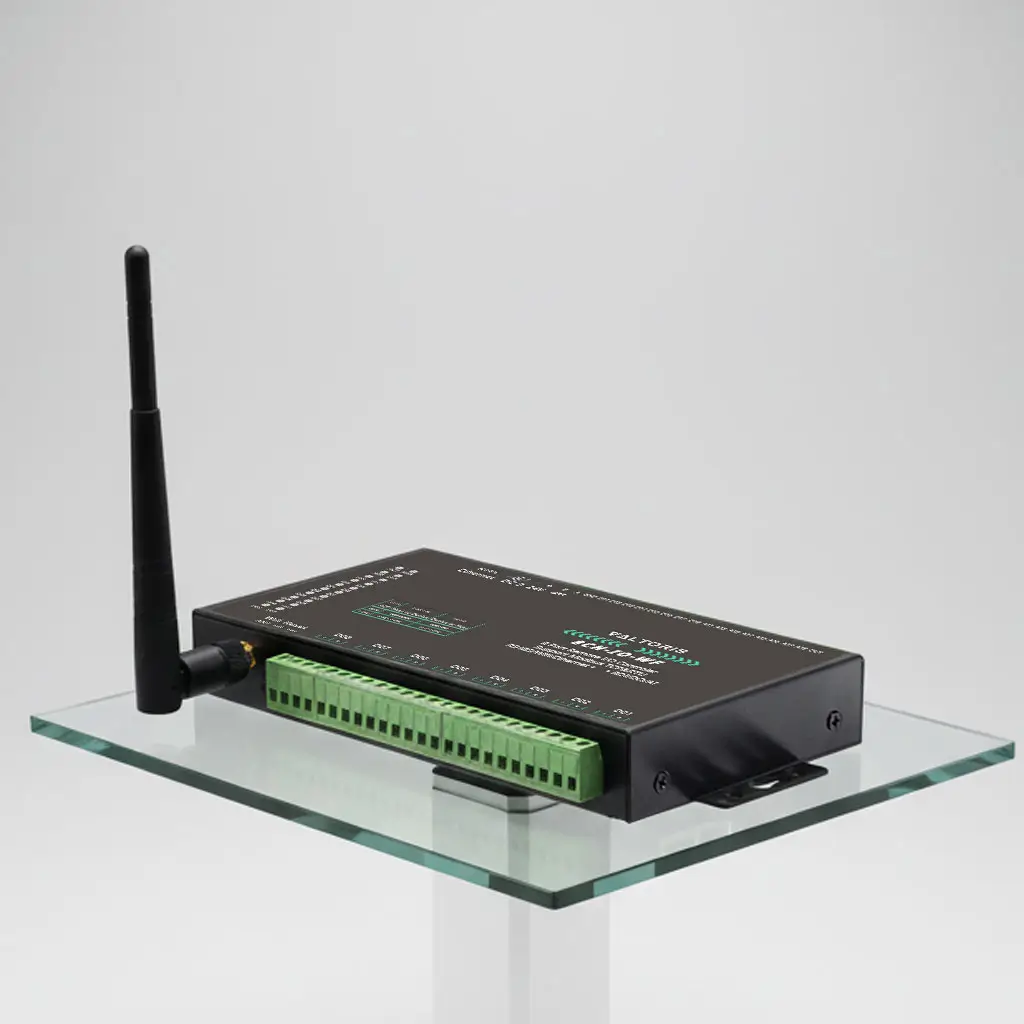
Produkt anzeigen
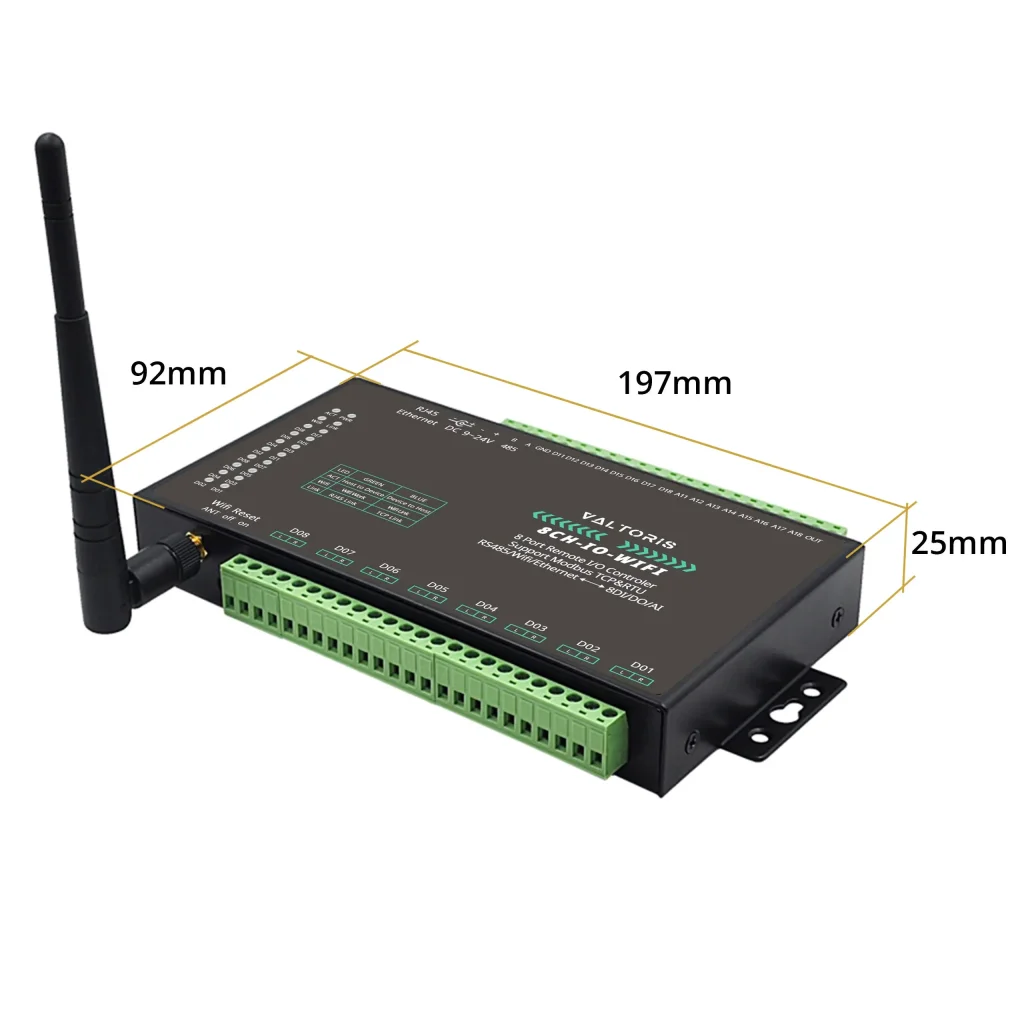
Umrissmaße
Leitfaden zur Auswahl von Remote-I/O-Controllern
Modell | REMOTE-E/A-TYP | Methode der Kommunikation | Stromversorgung | Spannungsbereich | Abmessungen |
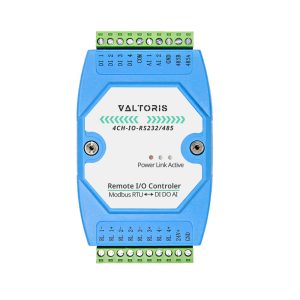 4CH-IO-RS232/485 | 2 AI 4 DI 4 DO Fernbedienbare E/A-Steuerung | RS232/485 | Schraubklemme | DC 9~24V | 121*72*34mm |
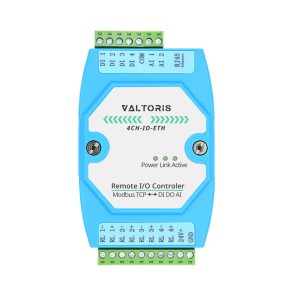 4CH-IO-ETH | 2 AI 4 DI 4 DO Fernbedienbare E/A-Steuerung | Ethernet | Schraubklemme | DC 9~24V | 121*72*34mm |
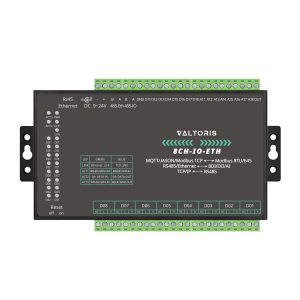 8CH-IO-ETH | 8 AI 8 DI 8 DO Fernbedienbare E/A-Steuerung | Ethernet | Schraubklemme + DC 5,5 Stromanschluss | DC 9~24V | 197*92*25mm |
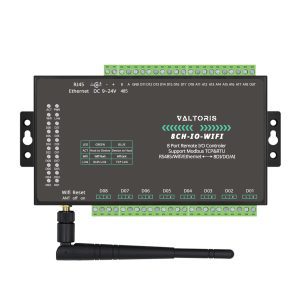 8CH-IO-WE | 8 AI 8 DI 8 DO Fernbedienbare E/A-Steuerung | WIFI | Schraubklemme | DC 9~24V | 197*92*25mm |
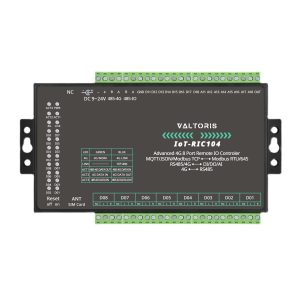 8CH-IO-LTE | 8 AI 8 DI 8 DO Fernbedienbare E/A-Steuerung | 4G | Schraubklemme + DC 5,5 Stromanschluss | DC 9~24V | 197*92*25mm |
Sind Sie bereit, Ihre Schalttafeln zu modernisieren? Die Integration von drahtlosen E/A in ältere SPS-Netzwerke erfordert Präzision.
- [Aktion A] 👉 Komplettes Datenblatt und Schaltpläne anfordern (einschließlich detaillierter Schaltpläne für Trocken-/Nass-DI-Kontakte, Relaisausgänge und 2/3/4-Leiter-Analogsensoranschlüsse)
- [ Aktion B ] 👉 Konsultieren Sie einen Ingenieur für eine Pilot-Demo-Einheit
| External interface | |
| Size: | L x W x H =9.2cm×19.7cm×2.5cm |
| Software | |
| Network protocol | Modbus TCP/ Modbus RTU |
| Under protocol | WiFi |
| Baud rate | 1200~115200bps (normal 9600bps) |
| Parity bit | none |
| Data bit | 8 bits |
| Stop bit | 1 bit |
| Response Time | < 30ms |
| AI Input Format | |
| Current: 4~20mA,0~20mA Votage: 0~5V,0~10V Resister: 0~10K, temperature/humidity sensor | |
| Power Consumption | |
| < 220mA@24V | |
| Communication | |
| Wireless standard | 802.11b /g |
| Frequency range | 2.412GHz-2.484GHZ |
| Transmit power | 802.11b:+20dBm(Max.);802.11g:+18dBm(Max.); |
| Receiving sensitivity | 802.11b:-89dBm; 802.11g:-81 DBM; |
| Environment | |
| Operating temperature | -40~85℃ |
| Storage temperature | -45~165℃ |
| Humidity range | 5~95% relative |
The 8CH-IO-WF Wireless Remote I/O Module lets you get digital and analog data over Wi-Fi and Ethernet connections that are always reliable. This remote I/O node connects to your network without any problems and has built-in Modbus TCP to Modbus RTU conversion.
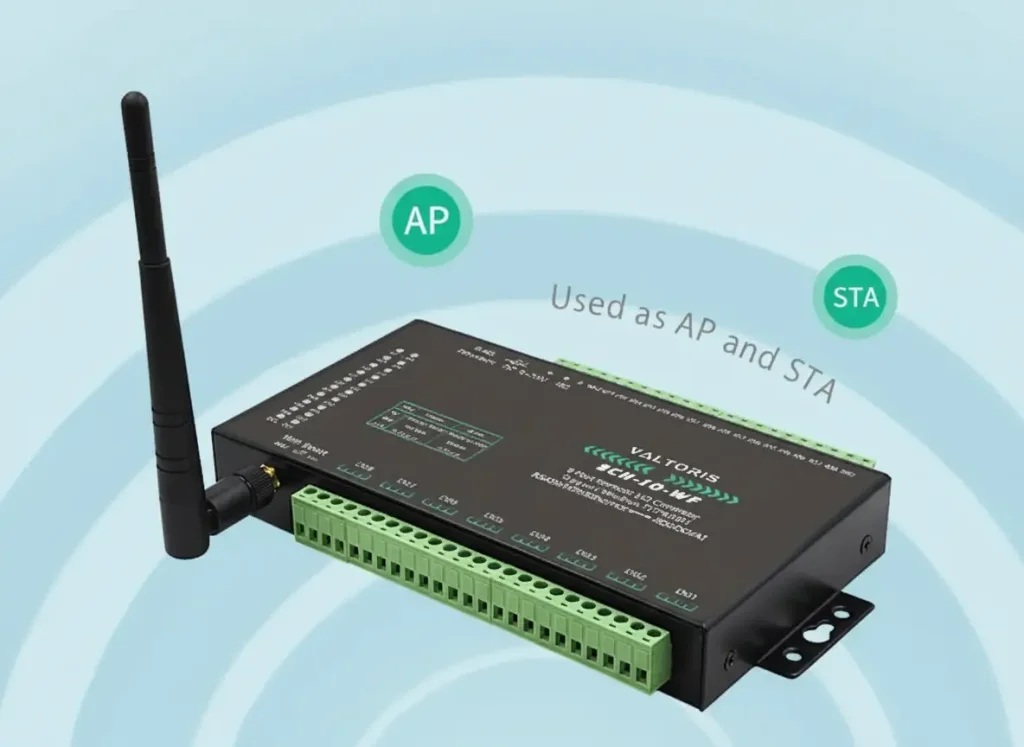
It simultaneously monitors 8 digital inputs (DI) and 8 analog inputs (AI), while actively controlling 8 relay outputs (DO). The built-in Wi-Fi can work in both Access Point (AP) and Station (STA) modes, so you can connect your existing industrial routers and data acquisition systems wirelessly in a variety of ways.
Q: Can I install this Wi-Fi module inside a closed metal control cabinet?
A: If you place the module inside a sealed metal enclosure, it will act as a Faraday cage and severely degrade the 2.4GHz Wi-Fi signal. For optimal performance, you should either use a non-metallic (polycarbonate/fiberglass) enclosure or route an external Wi-Fi antenna with a magnetic base to the outside of your metal cabinet.
Q: What is the practical difference between AP (Access Point) and STA (Station) modes for my SCADA setup?
A: * STA Mode (Most Common): The module acts like a client (just like your smartphone) and connects to your factory’s existing wireless network. This is ideal when you want multiple I/O nodes reporting back to a central SCADA server via a central router.
AP Mode: The module creates its own Wi-Fi hotspot. This is useful for localized troubleshooting, allowing an engineer with a laptop or Wi-Fi HMI to connect directly to the I/O module in the field without needing a broader factory network.
Q: Is the Wi-Fi connection fast and reliable enough for real-time PLC control loops?
A: For data acquisition, monitoring (temperature, tank levels), and slow-response control (turning on a pump), it is highly reliable. However, because Wi-Fi inherently involves minor packet jitter and latency (typically 10-50ms), we do not recommend using any wireless I/O for high-speed, deterministic safety loops or fast motion control. Keep your SCADA polling rates above 100ms for stable wireless telemetry.
Q: I have three older RS485 power meters at the same remote site. Can this module transmit their data over Wi-Fi too?
A: Yes. The 8CH-IO-WF features a built-in Modbus TCP-to-RTU gateway. You can daisy-chain those existing meters to the module’s RS485 serial port. The module will bridge their RTU data over your Wi-Fi network to the SCADA system, eliminating the need to pull hundreds of feet of new serial cables. (If you have multiple branches of meters, consider using an [Isolated RS485 Hub] to organize the local wiring before connecting to the I/O node).
Q: Does it support Wi-Fi roaming if installed on a moving vehicle like an AGV?
A: The standard 802.11b/g protocol supports basic connection handoffs, but it isn’t designed for seamless roaming between different factory routers with no delay. If your app uses fast-moving AGVs (Automated Guided Vehicles), we suggest making sure that there is strong, overlapping Wi-Fi coverage or asking us for help with AGV networking solutions.

📖 Definitive Guide: [ The Ultimate Guide to Remote I/O: Basics, Specs, and Selection ]
🔄 Concerned about severe wireless interference? If your factory environment cannot support Wi-Fi reliably, discover our [ Wired Ethernet Remote I/O Modules ] for rock-solid, cable-based Modbus communication.