
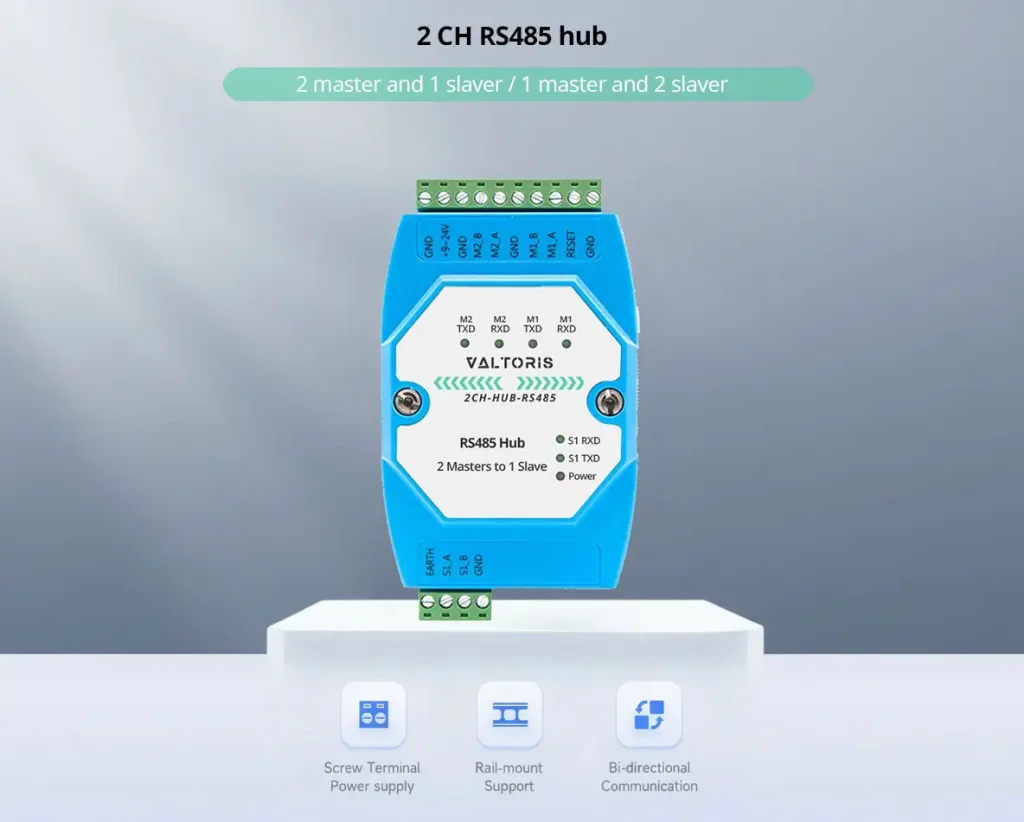
Concentrador industrial activo de 2 canales RS485 tipo caché
Diseñado para resolver conflictos de comunicación serie multihost, este concentrador industrial RS485 tipo caché encamina eficazmente los datos entre dos maestros y un esclavo (o viceversa). Cuenta con configuraciones de velocidad de transmisión independientes y filtrado de datos avanzado para garantizar una integración de telemetría perfecta y la integridad de los datos en redes SCADA complejas.
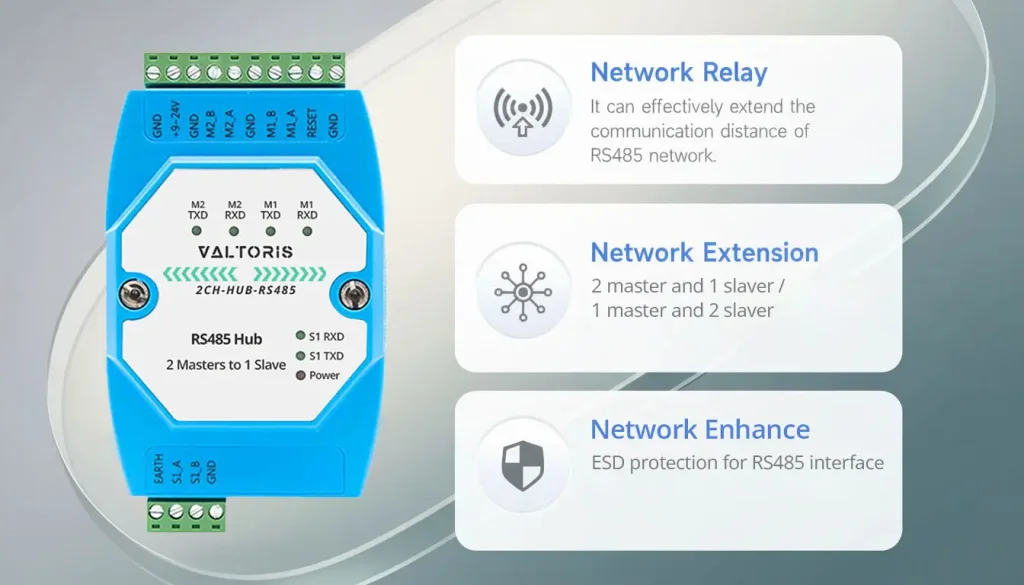
Función principal
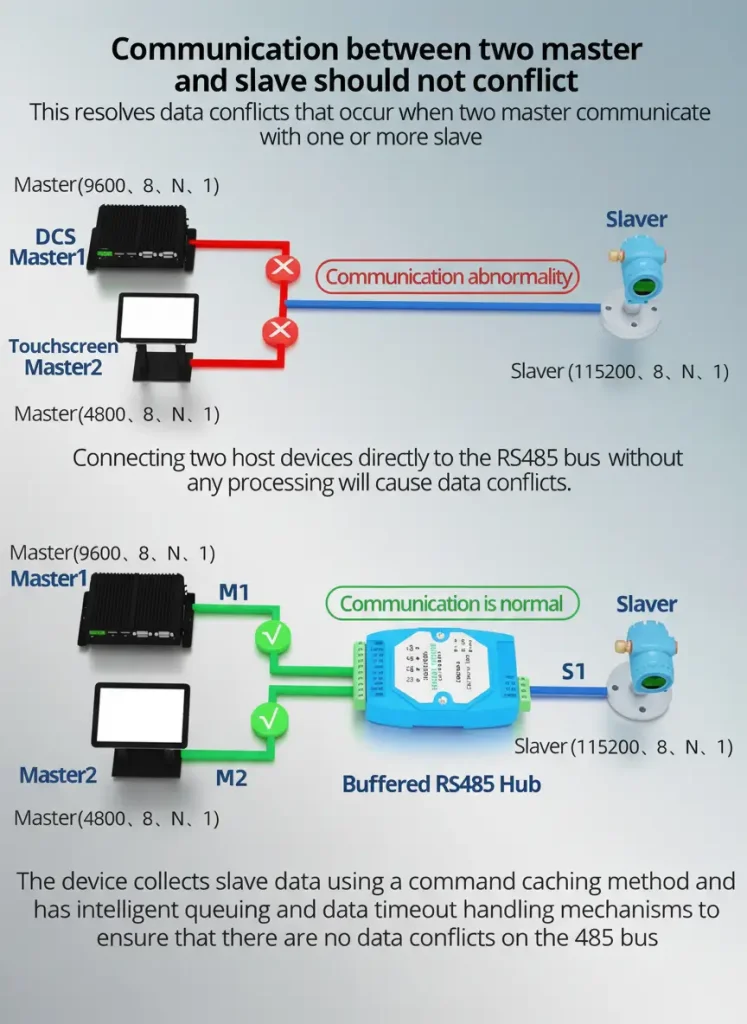
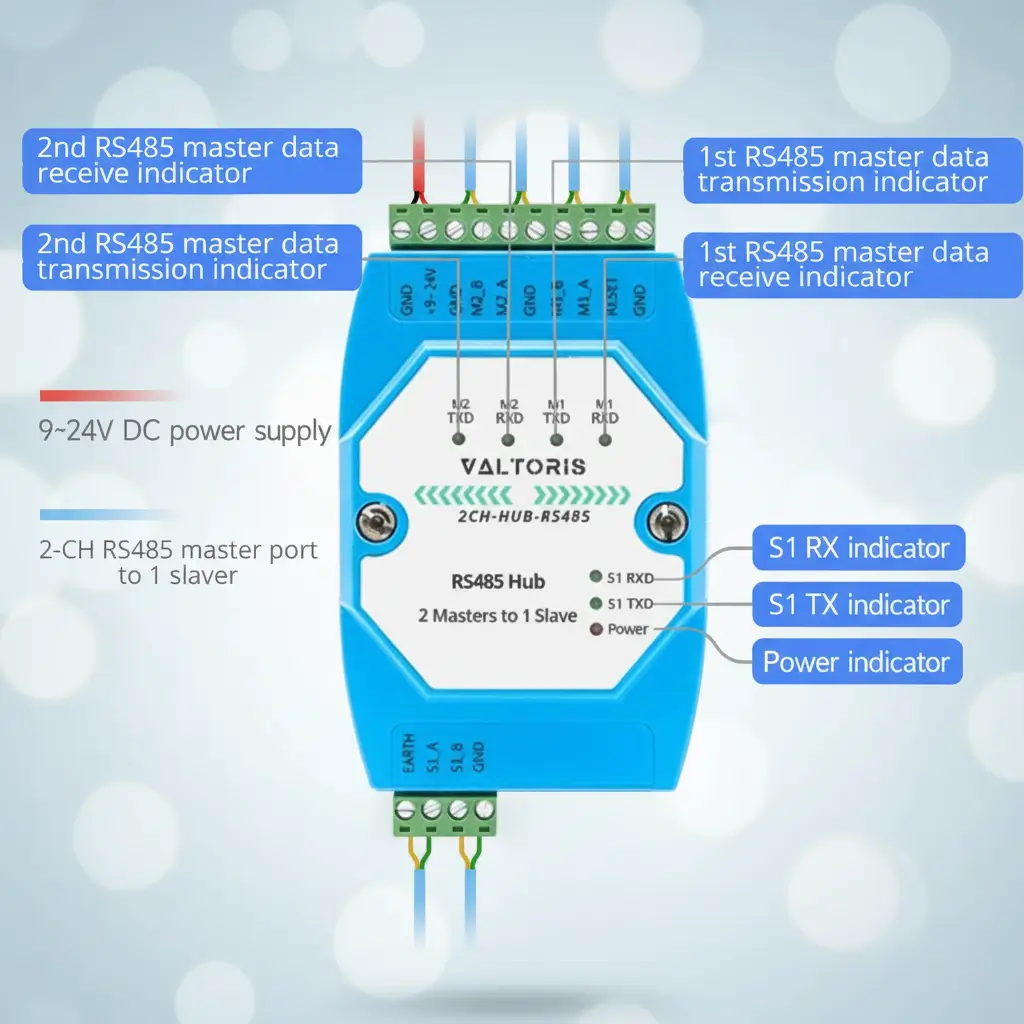
Soporta relé de red RS485, 2 maestro y 1 esclavo / 1 maestro y 2 esclavos
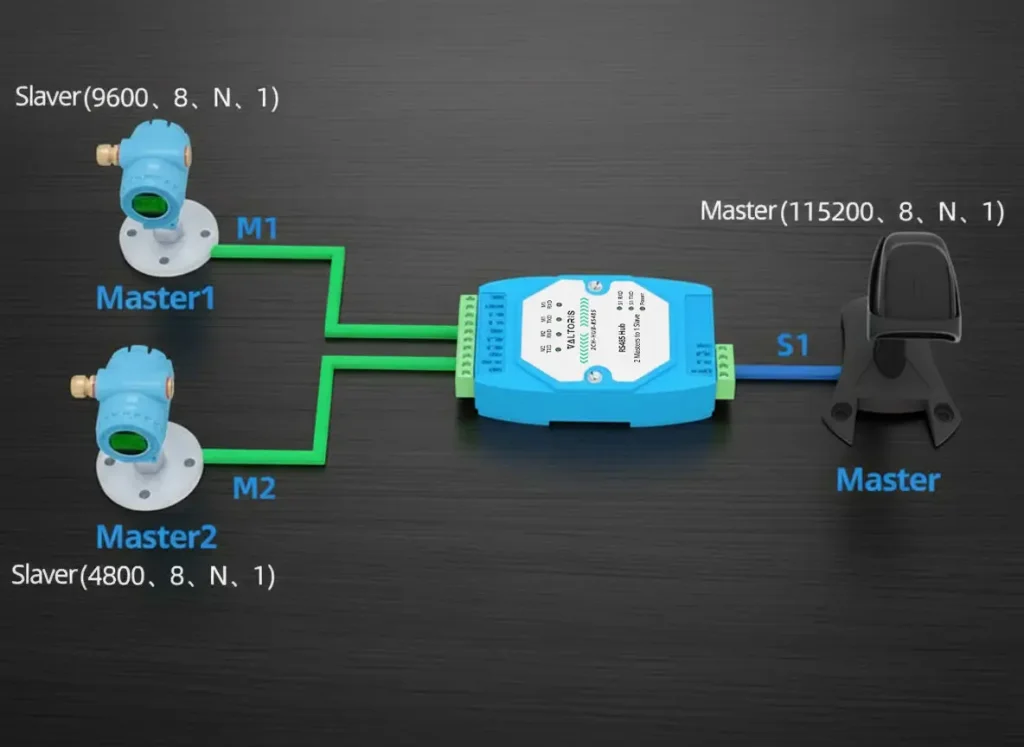
Esquema de conexión
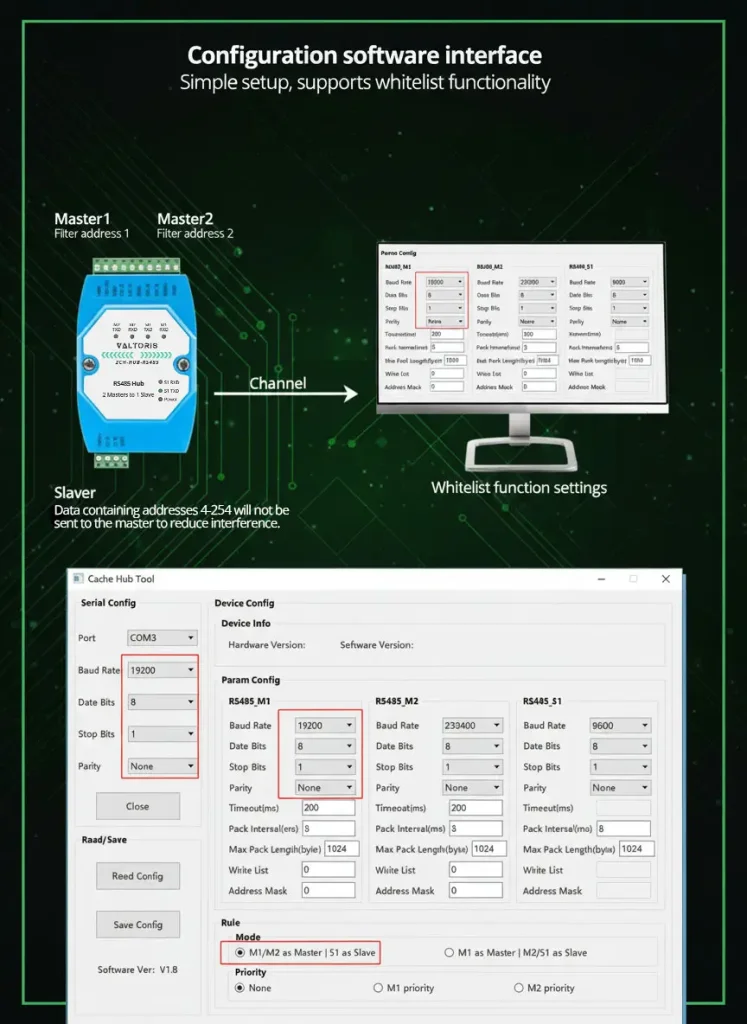
Cada canal RS485 es independiente, y los parámetros del puerto serie se pueden configurar de forma independiente
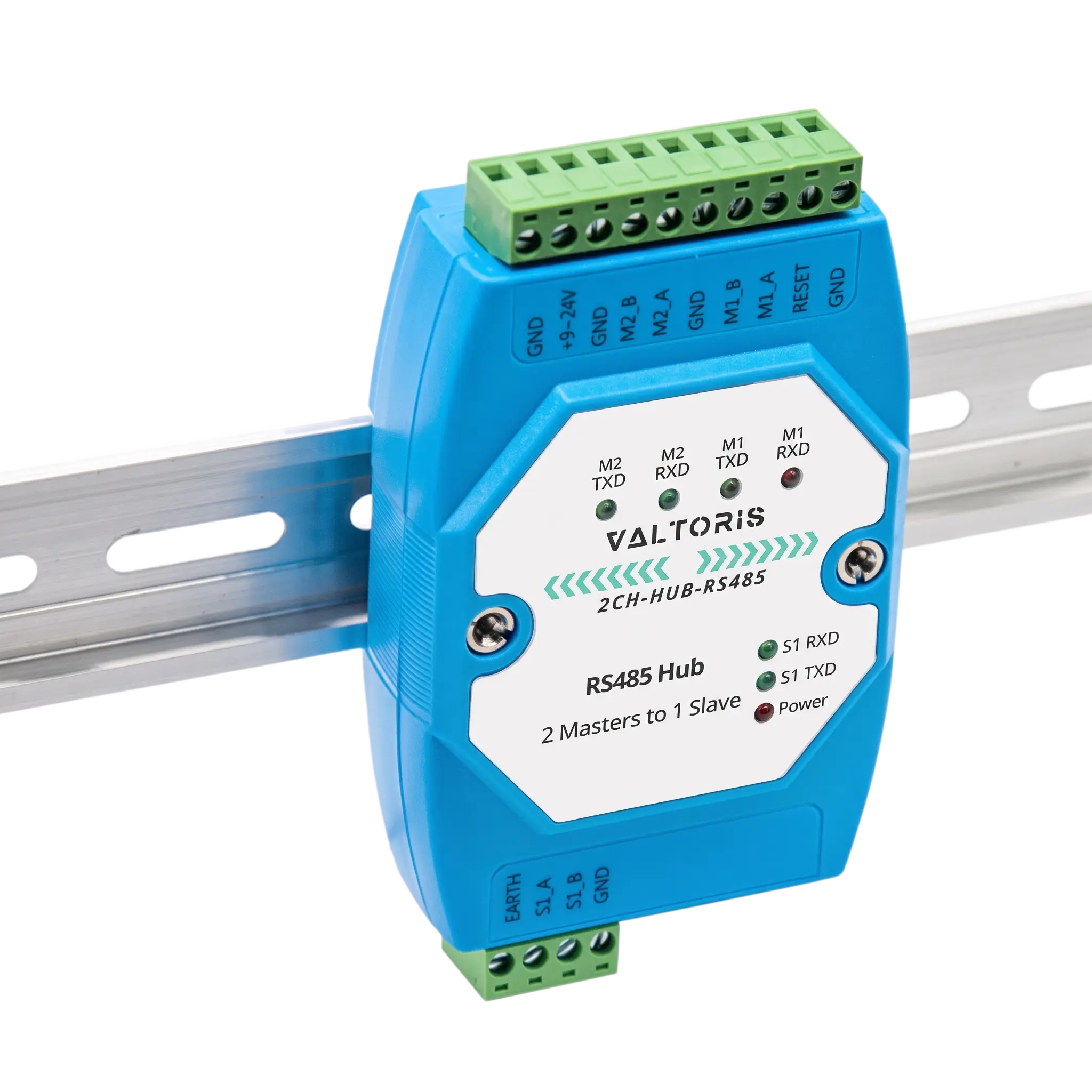
Soporte de montaje en carril
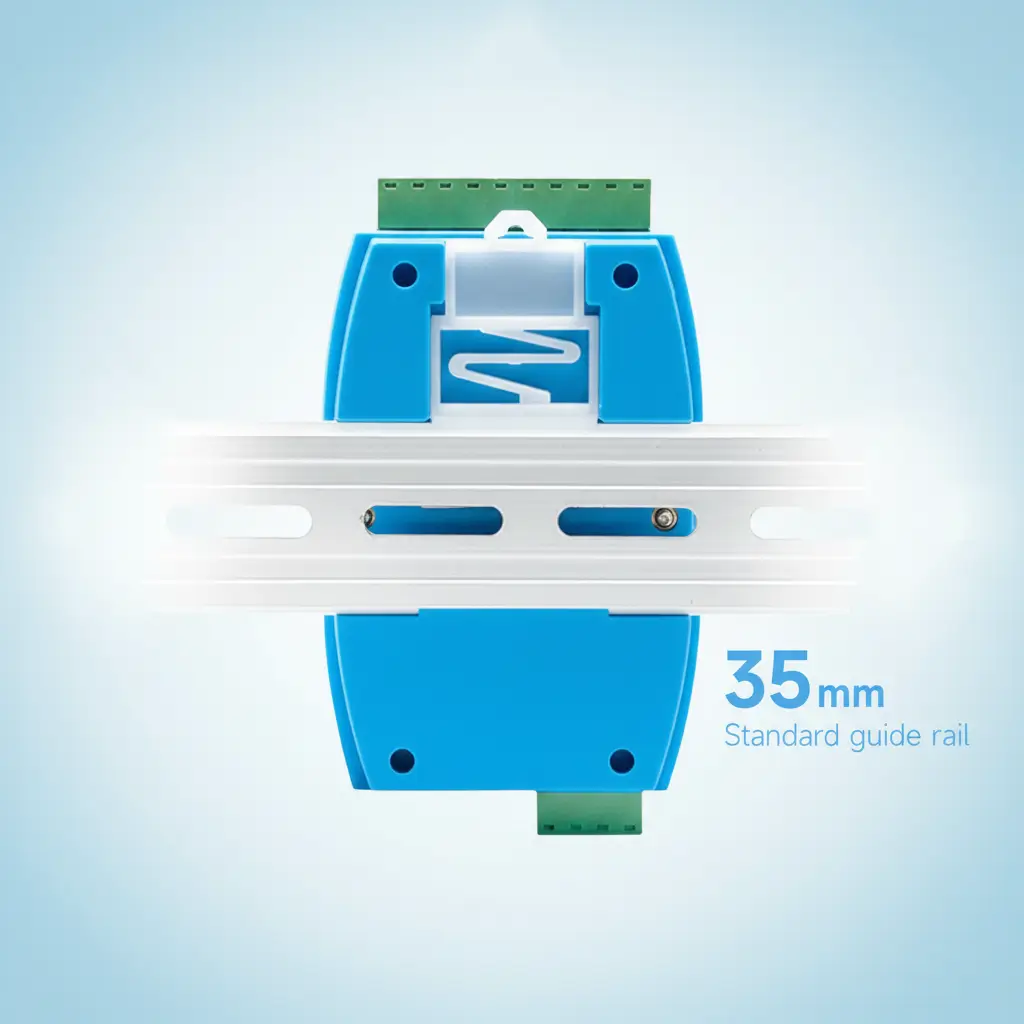
Admite carril guía estándar de 35 mm con hebilla de montaje en carril, fácil de instalar.
Introducción de la interfaz
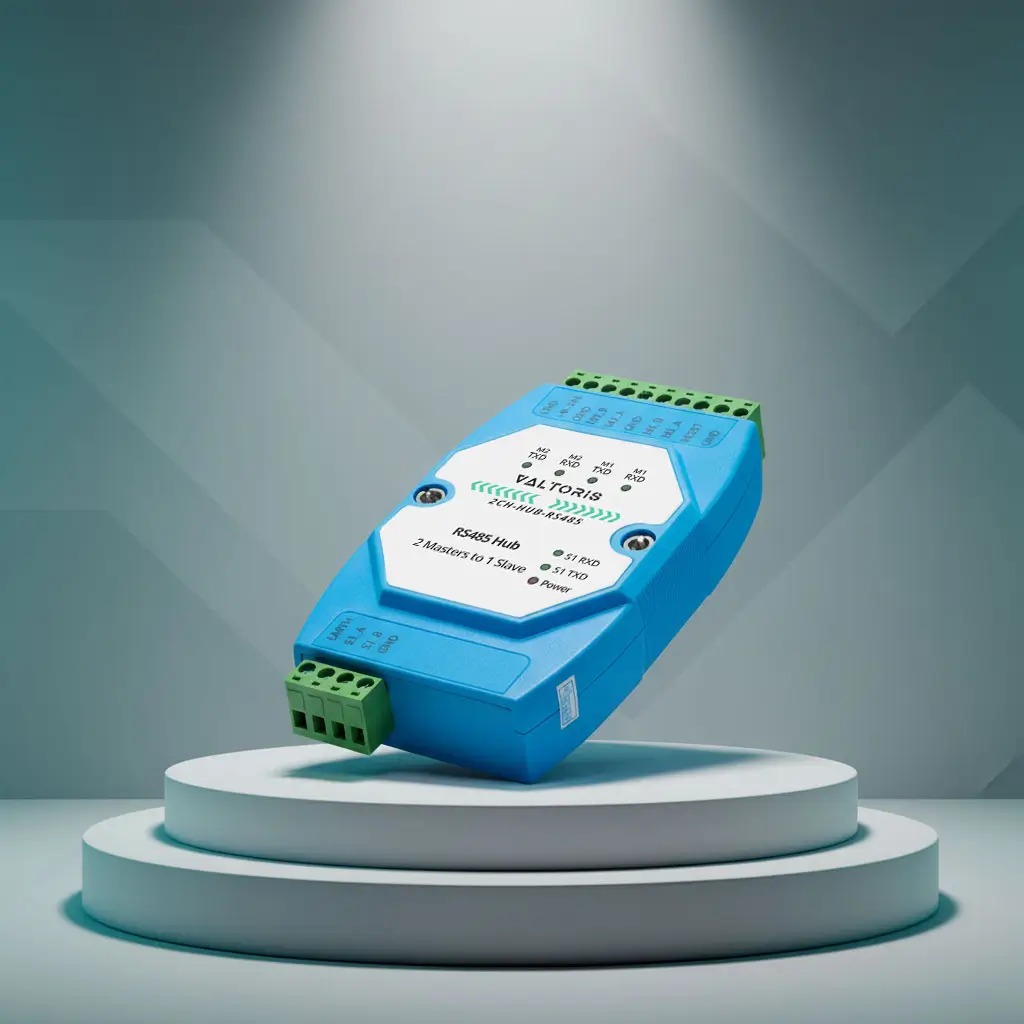
Productos
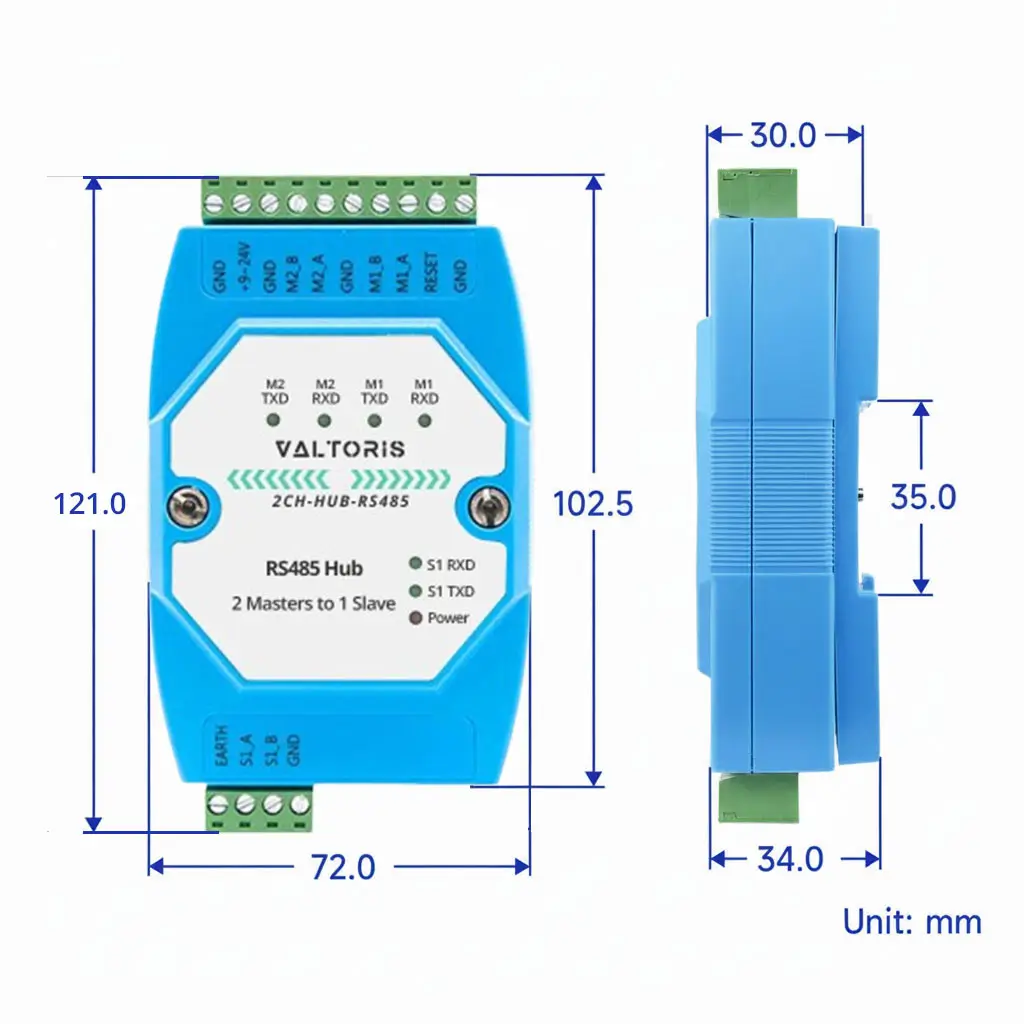
Dimensiones generales
Guía de selección de cubos
Modelo | ||||
Resumen del producto | Concentrador caché RS485 activo de 2 canales | Concentrador de aislamiento de expansión RS485 activo de 4 canales | Concentrador de aislamiento de expansión RS485/232 activo de 4 canales | Concentrador de aislamiento de expansión RS485 activo de 8 canales |
Interfaz física | Puerto RS-485 3PIN cabeza de brida*3 | Puerto RS-485 2PIN cabeza de brida*5 | Extremo RS-232C DB9 cabeza hembra (tipo agujero)*1, puerto RS-485 2PIN cabeza con brida*5 | Puerto RS-485 2PIN cabeza de brida*9 |
Velocidad de transmisión | 1200~460800bps | 300-460800bps (adaptable) | 0~200Kbps (adaptativo) | 300-460800bps (adaptable) |
Protección contra el aislamiento | / | Tensión de aislamiento RS485 Tensión de aislamiento: 2500V Protección estática RS485: 12KV | Tensión de aislamiento RS485 Tensión de aislamiento: 2500V Protección estática RS485: 12KV | Tensión de aislamiento RS485 Tensión de aislamiento: 2500V Protección estática RS485: 12KV |
Parámetros de interfaz | Bit de datos 8 Bits de control Ninguno/Impar/Par/Marca/Espacio | |||
Nodos de apoyo | Cada puerto RS485 admite un máximo de 32 nodos | |||
Distancia de transmisión | RS232C:15m; RS485: 1200 metros (a 9600bps); Cuanto mayor sea la velocidad de comunicación, menor será la distancia. | |||
Medio de transmisión | Cable ordinario, par trenzado o cable apantallado | |||
Método de trabajo | Semidúplex asíncrono | |||
Consumo de energía | DC9-24V 12V@30mA | |||
Temperatura de funcionamiento | -45℃~+85℃ | |||
Humedad | <95%HR | |||
Tamaño(Longitud x Anchura x Altura) | 121mm * 72mm * 34mm | |||
Interface standard | Compliant with RS485 standard |
Physical interface | RS485 screw terminals |
Baud rate | 1200~460800 |
supported nodes | Each RS485 port supports up to 32 nodes |
Communication distance | 1200m (9600bps), the higher rate the shorter distance |
Operating mode | RS485 two-wire (A, B), half-duplex transparent transmission |
Power supply | DC 9~24V |
Operating temperature | -45 ~ +85℃ |
Environment humidity | <95%RH |
Transmission medium | Normal parallel cables/twisted-pair cables |
The 2CH-HUB-RS485 is an industrial-grade, 2-channel active RS485 caching hub engineered specifically to resolve multi-host data conflicts. In standard RS485 networks, two host devices directly polling the same slave will cause inevitable data collisions. This caching hub independently collects data, identifies the originating master station, and safely routes the telemetry back without data loss.
Core Applications & Features
* 2 Masters to 1 Slave Topology: Allows two master stations to simultaneously schedule and read from a single RS485 slave station without data clashing.
* 1 Master to 2 Slaves (Baud Rate Bridging): The three RS485 interfaces are all completely independent. This allows for seamless communication even if the devices are running at different baud rates (1200 to 460800bps supported).
* Advanced Data Filtering: Built-in address mask and whitelist functions allow users to filter station addresses for Modbus reply commands, reducing unnecessary bus load.
* Visual Configuration: Comes with a dedicated «Cache Hub Tool» software for straightforward PC-based parameter management and diagnostics.
Q1: Will the «active caching» mechanism cause severe polling latency or timeout errors on my SCADA system?
A: Nope. 2CH-HUB-RS485 has microsecond queuing at hardware level. When two master stations poll the same slave simultaneously, the hub caches one request instantly and then routes it sequentially in under a second. For normal industrial polling rates (1-2 requests per second for example) this nanosecond delay is totally invisible to the master station. You do not have to change the timeout thresholds on your system.
Q2: Is this hub strictly limited to Modbus RTU, or can I use it with custom serial protocols?
A: The device operates on standard RS485 half-duplex transparent transmission at the physical layer. It seamlessly transmits Modbus RTU as well as most standard serial payloads. However, advanced features like Address Filtering are specifically optimized for Modbus frames. If your project also requires converting these serial protocols to Ethernet TCP, we highly recommend pairing this hub with our [Industrial Modbus RTU to TCP Gateway]
Q3: With independent baud rates across three ports, do I need to configure complex hardware DIP switches in the field?
A: We got rid of the tiny DIP switches for easier field deployment. The device comes with a dedicated Windows based Cache Hub Tool. Connect your laptop to the device via USB to RS485 adapter to visually configure baud rate (1200~460800bps), data bits, parity and whitelist settings for each port independently. Every setup takes effect instantly and needs no coding at all.
Q4: In high-EMI environments, if my two master stations have different ground potentials, will it crash the RS485 bus?
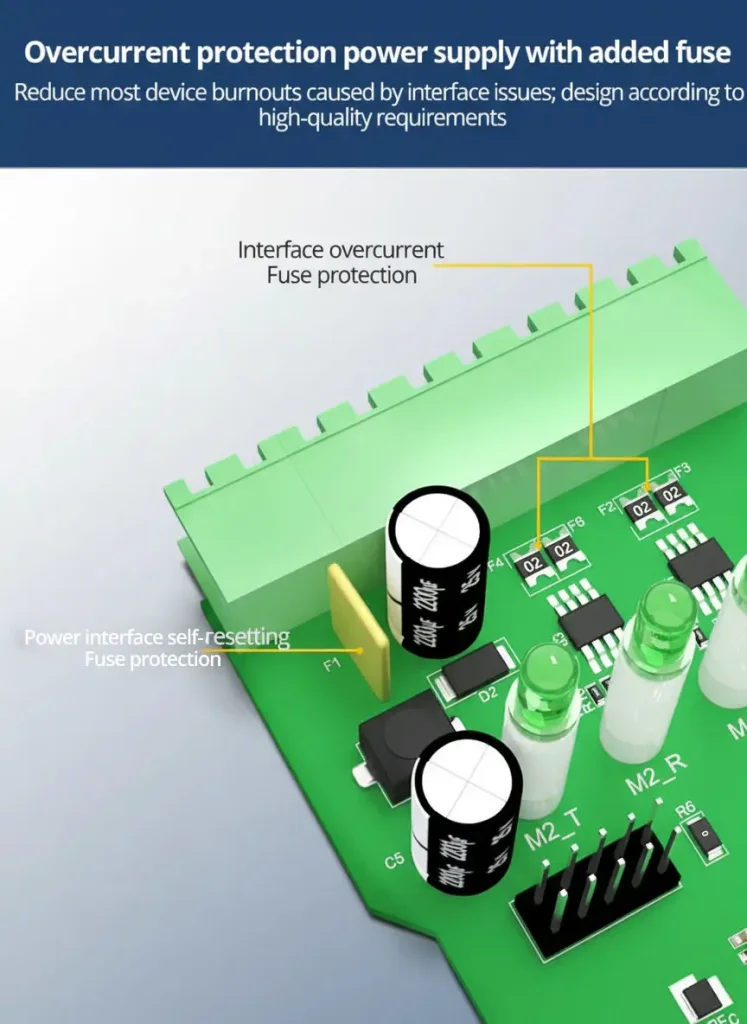
A: We built this hub to eliminate that very risk. All the RS485 ports on the device feature industrial-grade optical isolation and surge protection. This physically decouples the ground loop currents between the master stations and the slaves. Standard shielded twisted-pair (STP) cables give reliable, continuous telemetry in the most severe electrical environments.